If We Only Had A Crystal Ball…

My daughter, Angie, got through childhood and adolescence very well, and not unlike many other young people. But there were signs of the coming storm. Here’s an early excerpt from my award-winning recovery memoir:

“If I was surprised by my daughter’s drug addiction in 2001, it’s because she appeared so functional and went out of her way to hide herself from me.  Later on once her addiction had taken hold of her, I would be incredulous at the dysfunctional behavior I was seeing. It’s as though she had become possessed. She had problems, but I thought I was helping her deal with them responsibly. There were no visible red flags. She didn’t stay in bed every day and pull the covers over her head. She diligently saw her therapist every week, facing every day with discipline and good humor. She never missed her classes and she never quit her jobs. Her grades were excellent. Maybe—and this is important to recognize now—this was the beginning of the denial that would hamper me throughout Angie’s addiction, preventing me from dealing with her illness intelligently and effectively.

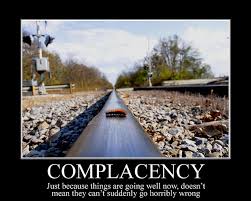
Angie was a good daughter. But please, beware of the complacency in those words.  Clearly, she hid her pain very well. Clearly, much was lurking beneath the surface that I did not see. And if I ache with the vacant promise of all the “woulda, coulda, shouldas,” it’s because I know that even if I had known what was coming down the road, I couldn’t have stopped it.”  ~from A Mother’s Story: Angie Doesn’t Live Here Anymore, by Maggie C. Romero (pseudonym), available on Amazon
Boundaries

Self-care is all about healthy choices: choosing how we live and how we are treated by others.

Living with addiction puts us at risk in ways we hadn’t imagined. I often moved boundaries around to accommodate others. But when I saw how that was hurting me, I was able to step back and enforce my boundaries.

We are not responsible for the chaos. It’s not our fault. I won’t allow it in my house.

I’ve often seen this attitude help addicts make different choices for themselves.

Boundaries benefit everyone.

The Wolf You Feed

“I am sometimes at odds with my recovery groups about the nature of addiction: is it a disease or a choice? I don’t want to force my views on them. There’s a wonderful Cherokee tale told by a grandfather to his grandchildren:

‘There’s a battle inside all of us between two wolves. One wolf is jealousy, greed, dishonesty, hatred, anger and bitterness. The other wolf is love, generosity, truthfulness, selflessness, and gratitude.’

‘Who wins the battle, grandfather?’

‘The wolf you feed.’

Insist that our loved ones are choosing to be addicts, that they want to stick a needle in their arm and live in a gutter, and we feel justified in our anger and our bitterness. Keep feeding those feelings, and they will consume you. I choose to believe that my daughter is wired differently and is prone to addictive disease. That’s no surprise, since four generations in my family have all had addictive disease in varying degrees.  For whatever reason we still are unsure of, whatever life stresses beckoned her into that dark place, she became a victim of addiction.” ~excerpt from my award-winning memoir A Mother’s Story: Angie Doesn’t Live Here Anymore, by Maggie C. Romero (available on Amazon)

Dr. Nora Volkow, director of the National Institute on Drug Abuse, has said: “I’ve studied alcohol, cocaine, methamphetamine, heroin, marijuana and more recently obesity. There’s a pattern in compulsion. I’ve never come across a single person that was addicted that wanted to be addicted. Something has happened in their brains that has led to that process.”

We’re Not Responsible

“My father made attempts here and there to give up gin and tobacco.  When he had his gall bladder removed the nurses made him cough into a bag, and he was so disgusted with what came up that he stopped smoking for a while. But he never completely set aside his self-destructive behavior. It was like an old friend who reminded him of what he’d often felt as a child from an uncaring, abusive father: “You’re not good enough, not important enough.” As a young man working in the family business, he met and fell in love with my mother, who spent a good part of their marriage echoing his father’s disappointment in him. Where do the seeds of addiction take root? It’s the old chicken and the egg confusion. Was my father predestined to become an alcoholic? Or was he made one by the emotional abuse he endured? And if the latter is true, then how and when was I an emotional abuser of my own daughter?

But Twelve-Step recovery gently steers us away from questions like that; we can’t go back and do things over.  And I’m only human. I sometimes ask myself what I did wrong or what I missed seeing. Then I remember that addiction is a disease: “I didn’t cause it, I can’t control it, and I can’t cure it.” And like a gentle breeze blowing away the clutter of remorse, I let go of those thoughts and embrace my life again, free of responsibility.

In any case, whatever she chose to do now, I needed to leave her alone to do it. I knew better than to scream and wail in the night to God and all the graces that protected the innocent to save my daughter. Whatever the roots of addiction are, whatever holes were missing in her that this opportunistic disease filled in, I didn’t have the power to combat them. And I just had to let go of the struggle, or I would disappear down that rabbit hole with her.” ~excerpt from my award-winning addiction memoir A Mother’s Story: Angie Doesn’t Live Here Anymore, by Maggie C. Romero

Love And Enabling

A while back I read Libby Cataldi’s book, Stay Close. In my book, I say that I try to stay in communication with Angie, but reading Libby convinced me to “stay closer.”

Now, after years of recovery work, I feel strong enough to try to keep up communication without feeling drawn into the orbit of her manipulation and insanity. Whatever happens, I want her to know that I’ve always loved my daughter inside the addict—and I always will.


In the Afterword in Libby’s book, Dr. Patrick MacAfee has these words to say: “I believe that ‘stagli vicino’—staying close but out of the way of the insanity—is best. If you are dealing with addiction, offer the addict roads to recovery, not more money or bailouts. Excuses keep people sick…The fear of watching a loved one failing is frightening, but don’t let it cloud your realization that the natural extension of love and caring may only enable the addict’s condition.”

That’s a very fine line. We want to help our loved ones, of course. But often giving cash to an addict is like oxygen to a fire. It just feeds the addiction. There are so many other ways to offer help, and when they are ready hopefully we’ll be stronger to give it.

Alice In Wonderland

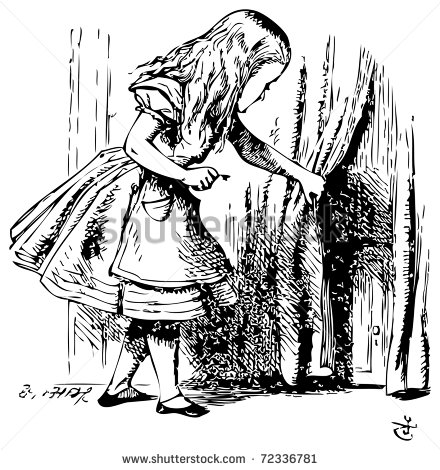
“’Alice: Would you tell me, please, which way I ought to go from here?’

The Cheshire Cat: ‘That depends a good deal on where you want to get to.’

Alice: ‘I don’t much care where.’

The Cheshire Cat: ‘Then it doesn’t matter which way you go.’

Alice: …’So long as I get somewhere.’

The Cheshire Cat: ‘Oh, you’re sure to do that, if only you walk long enough.’

It’s worth noting here that of the four rehabs Angie has been to this one, the one she herself wanted produced the best results in her. Why? Because she wanted it—as plain and simple as that sounds. She wanted it because for the first time in her disease she felt her life was in danger—not from drugs—but from the life and the people that accompany them. A few years down the road, no longer a stranger to the danger that went with this way of life, three more rehabs would be placed in front of her, like roadblocks: ‘Choose, Angie, do this or die. And to her credit, I suppose, she chose to go where we wanted to send her. ‘Where we wanted to send her.’ That’s why they didn’t work. She wasn’t ready to make that commitment again. She was just Alice tripping from one place to another, when all of a sudden this bulldozer broke through the ceiling and screeched, ‘Angie, come with me. I want to save you!’ And ‘curiouser and curiouser’ she cracked, ‘Oh, what the hell, I need a vacation from all this anyway.’” ~excerpt from my award-winning addiction memoir, A Mother’s Story: Angie Doesn’t Live Here Anymore, by Maggie C. Romero

The Healing Power Of Love

None of us is perfect. We all come into parenthood with different baggage. But we love our children. We do the best we can with what we have. But we love our children. And it’s the love we grow as parents—like an extra pair of arms to hug them—that will strengthen us to go on. Wherever they are—whether here or in Heaven—we are embracing our children.

Take a break, Moms. Celebrate yourselves today!

The Good Daughter

“Angie was a good daughter. But please, beware of the complacency in those words.  Clearly, she hid her pain very well. Clearly, much was lurking beneath the surface that I did not see. And if I ache with the vacant promise of all the “woulda, coulda, shouldas,” it’s because I know that even if I had known what was coming down the road, I couldn’t have stopped it.” ~Maggie C. Romero, A Mother’s Story: Angie Doesn’t Live Here Anymore

Expectations

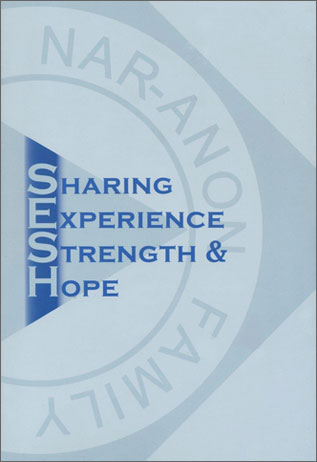
In recovery, we learn to profoundly adjust our expectations, hard as it is. We raised one child, and now we have another. We are all too aware of the change that drugs have produced in our children. A parent wrote in Sharing Experience, Strength and Hope (the SESH book) a very revealing statement, something I could have written myself. It is a key to understanding my story, my mother and father’s stories, and my daughter’s painful struggle:

“I expected my children to be perfect, to always do the right thing. I tried to control them by giving them direction and making them do things in a way that I felt was correct! When they didn’t, I could not handle it.

I could not accept their drug use and I felt that their behavior was a reflection on me. I was embarrassed for myself and scared to death for them. I became so distrusting of my children that I showed them no respect. I would meddle and invade their privacy looking for any excuse to challenge and confront them.

When I came to Nar-Anon, I learned that my interference and my attempts at controlling them were actually standing in the way of their recovery. I learned to let go of the control I never had in the first place.”


Those words echo my own from a recent blog: “I would finally, thank God, let go of the oppressive burden I was placing on my daughter by demanding she get well so that I could be OK.” This is a difficult statement for many of us to make.

Angie’s active drug addiction shook me to the core and made me decidedly unwell. Her illness had the power to ruin my day (and my life) before I got into a recovery program and started practicing the concept of detachment with love.

This concept has placed me at a healthy distance from my daughter so that I could view her situation with some objectivity and respond to her with intelligence and compassion. I’m very grateful for the education I’ve received in the rooms of recovery. I will always love Angie and I grieve the loss of her. But there are other people in my life, and I want to stay well for them. Thank you, Nar-Anon, for helping me reclaim my life!