The Healing Power Of Writing

My friend from Virginia writes me that he took my book to his son who is serving a six-month sentence in jail. Justin was so moved by the book that he has decided to write his own story.  I am happy to have been a source of inspiration for him, because just the act of writing my story was healing for me. Likewise, it could prove to be the catharsis Justin needs to finally face his demons and walk away from drugs.

David Sheff’s (Beautiful Boy, Clean) son, Nick, wrote his own gripping tale, Tweak, and it was very successful.

We all have a story to tell. And even though we’re not all famous authors, our stories  have value to those of us walking down the painful road of addiction. I hope Justin and many other addicts out there write down what’s in their heart. More of us need to get these stories into bookstores. The shame and stigma of addiction will fade in time if we all come out of the shadows and tell our truth.

Addicted To Our Addict

Hands up! Who’s guilty? ME!

Other people’s drama is a great distraction, sometimes, from our own problems. But when it came to Angie’s continuous drama and crises, it almost became an addiction for me, and I couldn’t walk away.

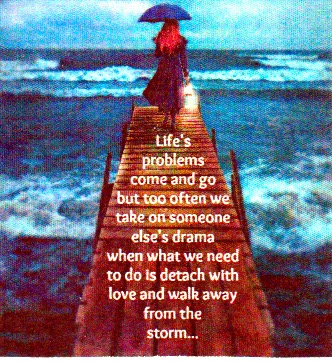
Not until I was so exhausted by it—and convinced that my involvement was helping no one—was I able to say “Enough” and walk away from the storm.

At a meeting a few years ago, a member said that when his daughter was actively using and threatening his well being in any number of ways,  he envisioned himself on a life raft floating at a safe distance from her. Seeing her paddling toward them in a canoe, his wife yelled, “Paddle faster. She’s packing a chainsaw!”

Not everyone has so much drama and/or danger from the addict in their life. But some of us do; some of us need to protect ourselves from the stranger we don’t recognize anymore. And for those of us who need to detach (with love) and walk away, it is an important act of  self-affirmation and love. When we take care of ourselves, we remain strong for the others in our life—and even for our addict—if the day we pray for comes and he/she finds recovery—and comes out of the storm.

Writing A Healing Memoir

A Memoir of Recovery

My memoir about my daughter is a graphically honest portrayal of addiction at its worst. And Angie is still alive, so I was a little fearful of publicity and pictures. But not anymore. Many readers have asked me “What would you do if Angie saw this book someday? Wouldn’t you be horrified?” My answer is this: “No, not at all. The book is not a condemnation of Angie. It is a celebration of life and love.”

In the Introduction, I showcase Angie as she was before addiction corrupted her. She was a beautiful child, young woman, a talented gymnast, writer, artist, and college graduate. And most of all she was a loving and thoughtful daughter to her father and me.

The rest of the book is a portrait of the horrors of addiction and what it does to a young woman with her whole life ahead of her. Once addiction took over, this person was no longer my daughter Angie. And I make that clear in the final chapters, how parents must learn to separate their children from the addicts they become in order to keep loving them and deal effectively with this cruel disease.

Love And Loss

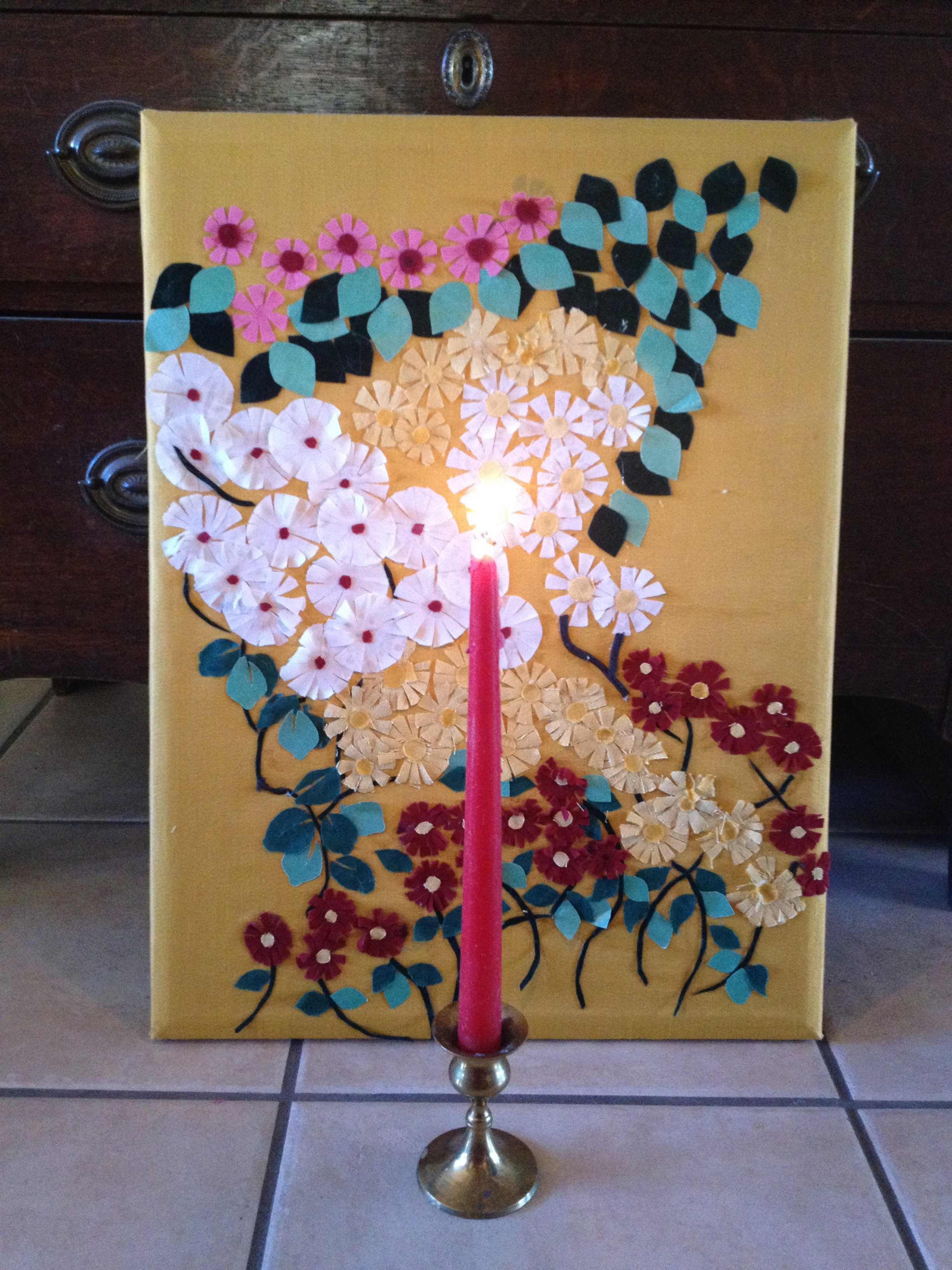
Angie made this gift for me when she got out of her first rehab in 2002. I treasure it—ever a reminder that beauty is often born out of loss.

My daughter was a gifted visual artist as well. I keep her renderings all around me because I like to remember what promise she had. This reinforces my certainty that addiction is a brain disease, not a moral failing. If she had not succumbed to the living death of heroin addiction, I feel sure that she would living her life along with her siblings, probably doing more creative things.  

Addiction is a tragedy for all families. But we can try to celebrate what was good about our addict’s lives before they got sick. I’m grateful for the years I’ve had with Angie.                        

One Path To Recovery

“We rise by lifting others.” Robert Ingersoll

I grew up in an alcoholic family. There was a lot of dysfunction around me and, to make a long story short, I was severely depressed. That led to a number of other problems, of course, and so my mother got me into volunteer work when I was thirteen, hoping it would relieve my anxiety and sadness. It wasn’t the immediate panacea that we’d hoped it would be, but it was a step in the right direction. And it brought me out of my isolation.

Life unfolded for me in a dizzyingly assortment of ways: there were three children including my addict Angie and all the heartache that goes with her illness; a lot of travel in the Foreign Service; and a fulfilling teaching career. I’ve had a great life and I am very grateful. But through it all, thanks to my mother, I’ve been a volunteer in various different organizations. The work has kept my perspective healthy and made me feel better about myself, something I sorely needed. And it’s taken me most of my life and much 12-Step recovery work to truly celebrate myself fully. Helping others always helps me more.

Happy New Year!

Baby Steps Lead To Bigger Ones

“First Step Prayer:

Dear Lord,

I admit that I am powerless over my addict.

I admit that my life is unmanageable

When I try to control him/her.

Help me this day to understand the true meaning of powerlessness.

Remove from me all denial of my loved one’s addiction.”

The first step is probably the most important one in assuring our recovery from the effects of another’s addiction.  And it’s because I refused to take it that it took me so long to start to recover. I simply wouldn’t accept my powerlessness over my daughter’s disease. I felt as though I would be dropping the ball and appearing not to care about her. I felt that I had to do everything in my power to save her.

So, deep pockets enabled me to put Angie through four rehabs. Deep pockets also had me paying her rent, paying off her loans, paying back the creditors she got into trouble with. All my “help” simply gave her more money for drugs. In short, deep pockets are dangerous. She might have learned something from the consequences of her actions if I hadn’t kept getting in the way.

So yes, my life had become unmanageable. I love Angie very much. So I kept making things easy for her. But we can enable our children to death. Now I’ve let go of all my attempts to control her and her disease.

And I feel as though the weight of the world has been lifted from my shoulders.

Let God Do It…

God meme

Like most of us here, I raised my family with the best of intentions. I loved my kids to the moon—still do—but I also felt completely responsible for them. That’s understandable when they’re children and young adults. But at some point—and this place is different for all of us—we must relinquish our responsibility and allow our children to be responsible for themselves.

This gets so complicated because mental health issues so often accompany active addiction. There is so much for our children to shoulder, and we want to help.

This understanding is never more critical than when our adult children struggle with addiction. If we are hampered by guilt—a truly crippling emotion—we might allow ourselves to feel overly responsible. This in turn puts us at risk of becoming enablers. And that downward spiral will continue—until we break free of it.

”We didn’t cause it; we can’t control it; we can’t cure it.”


All I Want For Christmas…

i-will-support-you

‘Tis the season…yes, it’s the time of giving and thinking of others.

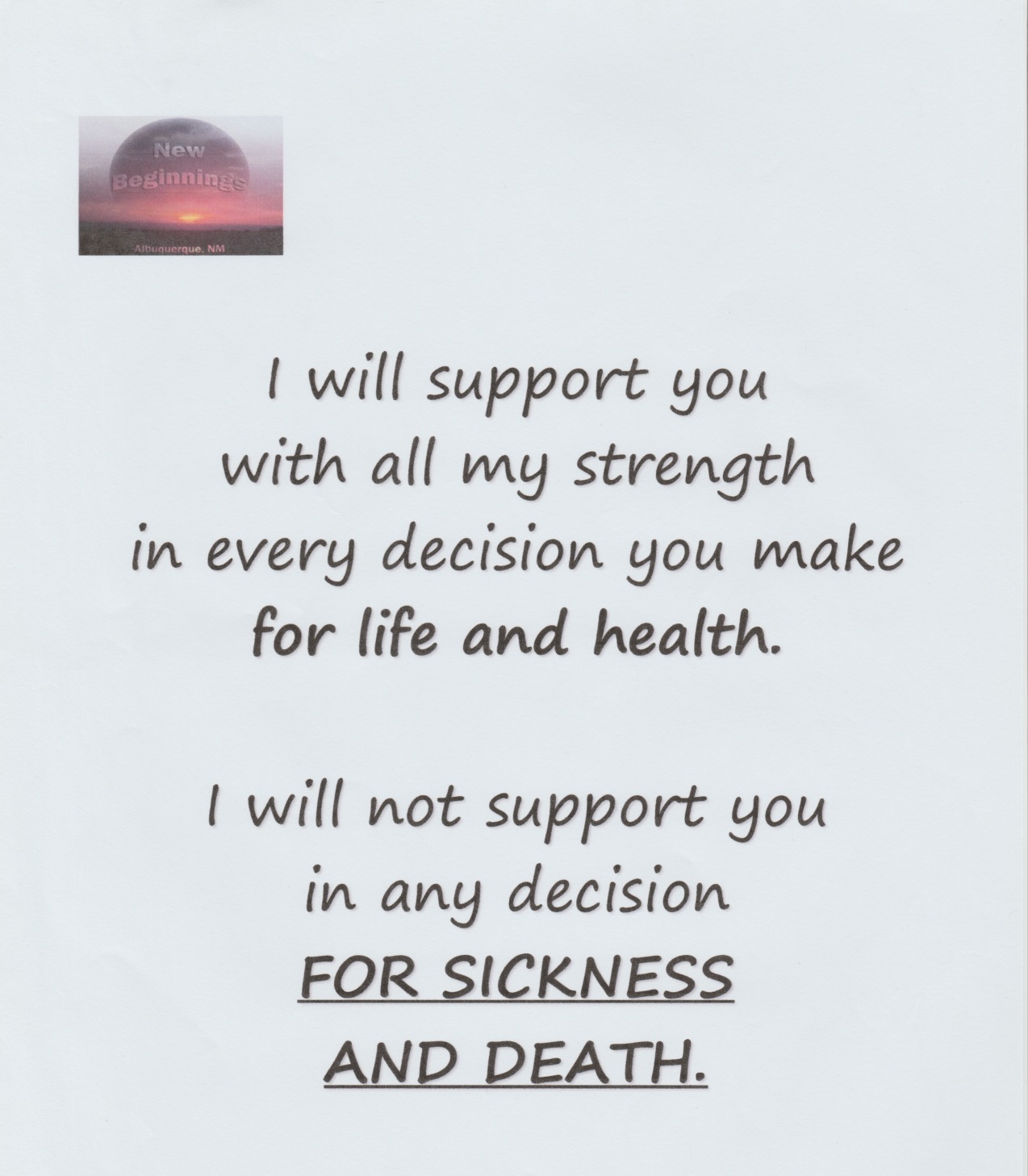
I think of Angie often and even more so during the holiday season when she is so missed in our family. But I have learned over the years that the best gift I can give my daughter is the gift of detachment with love. One of the hardest ways we can love our children struggling with addiction is to let go and encourage them to choose recovery. This is something we cannot do for them.

We can pay their rent, buy them a car—in short, we can make their lives comfortable. But is it always wise to support them financially? I know that every case is different, especially when grandchildren are part of the picture—and my heart goes out to you grandmothers—but in my case, my generosity just gave Angie more money for drugs.

So I’ve learned the hard way to let Angie face the consequences of her choices and take responsibility for herself. It’s the hardest thing…to remove the safety net we want to put under our children. It’s the hardest thing… to watch them flounder in the grips of this cruel disease.

So all I want for Christmas is the serenity to remember that I don’t have the power to save Angie. All I can do is love her. She was raised in a loving family for twenty-one years before she turned to drugs. Wherever she is and whatever she’s doing, I know she knows this.

“Is It Working For You?”

From The Forum, June, 2015:

“The Suggested Preamble to the Twelve Steps have been the most helpful in my recovery: ‘We believe alcoholism is a family illness and that changed attitudes can aid recovery.’ That is to say, it is our attitudes, not our situation, that cause our unhappiness.

When I first came to Al-Anon, and heard these words being read, it was like listening to a foreign language that I did not speak. It was beyond my comprehension that I could find peace and happiness through a change in my own attitude. As I heard these words being read week after week and meeting upon meeting, I resisted the suggestion that I could find peace and contentment if I would become willing to change the attitudes that kept me a prisoner of pain and suffering.

First of all, I didn’t know that I had any particular attitude. My thinking made perfect sense to me. There was nothing wrong with my attitude. I didn’t even understand what my attitude was. Slowly, as I listened in meetings and began working the Steps with my Sponsor, my attitude did begin to change. I was not consciously aware of the change, but I did recognize that my life was less stressful and I was finding periods of happiness and serenity.

One night, a few years into the program, it hit me. I was leading a meeting and as I read the Suggested Preamble to the Twelve Steps, these words ‘…changed attitudes can aid recovery’ struck me. I wanted to laugh out loud and say, ‘Duh…do you think?’ It was so completely clear to me. I got it. I really got it!

Although up to that point, I had changed in many ways, I really believe that this singular, amazing, and powerful moment of clarity was the turning point in my recovery. Reflecting on that moment and remembering the words ‘changed attitudes can aid recovery’ during personal struggles and moments of frustration, kept me willing to continue my journey of self-discovery and brought me a spiritual awakening I would never have thought possible.”


Beautifully spoken by Paula w. of Arizona. I can’t really add much to that, except something my sponsor told me to always ask myself when complaining about a situation that I find myself in: “Is it working for you?” I should always ask myself, and if it’s not, what can I do to change it? Often it’s a change in my behavior, but when that proves fruitless then sometimes a change in attitude is all I need to get a good night’s sleep. Is it a problem I have any control over? No? Then let go and let God. Go to sleep. Maybe other solutions will present themselves tomorrow. But for now, give yourself a good night’s rest—because you’re worth it.
Family Ties

(excerpt from the Prologue of my memoir, A Mother’s Story: Angie Doesn’t Live Here Anymore, by Maggie C. Romero)

“Where might my daughter be now if fate, or genes, had been kinder to her? Now, several years into her illness, I am coming to terms with the terrible legacy that began generations ago in my own family and which I have unwittingly passed on to my daughter.  All these years I’ve diligently searched for answers, clarity, and solace in the face of terrible pain. Like a gift from the universe, it has come to me slowly, and it is with me now. But it’s been a hard won victory.

 Looking back, it’s hard to believe Angie ever could have been such a joyful child.  True, her start in life was, between the colic, screaming, and subsequent hernia operation at a mere three months, not a smooth one.  But she bounced forward into childhood so that I never imagined what would be down the road many years later.  There were signs, yes, but I never saw the enormity of full-blown drug addiction coming. In any case there’s nothing I could have done to prevent the dreadful onslaught that would engulf my family.

I liken the effect addiction has on families to a bomb exploding in the living room with everyone nearby.  The shrapnel hits us all in different places; none of us is left untouched, though some may be wounded more than others. Some even ignore the explosion or block it out as the insidious effects of addiction take root in these bewildered individuals.

What happens when a bomb drops anywhere? Doesn’t everybody run for cover? That’s what happened in my family. Angie’s brother and sister got out of the way as much as possible—a healthy response, I suppose—shrapnel wounds can be pretty dreadful. It broke my heart to see them pull away from their sister. But now Angie was so isolated in her family. And so began the long journey, Angie’s father’s and mine, of carrying her, much of the time, on our backs.”

naranon-the-familynaranon-the-family