The Many Faces of Gratitude

Though nothing can restore the years we’ve lost with Annie, I feel more and more able to embrace the life around me and revel in the gifts I’ve been given. On my gratitude list this morning: “I thought the rose bush was dead, but a little more water and it’s come back.”  Simple things—

How is it possible for me to be grateful, even, to Annie, whose illness brought me into the rooms of 12-Step recovery? How is this possible?

My unsent letter to my child:

Dear Annie,

Ironic, isn’t it, that you have become my teacher and not the other way around—teacher of life, teacher of love, and beacon of surrender.

I’m so grateful that you were born, even though at times I’ve felt otherwise. God works in mysterious ways, doesn’t he? Though you haven’t been in my life long, and not always happily, it’s been your very existence that has propelled me into a serenely spiritual life, even happiness. I never would have done the work necessary to reach this place without your inspiration.

You are my child, my teacher. As I’ve stumbled on this rocky path, my thoughts of you have guided me; they guide me still.

All that I’ve become are gifts from you, my daughter: life lessons, trial by fire. How do I honor you?

By living well—By loving well.

Mom
Enough

“Enough is enough when the hurt inflicted is greater than the lesson learned.”

 I felt that, because I was Annie’s mother, I just had to put up with things. But underneath that martyred attitude was a shaky self-esteem that whispered to me, “This is what you deserve. It’s your fault.”

When I recognized the truth of that, I became willing to take up the yoke and start working on myself. After many years of working the steps and arriving at a place of self-love, I no longer hear those voices. I’ve gotten my life back, and concentrate on what I can control in my life.

I give thanks, multitudes of thanks, for what I’ve been given. This year on Mother’s Day, I’m able to celebrate myself. And I’m grateful to Annie for getting me into recovery.

God Bless Us, Mamas. We do the best we can!

I Am a Child of God, and I am Worthy

From Each Day A New Beginning, CAL, November 2:

“Love is a gift we’ve been given by our Creator. The fact of our existence guarantees that we deserve it. As our recognition of this grows, so does our self-love and our ability to love others…High self-esteem and stable self-worth were not our legacies before finding this program…Had we understood that we were loved, in all the years of our youth, perhaps we’d not have struggled so in the pain of alienation.”

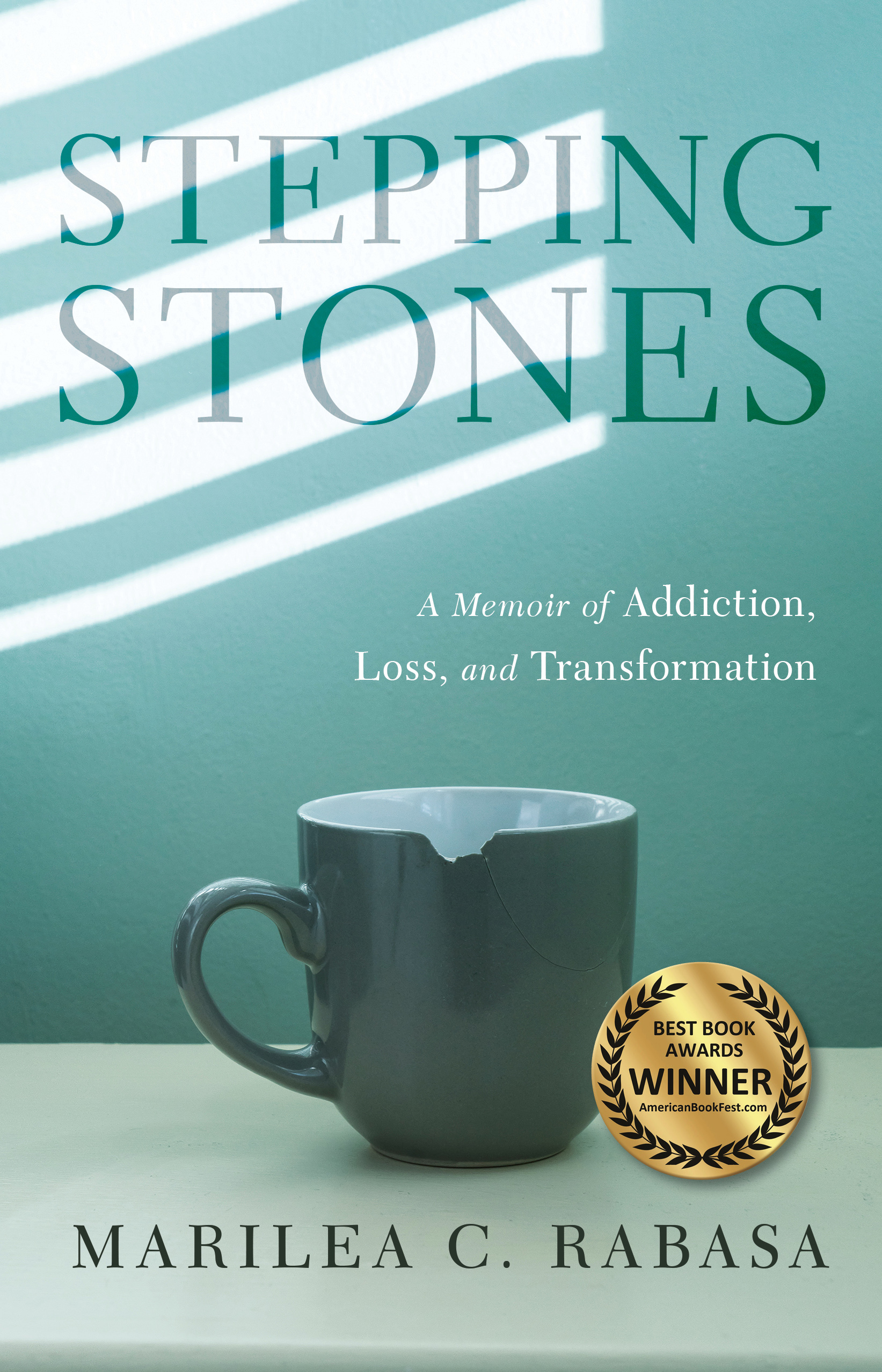
This vignette, entitled “Grace,” from my award-winning memoir, Stepping Stones: A Memoir of Addiction, Loss, and Transformation, affirms my realization that I am a child of God, worthy of love:  

    “While working… back in 1972, I spent a lot of time at a particular thrift shop… Making only about six thousand dollars a year, I was grateful to have acquired a taste for secondhand merchandise.

For twenty dollars, I bought a large print of Maxfield Par­rish’s most famous painting, Daybreak, mounted in a handsome frame. Something stirred in me as I spotted the alluring blues in an obscure corner of the shop where someone had placed the painting. It has held a prominent place over every bed I’ve slept in since that year.

I am the woman lying on the floor of the temple, one arm casually framing her face, shielding it from the sun. Columns support the temple, and there are leaves, water, rocks, and moun­tains in the background, painted in tranquil shades of blue.

Bending over me is a young undressed girl. I am in conversa­tion with her. My face feels warm and I’m smiling. The setting in this picture is one of absolute calm, beauty, and serenity.

That has been my ever-present wish: to be as watched over and cared for, as it appears that woman was.

All my life, though I wasn’t always awake and aware of it, I have been.” @2020Marilea C.Rabasa

God, in all His magnificence, has always loved me.

The Big Crippler

This is a newsletter blurb that I picked up where I used to work:

“Regardless of cause, history or contributing factors, feeling guilty about your past role in the development of your child’s problem behavior will risk sabotaging your parenting roles.  For a more focused relationship with your child: 1) Recognize guilt as negative, self-talk that is normal, but that can be managed or stopped, 2) Acknowledge that a desire for relief from guilt places you at risk for changing the rules, boundaries, and standards that you want followed. 3) Try to act more consistently and proactively, feel better about tough choices, so that you can be less encumbered by what happened in the past.”

What is negative self-talk? It’s when your son gets arrested for burglary and you say you just didn’t raise him right. You blame yourself, so you bail him out.

My guilt around Annie was very great, and in seeking to relieve myself of it I have too often spoiled her, not followed through on adherence to consequences, and cushioned the falls that might have taught her valuable life lessons.

I’m learning to consider tough choices now instead of easy ones. And I’m letting go of my guilt around my past behavior. But it’s a well-worn groove in my character, and I’ll need to work very hard to let go of it completely.

Steps Eight and Nine—the apology steps—provide an opportunity to learn the difference between what is and is not our responsibility and to take a more realistic look at the effects of our actions.  In my case, my sense of responsibility was inflated. So when I crossed the line and tried to fix her, to relieve my anxiety, I messed up. In my desperation to be feel better, I became the consummate enabler. I felt I had to punish myself because my daughter’s substance use disorder must have been my fault. But I don’t feel that way anymore. I’ve learned to let go. It’s a journey to freedom that parents will make in their own way and at their own pace.

God Bless us All!

Out Of My Mouth

My sponsor often scolded me when I put myself down, even slightly. Until I got into recovery, low self-regard followed me most of my life. I had some bad habits that needed correcting. If I had a hard time accepting myself, how could I expect anyone else to?

Thank goodness I found the rooms of recovery before I grew too old to reap the rewards! The twelve steps, when practiced with the help of my sponsor, have brought miracles of transformation into my life. I’m so grateful that I’ve remained teachable and not too set in my ways.

I, along with millions of others in our fellowship, have found the courage to change. We only get one chance to go around the block, and it’s never too late to try to do better. My life and relationships have grown richer and more rewarding as a result.

There was a time in my life when genuine joy was a foreign concept to me. Now, upon waking, each day is a new beginning, a chance to check my attitudes, my words, and my behavior.

The three A’s: awareness, acceptance, and action. Each night before my head hits the pillow, if I’m following my program, then I know I’ve done the best that I could do. I especially need to watch what I say because words can’t be taken back and they often do much harm. So, I try to be mindful that my words reflect the best in me.

Other people can be mirrors for us, and if I pay attention, I learn through my every interaction with others what is working and what is not. My program offers an endless array of guidelines to help me make the most of my life.

My joyfulness, on any given day, springs from that.

Dancing In The Rain


The road to my spiritual life began when I was a young child growing up in an alcoholic family. But I didn’t start to walk down this recovery road until halfway through my life when my daughter fell ill with substance use disorder.

I was unhappy growing up. It’s a classic story of family dysfunction that many of us have experienced as children. But back then I didn’t have Alateen. My father was never treated and died prematurely because of his illness.  I, too, was untreated for the effects of alcoholism, and grew into an adult child.

Many of us know how rocky that road is: low self-esteem, intense self-judgment, inflated sense of responsibility, people pleasing and loss of integrity, and above all, the need to control. I carried all of these defects and more into my role as a mother to my struggling daughter, and predictably the situation only got worse.

I was a very hard sell on the first three steps of Al-Anon, and my stubbornness cost me my health and my career. But once I did let go of my self-reliance, my whole life changed for the better.  The Serenity Prayer has been my mantra every day. I’ve learned to let go of what I can’t change. I don’t have the power to free my daughter of her disease, but I can work hard to be healed from my own.  This is where I’ve focused my work in the program.

My daughter has gone up and down on this roller coaster for twenty years, and right now she’s in a very bad place. But that has only tested me more. My faith grows stronger every day when I release my daughter with love to her higher power, and I am able to firmly trust in mine.

Friends of mine ask me, “How do you do that? You make it sound so simple!”  I tell them, “First of all getting here hasn’t been simple. It’s the result of years of poisoning my most important relationships with the defects I talked about earlier. I knew I had to change in order to be happy. Secondly, I fill my heart with faith-based unconditional acceptance of whatever happens in my life. It’s my choice.

Somewhere in the readings, someone wrote ‘Pain is not in acceptance or surrender; it’s in resistance.’ It’s much more painless to just let go and have faith that things are unfolding as they are meant to. There’s a reason that HP is running the show the way he is. I just have to get out of the way. I also read somewhere the difference between submission and surrender: submission is: I’ll do this if I get XYZ; surrender, on the other hand, is unconditional acceptance of whatever I get. Well, the latter is easier because I’m not holding my breath waiting for the outcome. I just let go – and have faith. Again, it’s a very conscious choice.

We all have different stories. What has blessed me about a spiritual life is that I can always look within myself and find peace regardless of the storms raging around me. I’m learning how to dance in the rain.

Tidying Up

“First become a blessing to yourself so that you may be a blessing to others.” ~Rabbi Samson R. Hirsch

What a Sisyphean task that has been for me. In order to become “a blessing to myself,” I had a lot of work to do. I needed to clear away the debris from my past, clean up my side of the street, make amends to anyone (including myself) necessary, and move forward.

These words, all in a sentence or two, represent a lifetime of attempts at self-improvement, reaching for happiness. And just good clean living. It’s a daunting amount of work. Change is difficult for anyone. But I was determined, when I hit my bottom, to try to be a better version of myself.

It’s been my sincere love of all those around me—both friends and family—that catapulted me into what I hope will be a lasting state of recovery and the peace that goes with it.

And timing is everything in life. I’m ready to adopt an attitude of gratitude and enjoy the years in front of me. Life is good.

Staying Out Of The Weeds

Before I went into recovery, I was pretty lost. On the outside, my life seemed to be rolling along well. But on the inside, I was insecure and sad. I dealt with these feelings in unhealthy ways, but didn’t feel much pressure to change them. I never missed a day of work, and I appeared to be fine. But appearances can be deceiving. Nothing had yet occurred to call my choices into question. Nothing had happened yet to push me out of my complacency.

But when my middle child fell victim to substance use disorder, after I had tried and failed over and over again to help her, I broke. The carefully manicured life I had been living was a treasured glass from my cupboard, smashed onto the kitchen floor. Many little shards, and some big ones. I cut my fingers cleaning it up.

My recovery fellowship comes with a philosophy that teaches me many different things. And one of those things is to forgive myself and others for the transgressions we inevitably commit in our lives. Our common humanity dovetails at every meeting I go to, where we encourage ourselves to face our defects, let them go, and move on.

For years, I held on to mine to punish myself for my part in Annie’s disease, and most importantly, for failing to “save” her. I have learned, gratefully, that my daughter suffers from substance use disorder, as do I, and I could no more save her from it than if she’d had diabetes. I simply don’t have that power.

So I try to stay away from martyrdom and self-pity, because neither of those feelings will help Annie get well, and they hurt me a great deal. That’s where the weeds are. They muddy the waters; they keep me angry and sad. When I steer clear of them, it takes some of the sting out of losing my daughter. I can more easily open my heart to what remains in my life.

The miracle of my recovery is that, like a gentle breeze blowing away the clutter of remorse, my eyes can see my life through another lens now, one full of gratitude, humor and love. The fruits of my recovery rest on these three things.

“We forget that the depths teach us how to better appreciate the heights.”

“Let Go And Let God”

From Courage to Change, Conference Approved Literature, December 8:

“The image of an avalanche helps me to give the drinking alcoholic (or addict) in my life the dignity to make her own decisions. It is as though her actions are forming a mountain of alcohol-related troubles. A mound of snow cannot indefinitely grow taller without tumbling down; neither can the alcoholic’s mountain of problems.

Al-Anon has helped me to refrain from throwing myself in front of the alcoholic to protect her, or from working feverishly to add to the mountain in order to speed its downward slide. I am powerless over her drinking and her pain. The most helpful course of action is for me to stay out of the way!

If the avalanche hits the alcoholic, it must be the result of her own actions. I’ll do my best to allow God to care for her, even when painful consequences of her choices hit full force. That way I won’t get in the way of her chance to want a better life.

Today’s reminder: I will take care to avoid building an avalanche of my own. Am I heaping up resentments, excuses, and regrets that have the potential to destroy me? I don’t have to be buried under them before I address my own problems. I can begin today.”

‘The suffering you are trying to ease…may be the very thing needed to bring the alcoholic to a realization of the seriousness of the situation—literally a blessing in disguise.’ (From “So You Love An Alcoholic”)

I wish I had been able to do this fifteen years ago. But we get there when we get there. It’s never too late to start over, whether we’re a using addict or the enabler of one. I say this with kindness and a deep compassion for myself. I truly believe that we all do the best we can with what we’ve got at any given moment.

Other Voices Are Calling Me

Most of us have experienced the pain of substance use disorder, either directly or indirectly. It’s everywhere in our society, and addiction in all its forms has the power to take away our happiness and wellbeing. My daughter Annie has scrambled in and out of the rabbit hole for over nineteen years, and much of the time I was in it with her. But I’ve learned to let go of a disease and its ensuing consequences that I have no control over. Yes, let go.

Once the tears dried and I could open my eyes, I looked around to see what was left from all the chaos and devastation: a job I liked, flowers blooming, other family members, good health, enough money to be comfortable, friends who cared and didn’t judge me. The list went on. These little girls are my great joy, and if I didn’t have them I hope I could try to celebrate something else—anything else—in my life, even though some days the grief is overwhelming. Time passes too quickly, and before I know it, mine is up. Life is too precious to waste.

My years in the recovery rooms have taught me grace, and the courage to embrace all of my life—the good, the bad, and the ugly—as an expression of God’s will for me. I’m blessed to be part of a spiritual program that teaches me that painful lesson, despite my loss—or maybe, when I look at this picture, because of it.