War and Peace

“They sicken of the calm, who knew the storm.” ~Dorothy Parker

Do I see myself here? Somewhat, if I’m honest, as cynical as that quote is. Maybe in the beginning I was addicted to the drama of Annie’s substance use disorder. That—and all the martyrdom I subjected myself to. But this did not bring me happiness. There are a number of ways, I have learned, to stay involved with an addicted child—ways that might have helped us both navigate this illness better. But for a long time I was stuck and didn’t know how to free myself of the downward spiral.

Over time, my obsession broke me down and wore me out. I do enjoy the peace in my life now, though I still experience some PTSD. So many years, it seems, of struggling to help her, and then for both our sakes, letting go of the struggle to save her. Addressing once and for all my own substance use—so that my presence could benefit my other loved ones. Don’t think for a moment that I don’t feel the pain of losing Annie. I do. The trauma of losing a child, to whatever illness, never goes away. But, in my experience, it isn’t so heavy to carry. It feels lighter now. Hang in there, Moms. Many things are resolved with better education and the passage of time. Keep loving yourselves and the world around you. Love is the great healer of all things!

“Loving, like prayer, is a power as well as a process. It’s curative. It is creative.” ~Zona Gale
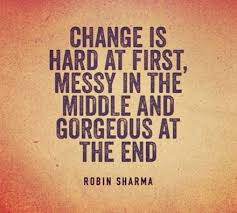
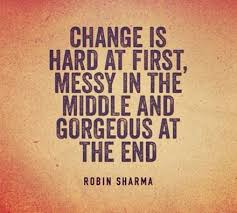
Oh My, How Hard It Is To Change!

Oh My, How Hard It Is To Change!

From Each Day A New Beginning, January 8:

“’When people make changes in their lives in a certain area, they may start by changing the way they talk about that subject, how they act about it, their attitude toward it, or an underlying decision concerning it.’ ~Joan Illsley Clarke

…Each positive change we make builds our self-esteem. Realizing that through our own actions we are becoming the kind of women (and men) we admire, gives us the strength, in fact, encourages the excitement in us that’s needed to keep changing…

I will accept an opportunity today to act as if I can handle a situation I used to run from.”

I was desperately unhappy when I joined Al-Anon. I was sure that my misery was caused by my daughter and her substance use disorder. It didn’t occur to me that it was my reaction to those circumstances that was the culprit. But when, after years of struggle, I finally did accept that I was the author of my own unhappiness, I was ready to do some of the real work of the program. Many people write me: “But what made you WANT to change?” I answer them all the same way: “I was sick and tired of being sick and tired” (of myself).

My daughter has gone in and out of recovery from SUD. My recovery, in recent years, has followed a different trajectory. And the key, of course, is being able to cut the umbilical cord and recognize that we are on separate paths.

That’s very hard for most parents, myself included. But when I see the damage that comes from NOT detaching, from staying mired in old resentments, old guilt, old unresolved stuff, I am reminded to let the past go and stay in the here and now. “Annie,” deep in her disease, has consistently tried to keep my focus on past errors, in order to justify her rage and distract her from what she needs to do now to get well.

But that’s the illness talking. I don’t take the bait anymore. I don’t engage unless it’s on a healthy level. Why not? Because it keeps us rolling around in the mud. And that’s not productive.

For a long time I welcomed rolling around in the mud. But not anymore. That’s one of the changes in myself that I’ve enjoyed. With my history, my self-esteem has always been shaky. But the tools of recovery help me learn how to adopt new attitudes about myself. And as the reading suggests, this is most often accomplished by making positive changes in my behavior.

When I do good things, they return to me tenfold. I may not get everything I want in my life. But for me to get up every day and say to myself: “You know, Marilea? You’re okay. You’re a work in progress. You just keep doing things that reinforce that self-directed goodwill, and you’ll be okay.”

Life is unfolding as my HP intended, and all will be well.

Staying Out Of The Weeds

Before I went into recovery, I was pretty lost. On the outside, my life seemed to be rolling along well. But on the inside, I was insecure and sad. I dealt with these feelings in unhealthy ways, but didn’t feel much pressure to change them. I never missed a day of work, and I appeared to be fine. But appearances can be deceiving. Nothing had yet occurred to call my choices into question. Nothing had happened yet to push me out of my complacency.

But when my middle child fell ill with substance use disorder, after I had tried and failed over and over again to save her, I broke. The carefully manicured life I had been living was a treasured glass from my cupboard, smashed onto the kitchen floor. Many little shards, and some big ones. I cut my fingers cleaning it up.

My recovery fellowship comes with a philosophy that teaches me many different things. And one of those things is to forgive myself and others for transgressions inevitably committed in our lives. Our common humanity dovetails at every meeting I go to, where we encourage ourselves to face our defects, let them go, and move on.

For years, I held on to mine to punish myself for my part in Annie’s disease, and most importantly, for failing to “save” her. I have learned, gratefully, that my daughter suffers from substance use disorder, as do I, and I could no more save her from it than if she’d had diabetes. I simply don’t have that power.

So I try to stay away from martyrdom and self-pity, because neither of those feelings will help Annie get well, and they hurt me a great deal. That’s where the weeds are. They muddy the waters; they keep me angry and sad. When I steer clear of them, it takes some of the sting out of losing my daughter. I can more easily open my heart to what remains in my life.

Staying in the weeds prevents me from changing and growing. My recovery fellowship provides the tools to accomplish those two things—with gentleness and kindness. It’s hard, hard work. But when I see positive results in real time, I’m encouraged to keep at it. There’s no graduation from this school of life.

The miracle of my recovery is that, like a gentle breeze blowing away the clutter of remorse, my eyes can see my life through another lens now, one full of gratitude, humor and love. The fruits of my recovery rest on these three things.

“Look Back Without Staring”

From Hope for Today, September 13:

“Never underestimate the power of self-awareness to put past experience into a new perspective…Until we take the time to look at ourselves honestly. we may never be free of the bondage in which alcoholism holds us captive.”

As the mother of a substance user, I was focused completely on my daughter Annie and her problems. In the beginning of her illness, I failed to see that how I handled the chaos in my home might have more to do with me than with her. I didn’t realize what a powder keg my past was bringing to an already explosive situation.

My own history of substance use played a big role in my reactions. Whoever said “Blame is for God and small children” forgot about me. I thought Annie’s illness was my fault. I burdened myself with guilt and an inflated sense of responsibility, and that burden crippled me when dealing with the consequences of her bad choices. I often lost my own moral compass, the one I raised her to follow. That guilt put at risk all the healthy boundaries I had set in place with all of my children. I became lost.

Much of my behavior was a misguided attempt to protect my daughter. I became overprotective, and shielded her from the logical consequences of many choices that might have taught her some valuable life lessons.

I did step up and put her through four rehabs. I was happy to do that and so hopeful. But after she got out and relapsed every time, I fell back into old patterns. I didn’t see how I might be part of the problem.

My enabling just kept her stuck, and I became stuck too in a vicious cycle that wasn’t helping either one of us. I needed to distance myself just enough to learn how to detach from my daughter. To do it lovingly and without any judgment.

It’s a fine line we mothers walk between protecting our children and letting them go to learn how to live well. Since so many substance users stop growing emotionally when they start using, it’s easy to step in and do too much for them. There’s nothing easy about what we face with our children.

But the more I learn about myself, the more armed I am to avoid the pitfalls along the way. As I find the need to change much of my behavior, so do those around me. My recovery has affected all those I come into contact with. And it has “freed me of the bondage that had held me captive” all of my life, so that I can let go of the past, and more effectively deal with the challenges that face me now.

The Freedom Of Recovery

From Survival to Recovery, p. 25-26:

“Unless recovery is found, blame, guilt, anger, depression, and many other negative attitudes can go on for generations in a family affected by alcoholism…Focusing on ourselves actually allows us to release other people to solve their own problems and frees us to find contentment and even happiness for ourselves.”

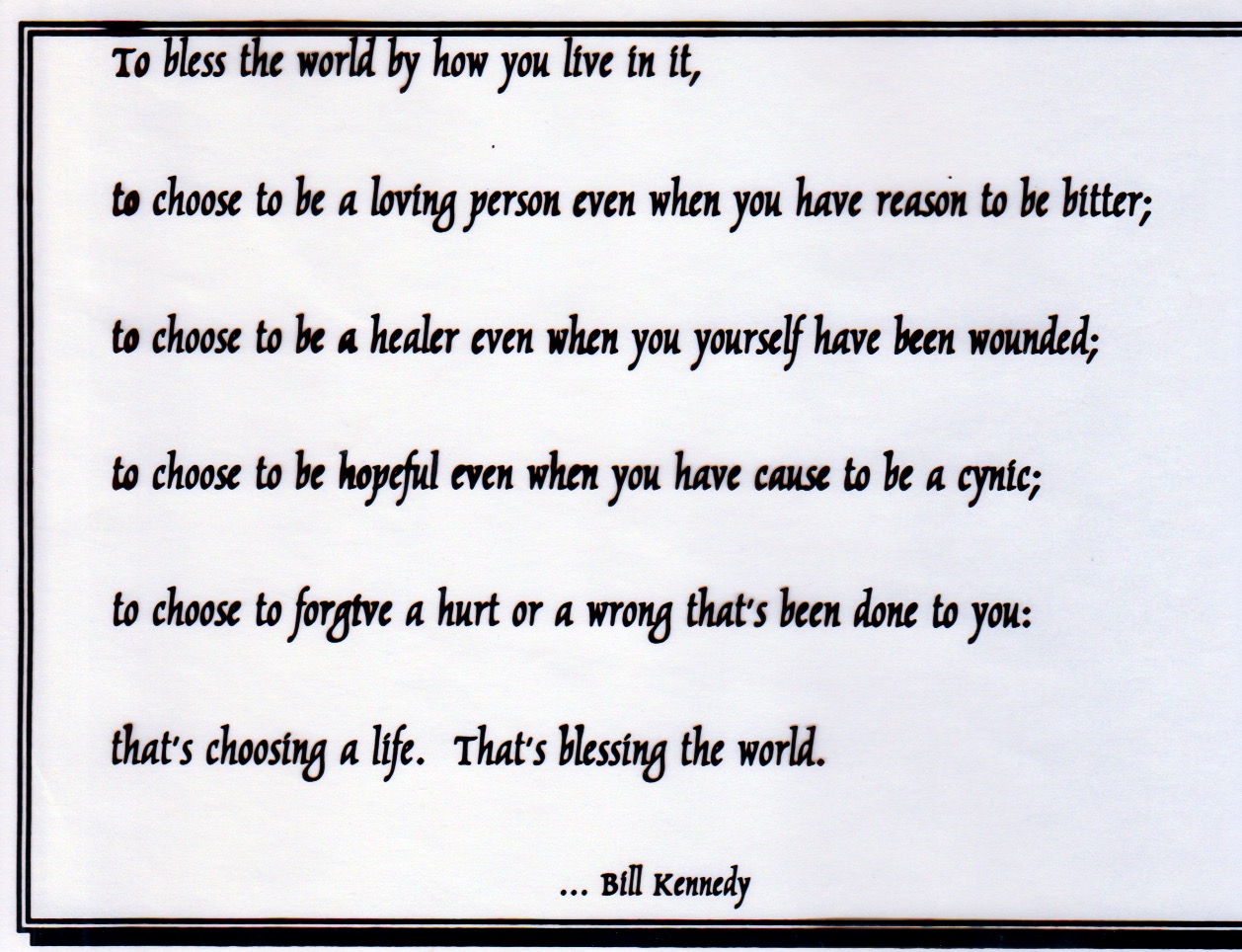
We all have different stories of how substance use disorder has touched our lives. In my life, guilt was a constant theme from very early in my childhood, and, as I said in my memoir, “Guilt is a terrible crippler.” It crippled me, especially, when my own child mirrored the user in me and morphed into a worse and more dysfunctional user than I ever was. Guilt and self-blame put me at risk in setting and enforcing boundaries, in becoming an enabler, in shielding Annie from the logical consequences of her behavior. In short, guilt kept me from parenting my daughter intelligently and kept me stuck in a hole. Fortunately I found recovery and release from my own remorse, much of it misplaced, which in turn is freeing Annie to live her own life and solve her own problems.

Whatever happens in the days ahead, I won’t be burdened under a cloud of shame that isn’t  mine to carry.

The Power Of Choice

I am not a victim, but an active participant in my own life. I learned the 3 A’s in Al-Anon: awareness, acceptance, and action. Those are three very loaded concepts.

Awareness requires some honesty and courage, the willingness to look in the mirror and face one’s reflection—sometimes good and sometimes not; it also requires an alertness to what’s happening around me.

Acceptance asks us to recognize the difference between changing what we can and what we can’t, which is really huge and really hard for most ordinary humans like myself.

Finally, action asks more courage of us to make changes—rendering our lives happier and more productive.

I may be an adult child, but I’m growing up. I will take responsibility for my own life, for my successes and my failures. In this way I feel empowered, no matter the outcome, to be the star in my own show.

“I don’t want to wake up one day and find I’m at the end of someone else’s life!”

T-H-I-N-K

From SESH, June 27:

“Today I express my fears and know that my Higher Power will control the outcome. I am where I need to be. When I feel anxiety, I can focus on the slogan T-H-I-N-K, which reminds me how to react differently.

T – Thoughtful

H – Honest

I – Intelligent

N – Necessary

K – Kind”

One slogan, T-H-I-N-K, can be very helpful. However, as with most tools, I need to use it with care and reason. As I’ve heard it said around these rooms, ‘my best thinking is what got me here.’ For me, thinking too much or in a negative way is almost as dangerous as thinking not at all. Obsessive thinking can be my symptom of this family disease as much as obsessive drug use is the substance user’s.

I will try to free myself of pointless rumination and stay focused on the freedom of my recovery.

Today, In Fact, Is All We Have

Spending too much time regretting my past mistakes and/or fearing what may happen in the future keep me from looking at what’s right in front of me. But the present moment is all that’s real and something I can hold onto. So I will try to be present and attentive to what’s going on right now. That’s how I can relish what’s good in my life and enjoy the ride.

I’m not sure why “Just for Today” has always been difficult for me. I was either weighed down with guilt and regret about past mistakes, or else I was frantic with worry about the future. No wonder I was miserable! I do have so many things to feel grateful for. But before recovery, I barely recognized them. It’s like I was living in a dark hole of my own making, and this went on for years without the proper intervention.

To be honest, I went through some “survivor guilt.” How could I be reaching for recovery while my daughter was in such a bad place? But after much step work and learning to forgive myself and treat myself with compassion, I accepted that it would serve no one if I lost myself in substance use disorder as well. There are other people in my life who need me whole and healthy.

And so, I make a choice every day to move forward and do the best I can with what I’ve got. The loss of a loved one doesn’t have to bury me. It can be my teacher. God works in mysterious ways, and I’ll never understand his reasons. But I don’t have to.

That’s where my faith comes in. I believe that something good can come out of pain and suffering. Today I live soberly, with the grace of God, and happily.

That’s something.

Surrender

From Each Day A New Beginning, January 9:

‘The Chinese say that water is the most powerful element, because it is perfectly nonresistant. It can wear away a rock and sweep all before it.’ —Florence Skovel Shinn

“Nonresistance, ironically, may be a posture we struggle with. Nonresistance means surrendering the ego absolutely. For many of us, the ego, particularly disguised as false pride, spurred us on to struggle after struggle. ‘Can’t they see I’m right,’ we moaned, and our resistance only created more of itself.

Conversely, flowing with life, ‘bubbling’ with the ripples, giving up our ego, releases us from an energy that heals the situation—that smooths the negative vibrations in our path. Peace comes to us. We will find serenity each time we willingly humble ourselves.”

‘Resistance is more familiar. Nonresistance means growth and peace. I’ll try for serenity today.’

I wrote in my first memoir toward the end: “This is where I was in my recovery as I left San Francisco, at that hard won place I’d fought through years of resistance to find: the end of the battle—acceptance.”  That’s what the above reading is all about, I think. Letting go of my desperate need to save my daughter from her substance use disorder, and coming to accept that I simply don’t have that power. I can only love her.

What could be harder for any parent than to accept our powerlessness over our child’s substance use disorder? Yes, there are many things we can do to help, not the least of which is continue to love our kids unconditionally. My experience has taught me, though, that when I make decisions out of fear, I risk making bad choices. When my actions flow from a place of love, including love of self, all will be well.

Getting Out Of The Way

I’m a mother. When my kids were little, it was my job to keep them safe from harm. If they ran across the street with a car coming, I might have spanked them a little so they’d remember to look both ways next time. Yes: pain; yes: consequences. Yes: both good teachers.

But when Annie was twenty-one and started making terrible choices, I still thought it was my job to protect her from harm, self-inflicted or otherwise. And I still treated her like a two-year-old.

When she first stole from me early on, I went into a long period of denial and guilt, minimizing my feelings and believing her incredible explanations. My inaction only emboldened her, and she went on to steal in other ways. Several times, she stole my identity, with no explanations. So even when it was clear to me that her behavior was unacceptable, I still behaved inappropriately: I did nothing. Even when the credit card company told me to do something—that it would be a lesson for her—I still did nothing.

Where was the smack on the rear she would have gotten from running across the street? Where were the consequences that would have reminded her to be careful? I presented Annie with no consequences in the beginning of her illness and so she learned nothing. Her progressive illness got much worse. My guilt was crippling me as an effective parent.

Not until I started working my own program of recovery was I able to release myself from the hold that was strangling us both. I needed to get out of my daughter’s way. She wasn’t two anymore.

I’ve made a lot of progress since those early days. I’ve learned to let go and leave Annie to the life she has chosen. Four rehabs helped her turn her life around for a while, but she always slipped back into her substance use disorder and the life that goes with it. But staying out of the way has given me the freedom to take back my life and learn to live well by focusing on something else. It has also given Annie the freedom to take responsibility for her own life and hopefully her own recovery. If she reaches for it again, and I pray she will, how much more rewarding it will be for her to find her own way!