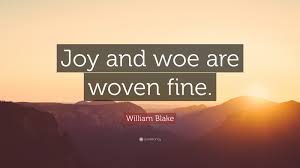
“I’m so grateful I found a way out of sadness, a way to take care of myself each day, and a relationship with the God of my understanding, who will never abandon me. The pain I’ve felt in the past is equal to the measure of joy I feel now.”
That’s quite a mouthful. Whoever wrote those words in “The Forum” is saying that somewhere between despair and happiness she or he did some work, and found some answers. For me, anyway, I entered into a state of grace. I quite deliberately let go of my precious wounds, which served no further purpose in my life. The lessons they taught me have been learned. I’ve put my sadness in a back drawer—and replaced it with positive thoughts that keep me motivated to reclaim my life, my remaining loved ones, and keep my heart ticking.
Grief is not a badge I wear anymore. Joyfulness is.
From Living Sober, AA World Services, Inc., p. 49:
“Many of us, when drinking, were deeply sure for years that our own drinking was harmless. We were not necessarily smart-alecky about it, but when we heard a clergyman, a psychiatrist, or an A.A. member talk about alcoholism, we were quick to observe that our drinking was different, that we did not need to do any of the things those people suggested. Or even if we could admit that we were having a bit of trouble with our drinking, we were sure we could lick it on our own. Thus we shut the door against new information and help. And behind that door, our drinking went on, of course.
Our troubles had to be pretty dire, and we had to begin to feel pretty hopeless before we could open up a little bit and let in some fresh light and help.”
Not all of us reach the same bottom, of course, before we decide not to drink. For many, it’s that first (or third) DUI. It could be lost employment for others. I’ve seen a couple of people with late-stage alcoholism awaiting liver transplants. Hopefully more and more alcoholics will decide to quit long before that happens.
My bottom cut me to the core and maybe that’s why I haven’t wanted to drink since. My son and his wife had an intervention with me. They called me out on my habit of drinking alone in their basement, something that I thought I was getting away with. Didn’t I think they’d notice all the empty vodka bottles? That and the fact that I was being secretive about it were red flags. Shame and secrecy all play into the denial that enables us to keep up bad habits.
I was stunned and deeply ashamed. And only because I’d had many years of work in another 12-Step group did I have enough recovery to stay in my chair and listen to their concerns. They were concerned about their children, my grandchildren, and the danger of drinking and driving. But most of all they were concerned about me, keeping me safe and alive long enough to enjoy watching them grow up.
I am so grateful to my son for stepping in. He saved my life. My own father was just a couple years older than I am when he died prematurely from alcoholism and smoking. History does not have to repeat itself.
When my children were young, I was not always emotionally present for them. To feel my son’s forgiveness now and to see his concern for my welfare is incredibly gratifying to me. I’ve been given a second chance and I want to take advantage of it. How many people get do-overs like that?
“There’s always going to be someone out there with far less than I have who is happy.”
It’s so important to keep things in perspective. Even though the compounding tragedies that bring us together in the rooms consume us, they needn’t. When I take a fully inventory of my life and recognize that my blessings far outnumber my losses, I know how much worse things could be.
And, for me, that makes all the difference.
Keeping things in perspective is a daily balancing act for me. Especially now, when everyone’s life is out of whack, it’s easy to get overly emotional and overreact to small things that we used to ignore. In a way, with all of our worlds reduced to the inside of our homes, we are living under a microscope. Families that used to send three kids off to school every day with husbands and wives sharing the car with public transportation are having to remain inside their home, constantly bumping into each other.
This is not something I’m experiencing, but millions of other families are, and results from this new normal will start pouring in. All anyone can do is try to make the best of a new situation. Hopefully many families will be stronger on the other side of this. My recovery demands that I remain grateful for my blessings because “there’s always going to be someone out there with far less than I have who is happy.” I’ll take a page from his/her book.
“’Even
though I can’t solve your problems, I will be there as your sounding board
whenever you need me.’ ~Sandra K. Lamberson
Our
emotional well-being is enhanced each time we share ourselves—our stories or
our attentive ears. We need to be part of someone else’s pain and growth in
order to make use of the pain that we have grown beyond. Pain has its purpose
in our lives. And in the lives of our friends, too. It’s our connection to one
another, the bridge that closes the gap.”
Never in
my lifetime have words and phrases meant more to me than “connection,”
“bridge,” and “closes the gap.” We are all living through an extraordinary time
where the viral pandemic has halted life as we know it. Of necessity, many of
our routines have stopped. From my small world of one to the world at large,
nothing will ever be the same again. This is a time when our physical health
and wellness are uncertain; it’s a time when the world is being engulfed by an
invisible threat which to some extent is out of our control. We’re doing our
best to slow the progression of the disease. Mitigation, social distancing. We
are being tested.
I, for
one, am enjoying yet another opportunity to look within and put things into a
larger perspective. And things will be different after this. I can’t see into
the future, and everyone’s world will change in different ways. But my world
already involves more appreciation for the finer things in life: things like
kindness, consideration and thoughtfulness, generosity of spirit and time, and
human connectedness. Just remember how Zoom crashed recently while Americans
across the country were anxiously trying to visually connect with one another. This
intense appreciation for those things will inform my choices on how to live,
what to do with my time. This is a good thing.
We are
interconnected and interdependent. We may not be able to connect hands right
now, but we can connect our hearts and minds as we all strive to figure things
out, learn some important lessons, and determine to make our planet stronger for
the next generation to enjoy and pass on. The world belongs to my grandchildren
and their children. God keep me strong to leave them something beautiful and
resilient, reflecting the best in us all.
“Addiction is like a chain reaction. It
is a disease which affects the addict as well as the family members, friends
and co-workers. We try to control, cover up, and take on the responsibilities
of the addict. The sickness spreads to those of us who care the most.
Eventually, we begin to feel used and unhappy. We worry, lose trust and become
angry. The addict blames us and we feel guilty. If only something or someone
would change!
When we discover Nar-Anon, we find others
with the same feelings and problems. We learn we cannot control the addict or
change him. We have become so addicted to the addict that it is difficult to
shift the focus back to ourselves. We find that we must let go and turn to
faith in a Higher Power. By working the steps, following the traditions and
using the tools of the program, we begin, with the love and help of our Higher
Power and others, to change ourselves.
As we reach out for help, we become ready
to reach out a helping hand and heart to those in need of Nar-Anon. We
understand. We do recover. Slowly, new persons emerge. Change is taking place.”
Though I have changed and grown through
my work in the program, I. of course, still love my daughter and am available
to help her if she reaches out to me for help. Detachment is not desertion. The
difference is that I’m a healthier person now and am able to make the tough
choices I couldn’t make years ago. I pray she finds the strength to come back
to her family. We can’t get back the lost years, but I still have hope, like
the warm sun shining on my face, and keeping my love strong.
Love and hope in the time of coronavirus.
If “addiction is a chain reaction,” moving through our society like a massive nimbus
cloud of loneliness and despair, then kindness and good will can also be a
chain reaction, propelling people to examine their lives and make necessary
changes. There was never an easier time to do this, when all these weeks of
enforced reflection carry the potential for change in all of us. In the Chinese
language, the word “crisis” has two characters: one for danger and the other
for opportunity.
This is humanity’s opportunity to move forward stronger and more effectively than ever before.
“When it is dark enough, you can see the stars.” ~Charles A. Beard
Involvement
in the world of substance use disorder is overwhelming, whether I’m a substance
user or love one. So when I try to do things on a daily basis, and not for the
rest of my life, getting through every day seems more manageable.
I am not
able to multitask. Not at all. If I try to do two things at once, neither of
them gets done. I’m just not able to juggle two things at once. So I make a lot
of lists and I try to manage things simply, doing one thing at a time. This
process has taught me a lot of patience, if only because the rest of the world
is screaming at my back to hurry up! So—with difficulty— I tune them out,
listening to my own drummer.
The
pressures of living are out there, relentlessly telling me to do this or finish
that. It takes discipline to ignore the ads, the competitive wars I
unconsciously wage against others, and proceed at my own pace—often just
putting one foot in front of the other. This is more necessary than ever in
pandemic mode.
Living for
this day only—yesterday never happened and tomorrow is just a dream—keeps
things remarkably simple and uncomplicated. I’m also, consciously, learning to
set healthy boundaries, where I recognize my own needs as they bump up against
the needs of others, figuratively, not physically! It’ll be a while before I
bump up against others.
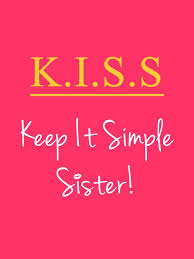
Oh brother! Life is so complicated. That’s why I make an effort to “Keep It Simple”! 🙂
From Each Day A New Beginning, by Karen
Casey, April 12:
“’Make
yourself a blessing to someone. Your kind smile or a pat on the back just might
pull someone back from the edge.’ ~Carmelia Elliott
We are healed
in our healing of others. God speaks to us through our words to others. Our own
well-being is enhanced each time we put someone else’s well-being first…We are
all on a trip, following different road maps, but to the same destination. I
will be ready to lend a helping hand to a troubled traveler today. It will
breathe new life into my own trip.”
Easter, 2020, seems to be ushering in a brave new world to us all. I remember hearing the term “globalization” about twenty years ago, and I wasn’t sure what it meant because I wasn’t experiencing it personally. Now, in the throes of a worldwide pandemic that I’m gratified I saw in my lifetime, I am experiencing what it means.
I’m glad
I’m living through this crisis because it is unveiling so many unsung heroes.
My confidence in the human race is soaring. My grandchildren getting
home-schooled by two loving parents tirelessly stepping up to the plate in a
game they never planned for. Health care workers risking their lives so that we
might live another day. Postal workers, baggers at the grocery stores; the list
is endless. But what I’m seeing as a result of all this courage is what Ann
Frank saw in that attic in Holland before she died: “In spite of everything, I
still believe people are really good at heart.”
It’s not
every day that our lives, and how we live them, are brought into such sharp
focus, from frequent hand washing to thinking twice before we hug someone. How
life has changed for us all! Now it is abundantly more clear to us how what we
do in our individual spaces has an impact on the community we live in, and in
neighboring communities and so on. I’ve learned a great deal about what happens
in a petri dish.
But of much
more interest to me now is how the health crisis has brought out the best in
millions of people around the world. There are also sad, angry stories of
corruption popping up like weeds in my garden. But I don’t focus on them any
more than I focus on anything else I can’t control. I am heartened by this
Easter’s celebration of humanity and hope in a time of fear and uncertainty.
And how creative we are! Drive-in movie theaters have become venues for church
services. And long after Easter Sunday this year there may be a revival of
drive-in movie watching!
“Revival…”
My Latin tells me that word means “live again.” Is that what we’re all doing
now? Learning how to live again?
From Each Day A New Beginning, by Karen Casey, December 1:
“’And it isn’t the thing you do,
dear, it’s the thing you leave undone which gives you a bit of a heartache at
the setting of the sun.’ ~Margaret Sangster”
A quality many of us share, a very
human quality, is to expect near perfection
from ourselves, to expect the impossible in all tasks done. I must rejoice for
the good I do. Each time I pat myself on the back for a job well done, my
confidence grows a little bit more. Recovery is best measured by my emotional
and spiritual health, expressed in my apparent confidence and trust in “the
process.” This is especially true now, in the middle of our national health
crisis, as we learn to put aside our egos, sometimes staying at home, in the
interest of protecting others.
Creeping perfectionism is a strange
form of self-sabotage. At first it seems like such a good and healthy attitude.
But setting realistic goals and doing my best to achieve them is very different
from placing unyielding demands on myself and feeling “less-than” if I fail to
meet them.
It all boils down to being honest
and knowing myself as I am, not as I think I should be. Knowing myself and
coming away liking myself—well, for many of us that’s a process that takes a
long time. Holding onto realistic aspirations can be a healthy thing. But
demanding perfection of myself and worse, punishing myself when I fall short,
is not healthy. It’s a bitter tyrant holding a whip at my back.
Strong language, yes. But not as strong as the sting of that whip on my back. I’m happy to be free of it. I love my recovery fellowship where I’m just one in a community of equals, where I can mess up and they love me anyway. I’ve grown up in the rooms all these years and I’ve learned to love myself, warts and all. This is where I found my humanity. I am truly blessed and happy to be alive, now more than ever as we join elbows 🙂 to strengthen our communities. Thank you, HP!
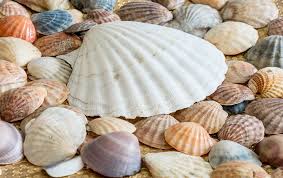
My
shell collection is extensive and surprisingly sturdy. I’ve dragged them around
with me from all my travels over the years. But I’ve run out of space to
display them. And I wonder why I’ve collected so many. What have they
represented to me? Maybe the assurance that something of me will be left
behind.
Ego.
Such a fundamental part of the human condition, the very thing that makes us
human, and separates us from God. It’s ego that keeps us struggling in our
relationships, ego that keeps us from accepting things as they are and feeling
content with what we have. Ego and our willfulness beneath it that traps us in
our restless search to outdo ourselves and others.
And
it’s ego that makes us want to leave an imprint in the sand.
All
human beings wrestle with ego, but substance users have found a solution that
elevates them from their soul sickness: losing themselves in substances and
behaviors that provide oblivion for a time. “We want what we want when we want
it.” That tired old phrase smacking of egocentricity and immaturity.
Substance users in their disease are all about themselves. In Alcoholic’s Anonymous, one definition of an alcoholic is an “egomaniac with low self-esteem.”
To
be “relieved of the bondage of self,” as the Third Step Prayer states in the
Big Book, I’m learning how to nurture a relationship with God and remember my
place in relation to him.
My
importance is next to nothing in the scheme of things. This keeps me
right-sized and humble.