Staying Out Of The Weeds

Before I went into recovery, I was pretty lost. On the outside, my life seemed to be rolling along well. But on the inside, I was insecure and sad. I dealt with these feelings in unhealthy ways, but didn’t feel much pressure to change them. I never missed a day of work, and I appeared to be fine. But appearances can be deceiving. Nothing had yet occurred to call my choices into question. Nothing had happened yet to push me out of my complacency.

But when my middle child fell victim to substance use disorder, after I had tried and failed over and over again to help her, I broke. The carefully manicured life I had been living was a treasured glass from my cupboard, smashed onto the kitchen floor. Many little shards, and some big ones. I cut my fingers cleaning it up.

My recovery fellowship comes with a philosophy that teaches me many different things. And one of those things is to forgive myself and others for the transgressions we inevitably commit in our lives. Our common humanity dovetails at every meeting I go to, where we encourage ourselves to face our defects, let them go, and move on.

For years, I held on to mine to punish myself for my part in Annie’s disease, and most importantly, for failing to “save” her. I have learned, gratefully, that my daughter suffers from substance use disorder, as do I, and I could no more save her from it than if she’d had diabetes. I simply don’t have that power.

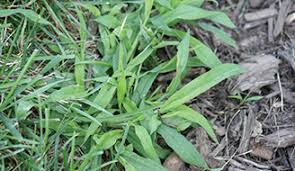
So I try to stay away from martyrdom and self-pity, because neither of those feelings will help Annie get well, and they hurt me a great deal. That’s where the weeds are. They muddy the waters; they keep me angry and sad. When I steer clear of them, it takes some of the sting out of losing my daughter. I can more easily open my heart to what remains in my life.

The miracle of my recovery is that, like a gentle breeze blowing away the clutter of remorse, my eyes can see my life through another lens now, one full of gratitude, humor and love. The fruits of my recovery rest on these three things.

“We forget that the depths teach us how to better appreciate the heights.”

Love Them Like It’s Your Last Day Together


At the end of the day, all that matters is love. All we have control over is how we share our love. And instead of counting our losses, at the end of the day, all that can never be taken away from us is our love.

In this month that celebrates all matters of the heart, I am happy to celebrate all the loved ones in my life—most especially my daughter Annie. She is lost to me at the moment, but I can still love her as totally and purely as when she came into the world forty-one years ago.

Parents struggle and wage a horrendous war against substance use disorder as we watch our children caught in the web of it. We experience so many conflicting feelings, from hush-hush shame to rage against all the pushers of the world. In my powerlessness and frustration I wanted to lash out against my loved one and tell her to “snap out of it!” Often we retreat to the seemingly safe harbors of enabling and protecting our children from the dire consequences of their drug-induced behavior. I’ve been to all those places and back again. At first I was so joined at the hip to Annie that I didn’t know where she ended and I began.

About a decade ago, I did find out. And I learned that I needed to detach and let her follow her own path. Nineteen years in recovery rooms have given me some important tools and guidance. In educating myself about substance use disorder, I learned that it is a brain disease. My daughter didn’t choose this life; she’s sick. When I accept this, I realize there is no room in my heart for a number of feelings that get in the way of my better self—judgment, resentment, fear and guilt. Those four feelings are destroyers of the peace and serenity we all deserve. None of us is perfect, but I can say with certainty that I did my best with what I had. Most of the parents I know are good, well-intentioned people. And many of them are drowning in the sadness of losing a child to this cruel disease. I understand them. Some days I felt so overwhelmed that I buried myself in grief. If I lived in a bubble, or on the moon, I could isolate myself, cover myself in a cloak of sadness and who would care?

But over time I have found myself empowered by something stronger than sorrow. There are other voices that I need to listen to. Many voices are my loved ones, but not all. When I forget to put out seeds, my Steller’s jay protests loudly. My deer family, bold and fearless, come right up to my deck. Sunrises slowly transform the Olympics into drizzling ice cream cones as I peer out of my window. Voiceless, maybe, but it’s a sight to behold.

Love is more powerful than any other emotion, and that is the only feeling I am left with, the only one I experience with Annie. In this way I know, though I’m human and have been through the gamut of all the above emotions, that I have done my best to reach my daughter. And whether or not I’ve been successful, I can rest easy knowing that she knows, if nothing else, that she is loved.

At the end of the day.

Other Voices Are Calling Me

Most of us have experienced the pain of substance use disorder, either directly or indirectly. It’s everywhere in our society, and addiction in all its forms has the power to take away our happiness and wellbeing. My daughter Annie has scrambled in and out of the rabbit hole for over nineteen years, and much of the time I was in it with her. But I’ve learned to let go of a disease and its ensuing consequences that I have no control over. Yes, let go.

Once the tears dried and I could open my eyes, I looked around to see what was left from all the chaos and devastation: a job I liked, flowers blooming, other family members, good health, enough money to be comfortable, friends who cared and didn’t judge me. The list went on. These little girls are my great joy, and if I didn’t have them I hope I could try to celebrate something else—anything else—in my life, even though some days the grief is overwhelming. Time passes too quickly, and before I know it, mine is up. Life is too precious to waste.

My years in the recovery rooms have taught me grace, and the courage to embrace all of my life—the good, the bad, and the ugly—as an expression of God’s will for me. I’m blessed to be part of a spiritual program that teaches me that painful lesson, despite my loss—or maybe, when I look at this picture, because of it.

The Benefits of Fellowship

From From Survival to Recovery, CAL, p. 19:

“Surrounded by other recovering people, we are learning how to heal our broken hearts and create healthy, productive, joyful lives…(our program) has led many of us to serenity, fellowship, and relief from loneliness and pain.”

Because of the stigma and shame surrounding substance use disorder, many of us have kept our loved one’s problem (or our own) shrouded in secrecy. I did most of my life, and only in recent years have I dared to share my family disease with the rest of the world. I realized that until I faced the dreaded subject and learned more about it, it would continue to rule me and my family.

“It” is substance use disorder and all of its effects and consequences. They are far-reaching, especially for the family of an addict. And they can become terribly complicated as we become enmeshed in the lives of those we love. Being in the rooms of recovery has helped me untangle the mess.

That’s why a number of programs have been so valuable to many of us who suffer. We break out of our isolation and share our stories with others like us. We gain valuable perspective by listening to others. Our self-esteem soars as we see others listening to us and validating our experiences. We are offered compassion and understanding inside the rooms when it may be hard to find either of those things on the outside.

And we begin our journey toward getting our lives back—when once they seemed to be lost.

Two-Stepping The Twelve-Step

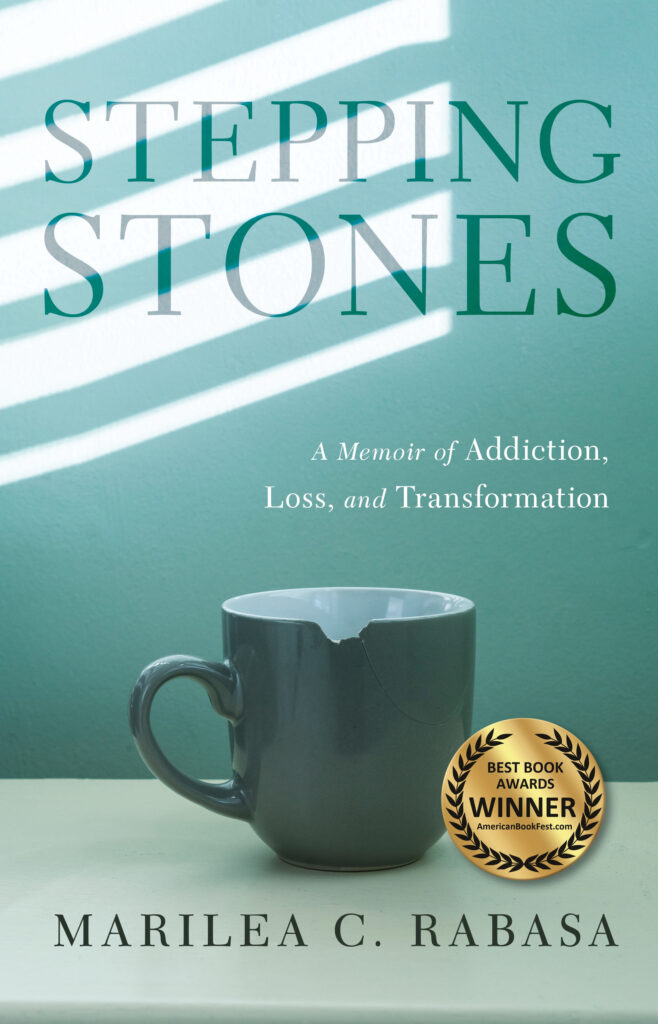
Excerpted from my memoir, Stepping Stones: A Memoir of Addiction, Loss, and Transformation:

 “’Marilea, why don’t you try a recovery meeting?’ my counselor gently advised me. She had heard me week after week moan about Annie turning into a monster I didn’t recognize anymore. It was terrifying; sleep eluded me.

‘Oh no, that’s not for me,’ I responded, echoing my mother from thirty years before when my sister tried to get her to do the same thing.

‘Well, I think it will help you to be around people going through the same thing.’

Thinking about it for a few weeks, though, I took her advice and started going to a meeting on Saturday mornings. Gene also felt it was a good idea.

And so began a long period of faithfully going to several twelve-step meetings, but essentially paying lip service much of the time, particularly to the first three steps, because I was nothing if not the biggest control freak around.

Step One: Admit my powerlessness? Never! I brought her into the world. It was my job to protect and save her.

Step Two: Believe that God could restore me to sanity? What’s insane about trying to save my child?

Step Three: Turn my will over to God? No way! I had to stay in control.

As a child, I took care of my own needs. I’d asked for company, hollered for attention, hoped for forgiveness, but was often ignored. So I became compulsively self-reliant: CSR, I humorously say at meetings. And much of that self-reliance, attempting to appear competent, looked like arrogance.

It took me a long time before I found the humility to get a sponsor. Part of me didn’t want to ask for help; an even bigger part thought I didn’t need help.It was Annie, I argued, who needed help.

Humility, I discovered, was a tremendous leveler, and it would bring me closer to what I’d been missing my whole life: being part of a community of equals.

But without being honest with myself and others, I remained isolated on the outside, looking in.”

The Domino Effect

From Each Day a New Beginning, Conference Approved Literature, May 22:

“’The change of one simple behavior can change other behaviors and thus change many things.’ ~Jean Baer

Our behavior tells others, and ourselves, who we are. Frequently, we find ourselves behaving in ways that keep us stuck. Or we may feel deep shame for our behavior in a certain instance. Our behavior will never totally please us. But deciding we want to change some behavior and using the program to help us, is a first step.”

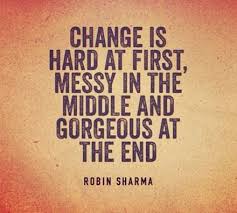
Change is hard. The older we get, perhaps, the harder it gets. Our years—our habits—can trap us. I’ve been trapped by my own worst defects: “I’m gonna be fine;” “I can handle it on my own;” “I don’t need any help, thank you very much.”

Trying to figure out the why’s of things over the years didn’t help me. That question just kept me stuck. And it kept me from taking responsibility for my own problems. So the suffering continued. Until I learned how to put out fires.

When I’m in the middle of a fire in the woods, I don’t wonder who started it. If I am to survive, I just need to learn how to douse it.

I’ve been challenged by depression for much of my life, but nothing could have prepared me for losing my daughter Annie to the living death of heroin addiction. That was the major conflagration in my life, and I wasn’t fighting it effectively. I made it so much about me and my misplaced guilt that I often used poor judgment in an effort to help her. When I saw that nothing was working, I felt broken. And at my bottom, that’s when I found the courage to change.

Letting go of my feverish attempts to motivate Annie to seek recovery, and my wish to control events, freed me of the painful circumstances that were claiming my peace of mind. Letting go—so counterintuitive when it’s your child—was one of the first steps I needed to take—and accept what I could not change. That was the hardest: knowing that I had no power to change her. But I did and do have the power to change myself, my reactions, and my attitudes.

At some point along the way, we might find ourselves in a fire we need to put out. I learned that I needed to change before I could be truly happy with my life. I needed to pay attention to what was happening in my own hula hoop. Looking outside of myself for answers only distracted me; it did not help me put out the fire.

“One small change today, a smile at the first person I meet, will help me chart a new course.”

All I Want For Christmas…

 ‘Tis the season…yes, it’s the time of giving and thinking of others.

I think of my daughter often and even more so during the holiday season when she is so missed in our family. But I have learned over the years that the best gift I can give her is the gift of detachment with love. One of the hardest ways we can love our children struggling with substance use disorder is to let go and encourage them to choose recovery. This is something we cannot do for them.

We can pay their rent, buy them a car—in short, we can make their lives comfortable. But is it always wise to support them financially? I know that every case is different, especially when grandchildren are part of the picture—and my heart goes out to you grandmothers, who deserve a special place in Heaven. But in my case, my generosity prevented my daughter from taking more responsibility for herself.

So I’ve learned the hard way to let her face the consequences of her choices. It’s the hardest thing…to remove the safety net we want to put under our children. It’s the hardest thing… to watch them flounder in the grips of this cruel disease.

So all I want for Christmas is the serenity to remember that I don’t have the power to save Annie. All I can do is love her. She was raised in a loving family for twenty-one years before she turned to harmful solutions to deal with her life. Wherever she is and whatever she’s doing, I know she knows this.

Two-Stepping The Twelve-Step

Memoir Excerpt from Stepping Stones: A Memoir of Addiction, Loss, and Transformation:

 “’Marilea, why don’t you try a recovery meeting?’ my counselor gently advised me. She had heard me week after week moan about Annie turning into a monster I didn’t recognize anymore. It was terrifying; sleep eluded me.

‘Oh no, that’s not for me,’ I responded, echoing my mother from thirty years before when my sister tried to get her to do the same thing.

‘Well, I think it will help you to be around people going through the same thing.’

Thinking about it for a few weeks, though, I took her advice and started going to a meeting on Saturday mornings. Gene also felt it was a good idea.

And so began a long period of faithfully going to several twelve-step meetings, but essentially paying lip service much of the time, particularly to the first three steps, because I was nothing if not the biggest control freak around.

Step One: Admit my powerlessness? Never! I brought her into the world. It was my job to protect and save her.

Step Two: Believe that God could restore me to sanity? What’s insane about trying to save my child?

Step Three: Turn my will over to God? No way! I had to stay in control.

As a child, I took care of my own needs. I’d asked for company, hollered for attention, hoped for forgiveness, but was often ignored. So I became compulsively self-reliant: CSR, I humorously say at meetings. And much of that self-reliance, attempting to appear competent, looked like arrogance.

It took me a long time before I found the humility to get a sponsor. Part of me didn’t want to ask for help; an even bigger part thought I didn’t need help. It was Annie, I argued, who needed help.

Humility, I discovered, was a tremendous leveler, and it would bring me closer to what I’d been missing my whole life: being part of a community of equals.

But without being honest with myself and others, I remained isolated on the outside, looking in.”

The Gift Of Life

From Each Day A New Beginning, Conference Approved Literature, November 7:

“’…we will be victorious if we have not forgotten how to learn.’ ~Rosa Luxemburg

For most of us the struggle was long, painful and lonely to the place we are now. But survive we have, and survive we will. The times we thought we could go no further are only dimly recalled…Step by Step, we are learning to handle our problems, build relationships based on honesty, and choose responsible behavior.”

Probably the most important factor in my recovery is the ability to remain teachable. We can become set in our ways, “you can’t teach an old dog…,” and older people sometimes can be resistant to change. This is all fine for those of us who have a life without serious challenges.

And then there are the rest of us.

My years in recovery have, out of necessity, showed me how to open my mind and heart in an effort to be forever teachable, to be always willing to learn the lessons that life puts before me. Without such flexibility and the willingness to view things differently, to let go of ideas and patterns that were bad for me, I would still be stuck in a life that was fundamentally unhappy. I say “fundamentally” because on the outside many things looked good. But on the inside, I was screaming.

Eighteen years ago, I entered the rooms of recovery out of a desperate desire to save my daughter. But after years of trying, I ultimately couldn’t provide her with the magic bullet to free her of her substance use disorder. That magic bullet doesn’t exist. My daughter has and always has had the power to recover. That’s one of the many things I learned in the rooms. And, over time, as I learned to turn the mirror back on myself, I have learned to face a number of things that were getting in the way of my own capacity to live well.

What I’ve learned was that life is a gift, and nowhere has that been made clearer to me than by watching my loved one throwing it away. My first instinct, of course, was to put myself between Annie and her bad choices. But that only made me sick and forced me into early retirement. That was my bottom.

Well, at the bottom I had two choices: either stay there—or lift myself up. I’m happy that I chose to keep on living. There are other people in my life who rely on me, other ways I can try to be of service. I’m not the first adult child out there, not the first parent to lose a child to this cruel disease. There are millions of us out there, a vast community of equals reaching out to help one another. And we do, right here sharing with one another, a daily reminder that we are not alone.

Keeping An Open Mind

From Each Day A New Beginning, September 13:

“’Nobody told me how hard and lonely change is’ ~Joan Gilbertson

…Honest self-appraisal may well call for change, a change in attitude perhaps, a change in specific behavior in some instances, or maybe a change in direction…(But) We find some comfort in our pain because at least it holds no surprises…Courage to change accompanies faith. My fears are telling me to look within to the spiritual source of strength, ever present but often forgotten.”

When I joined my recovery fellowship, my focus was firmly on my daughter. She had a life-threatening disorder, and I wanted to help her. So I helped. And I helped. And I helped…I had the best of intentions, but I needed to step back and reflect upon what, besides protecting her, was motivating me. My fear was getting in the way.

I needed to get help so that I could manage the situation better. It took me a long time to realize and accept that I was making a bad situation much worse. And this was happening because of my own unrecognized problems. Once I saw them and how they affected, not just my relationship with Annie, but with other important people, I found the willingness to work on myself and improve my relationships with others.

One day at a time, I’m still trying. I’m far from perfect, but I’m trying to be my best self. At the end of the day, that’s the only self I can control.