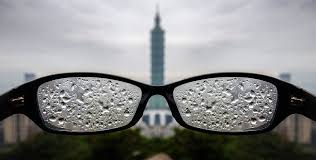
“The longer I live, the more I realize the impact of attitude on life. Attitude, to me, is more important than facts. It is more I important than the past, than money, than circumstances, than failures, than success. The remarkable thing is we have a choice every day…We cannot change the past…we cannot change the fact that people will act in a certain way…Life is 10% what happens to me and 90% how I react to it.” ~Charles Swindoll
I joined Al-Anon to help my daughter with her substance use issues. But I ended up helping myself so much more. It wasn’t my intention, but I’ve grown a lot in my efforts to heal from a lifetime of living around people with substance use disorder, including myself.
Growing up around alcoholism, and surrounded by a plethora of negative attitudes, I’ve had to unlearn those scripts and rewrite them, as though I were reparenting myself. It is certainly true that our attitude can move mountains…or level them.
I have had a difficult situation with my daughter for years. Early on I was either in denial or hardened in my grief at the loss of Annie. But if I try to keep a healthy perspective on it, if I don’t obsess about it, it won’t control me. I try to keep my heart open to the gifts of this program. Therein lies my happiness. And so, one day at a time, I try to keep a positive attitude, keeping the focus on myself, with gratitude and joy in all I have.
This is a miraculous program that “works if I work it.”
“One weekend before we left the country, telling Angel he was on his own with the kids, I drove East to be by the sea. In Ocean City, I got a cheap hotel room, a cheap bottle of vodka, and spent my time numbing myself. Instead of walking on the beach at the ocean I love so well, instead of grabbing a bag and adding more souvenirs to my beautiful collection, I lay on my bed, drank vodka straight out of the bottle, and passed out.
I might as well have stayed in a cheap motel near my own house.
In a fog most of the time, eating junk food from the boardwalk, I ran away from my life. I left my “shell” for the weekend, ventured off by myself, as empty coming out of a bottle as I was going into it.
I learned nothing, gained nothing from escaping for a few days other than missing my children terribly. I was still as hollow as the bleached whelks waiting to be snatched up by grateful collectors.
I would discover, many years down the road, the sneaky and devastating nature of addictive disease: how it stalks you, dupes you into thinking you’re okay “if it’s just once in a while.” It’s like any virus: it needs a host to take root. And grow.
To flourish. And continue.
Addiction, like any cancer, wants to survive. It filled my empty shell, opportunistic disease that it is, with false-confidence, false promises, false hopes.
Maybe I’ll be happier in Greece…”
Excerpted from my recently released, award-winning memoir, Stepping Stones: A Memoir of Addiction, Loss, and Transformation
For twenty-five dollars my mother bought a beautiful baby grand piano in the mid- 1950s, and my siblings and I took piano lessons. I forget when my brother and sister stopped their lessons, but I kept at it for quite a few years.
My own children took piano lessons on that same piano, but eventually lost interest, just as I did.
Somehow I kept two songs in my fingers for many decades. Edward McDowell’s “Scotch Poem” and “Improvisation and Melody”. What was I holding onto?
Then, out of sheer neglect, not oiling the wood at all, the baby grand quite literally fell apart when I tried to move it.
Maybe that was my Higher Power’s way of telling me to let go of those two songs.
The following is an excerpt from my new memoir, Stepping Stones.
“…Her first year of living independently seemed uneventful at first. Frequently visiting her in the apartment she shared, I took her furniture from her old bedroom so she would feel at home in her new digs. But there were signs that she was changing. She had never had many boyfriends in high school. Then one Sunday morning I arrived to find a friend of hers on the sofa, clearly feeling at home. Later I learned he was a bartender at a watering hole and drug hotspot in Adams Morgan. Well, she was on her own. And by now she was twenty-one; I felt I didn’t have much leverage.
In the spring, though two courses short of her graduation requirements at George Mason University, Annie was allowed to walk with her class, cap and gown and all.
Angel, his wife and I all dressed up for our second child’s college graduation in the spring of 2001, and we all viewed this ceremony as a symbol of hope that Annie was willing and anxious to embrace her adulthood and take on more responsibilities, like other young people.
“Hey, Mom, I want you to meet my friend Shelly. She got me through statistics sophomore year.”
“Hi, Shelly, nice to meet you. Thanks for helping Annie. Is your family here
today?”
“No. They had to work. No big deal for them anyway.”
“Oh. Well I think it’s a big deal, so congratulations from me! It was nice to meet you, Shelly, and good luck.”
Annie’s graduation distracted us from being curious about what she was doing in the evenings. Again, she went to a lot of trouble to cover up behavior that she knew would alarm us and might threaten an intervention.
Just like her mother.
At the end of the summer, she asked if she could move into my basement. Her roommate was buying a condo, she said, and their lease was up anyway. Later on, when I watched in horror as the tragedy unfolded in my own house, I wondered about the truth of that. I thought maybe the roommate saw where Annie was going and asked her to leave. No matter. She was in my house now. The circle was about to close.
Then a shocking discovery—a bowl of homemade methamphetamine on top of my dryer! I had been wondering about the stuff she’d left in my basement laundry room. I read the label: muriatic acid. I looked it up on my computer. So that’s what she used it for!
I moved the bowl up to the kitchen and put it next to the sink, where recessed lighting bore down on it. She couldn’t miss it when she came in the front door. I thought I’d be ready for the confrontation.
At 4:30 in the morning, she exploded into my bedroom while Gene and I were sleeping. I’m glad he was with me that night.
“How dare you mess with my things downstairs! Don’t you ever touch my stuff again, you fucking bitch!” she roared. I thought I was dreaming when I saw her there, animal-like, with wild, blood-shot eyes.
Gene held onto me as I sobbed into my pillow. “Oh God, this isn’t happening, Gene, please tell me this isn’t happening!”
A half hour later, pulling myself together, I went downstairs to make coffee. I still had to go to work.
Annie stomped upstairs from the basement with a garbage bag full of her clothes and brushed by me without a word or a look. After she slammed the door behind her, I ran to the kitchen window and saw her get into her car.
My daughter went from crystal meth, to cocaine, to heroin, as though it were a smorgasbord of terrible choices. Despite four rehabs and family love, her addictive disease continued. There were periods of remission, but they were short-lived. My daughter lived in one pigsty after another, her boyfriends all drug addicts. I would spend a decade trying to reconcile two feelings: complete hatred for the stranger who was living in my daughter’s body and total surrender to my love for her.
Because of our superficial differences, I didn’t realize right away how alike we were.
We’ve both suffered from depression since we were young. The adults in our lives didn’t always acknowledge our screams. We turned to substance abuse for relief: food, cigarettes, and drugs. I added alcohol to my list, but I’m not aware that she ever drank alcoholically. My daughter moved on to heroin.
At least I cleaned up well.
Though Annie was no longer living with me at that point, I tried to continue embracing her, accepting her, so she’d know she was still loved. But I couldn’t yet distinguish between helping and enabling.
I did unwise, misguided, things: I gave her money; I paid her debts; I shielded her from jail when she broke the law.
“Are you sure you don’t want us to contact the authorities about this, Mrs. Rabasa?” the rep asked me when she stole my identity to get a credit card.
“Oh no,” terrified of her going to jail, “I’ll handle it.”
And I did, badly.
This was enabling at its worst. Convinced her addiction came from me, that guilt crippled me and my judgment.
Placing a safety net beneath her only served to ease my anxiety. It did nothing to teach her the consequences of her behavior. I kept getting in her way.
It felt like I was in the twilight zone whenever I visited her. My daughter was buried somewhere deep inside, but the addict was in charge. One body, split down the middle: my daughter, Annalise; and a hard-core drug addict. A surreal nightmare.
Her apartment smelled of incense and dirty laundry. The soles of her shoes flopped until she could get some duct tape around them. She didn’t offer me anything to eat because there was no food in the refrigerator.
Nothing.
Twice while I was there she ran to the bathroom to vomit.
Heroin. Dope sick.
Annie was hijacked by a cruel disease—cruel because it robs you of yourself while you’re still alive. While destroying your mind, it keeps your body alive long enough to do a lot of damage before it actually kills you. For many drug addicts, it’s an agonizingly slow death.
It was like looking at a movie of my life in reverse, erasing all the good fortune that brought me to where I was, leaving only the pain and ugliness—and hopelessness—of a wasted life. How I might have ended up.
For better or worse, my life had been unfolding as many do with addictive personalities. But to see the same disease taking over the life of my child—to see that mirror up close in front of me—was threatening to be my undoing.
Trying to hold it together, I was imploding. Like all addicts and families of addicts, survival can be reached from many places, but often from the bottom.
“’Marilea, why don’t you try a recovery meeting?’ my counselor gently advised me. She had heard me week after week moan about Annie turning into a monster I didn’t recognize anymore. It was terrifying; sleep eluded me.
‘Oh no, that’s not for me,’ I responded, echoing my mother from thirty years before when my sister tried to get her to do the same thing.
‘Well, I think it will help you to be around people going through the same thing.’
Thinking about it for a few weeks, though, I took her advice and started going to a meeting on Saturday mornings. Gene also felt it was a good idea.
And so began a long period of faithfully going to several twelve-step meetings, but essentially paying lip service much of the time, particularly to the first three steps, because I was nothing if not the biggest control freak around.
Step One: Admit my powerlessness? Never! I brought her into the world. It was my job to protect and save her.
Step Two: Believe that God could restore me to sanity? What’s insane about trying to save my child?
Step Three: Turn my will over to God? No way! I had to stay in control.
As a child, I took care of my own needs. I’d asked for company, hollered for attention, hoped for forgiveness, but was often ignored. So I became compulsively self-reliant: CSR, I humorously say at meetings. And much of that self-reliance, attempting to appear competent, looked like arrogance.
It took me a long time before I found the humility to get a sponsor. Part of me didn’t want to ask for help; an even bigger part thought I didn’t need help. It was Annie, I argued, who needed help.
Humility, I discovered, was a tremendous leveler, and it would bring me closer to what I’d been missing my whole life: being part of a community of equals.
But without being honest with myself and others, I remained isolated on the outside, looking in.”
Excerpted from my recently released and award-winning memoir, Stepping Stones: A Memoir of Addiction, Loss, and Transformation.
The following is an excerpt from my new memoir, Stepping Stones: A Memoir of Addiction, Loss, and Transformation.
“Gene had retired from teaching within a year of my retirement, and we opted for a change of scenery. I did the groundwork, and one weekend we flew to New Mexico to buy a little house between Albuquerque and Santa Fe. We pooled our resources, pitching in together all we had. Gene and some friends cleared the back quarter acre of sagebrush, and he bought a dozen fruit trees to start an orchard. Over the years, he’s planted and nurtured a total of fifty trees—Rainier cherries, Saturn peaches, Challengers, Shiro plums, apricots, and many kinds of apples. One year we had so many peaches we had to give them away. It was grueling work but gratifying as we watched the blossoms turn into fruit.
Throwing myself into full-time recovery in New Mexico, I began the process of new growth in myself, attending one or two recovery meetings a day. That became my full-time job, embracing a spiritual way of life. But it’s come with a steep learning curve.
In Virginia, when I first started going to meetings, the guidelines of the program were hard for me to follow. I felt responsible for what was happening to Annie (Angie) and couldn’t let go of my need to save her, unwilling to admit my powerlessness. Doing so seemed counterintuitive to me.
Late in 2002, after we had sent her to her first rehab, she did well for a little while. I remember saying this at a recovery meeting:
“I have no doubt that my daughter’s progress parallels my own.” The people at the meeting just nodded, recognizing that was where I needed to be in that moment.
Still attached to my daughter with no understanding of the concepts of detachment and letting go, I thought I held all the cards—the magic bullet to her recovery. I desperately needed to believe that.
In time, though, I accepted that addiction is a brain disease—still a matter of much controversy in this country—and not a moral failing. Annie (Angie) was sick. I had no more power over her illness than if she’d had diabetes or cancer.
Through trial and error, following the road map that had helped many addicts and families of addicts since the 1950s, I learned to let go of the things no longer in my control…And I needed to get on with my life.”
From Living Sober, AA World Services, Inc., p. 49:
“Many of us, when drinking, were deeply sure for years that our own drinking was harmless. We were not necessarily smart-alecky about it, but when we heard a clergyman, a psychiatrist, or an A.A. member talk about alcoholism, we were quick to observe that our drinking was different, that we did not need to do any of the things those people suggested. Or even if we could admit that we were having a bit of trouble with our drinking, we were sure we could lick it on our own. Thus we shut the door against new information and help. And behind that door, our drinking went on, of course.
Our troubles had to be pretty dire, and we had to begin to feel pretty hopeless before we could open up a little bit and let in some fresh light and help.”
Not all of us reach the same bottom, of course, before we decide not to drink. For many, it’s that first (or third) DUI. It could be lost employment for others. I’ve seen a couple of people with late-stage alcoholism awaiting liver transplants. Hopefully more and more alcoholics will decide to quit long before that happens.
My bottom cut me to the core and maybe that’s why I haven’t wanted to drink since. My son and his wife had an intervention with me. They called me out on my habit of drinking alone in their basement, something that I thought I was getting away with. Didn’t I think they’d notice all the empty vodka bottles? That and the fact that I was being secretive about it were red flags. Shame and secrecy all play into the denial that enables us to keep up bad habits.
I was stunned and deeply ashamed. And only because I’d had many years of work in another 12-Step group did I have enough recovery to stay in my chair and listen to their concerns. They were concerned about their children, my grandchildren, and the danger of drinking and driving. But most of all they were concerned about me, keeping me safe and alive long enough to enjoy watching them grow up.
I am so grateful to my son for stepping in. He saved my life. My own father was just a couple years older than I am when he died prematurely from alcoholism and smoking. History does not have to repeat itself.
When my children were young, I was not always emotionally present for them. To feel my son’s forgiveness now and to see his concern for my welfare is incredibly gratifying to me. I’ve been given a second chance and I want to take advantage of it. How many people get do-overs like that?
“Addiction is like a chain reaction. It
is a disease which affects the addict as well as the family members, friends
and co-workers. We try to control, cover up, and take on the responsibilities
of the addict. The sickness spreads to those of us who care the most.
Eventually, we begin to feel used and unhappy. We worry, lose trust and become
angry. The addict blames us and we feel guilty. If only something or someone
would change!
When we discover Nar-Anon, we find others
with the same feelings and problems. We learn we cannot control the addict or
change him. We have become so addicted to the addict that it is difficult to
shift the focus back to ourselves. We find that we must let go and turn to
faith in a Higher Power. By working the steps, following the traditions and
using the tools of the program, we begin, with the love and help of our Higher
Power and others, to change ourselves.
As we reach out for help, we become ready
to reach out a helping hand and heart to those in need of Nar-Anon. We
understand. We do recover. Slowly, new persons emerge. Change is taking place.”
Though I have changed and grown through
my work in the program, I. of course, still love my daughter and am available
to help her if she reaches out to me for help. Detachment is not desertion. The
difference is that I’m a healthier person now and am able to make the tough
choices I couldn’t make years ago. I pray she finds the strength to come back
to her family. We can’t get back the lost years, but I still have hope, like
the warm sun shining on my face, and keeping my love strong.
Love and hope in the time of coronavirus.
If “addiction is a chain reaction,” moving through our society like a massive nimbus
cloud of loneliness and despair, then kindness and good will can also be a
chain reaction, propelling people to examine their lives and make necessary
changes. There was never an easier time to do this, when all these weeks of
enforced reflection carry the potential for change in all of us. In the Chinese
language, the word “crisis” has two characters: one for danger and the other
for opportunity.
This is humanity’s opportunity to move forward stronger and more effectively than ever before.
“When it is dark enough, you can see the stars.” ~Charles A. Beard
Twenty
years ago, my talented Vietnamese student cut out most of the letters for this poem
I wrote and he fashioned it into the shape of a tree:
The Christmas tree is a sight to
see,
All decorated up ornamentally.
The bulbs all colored, the lights
all bright,
I love to watch it late at night.
The gathering of gifts and family
I see
As a child of five in my memory.
And now the gifts have come back
to me,
Hanging here on this Christmas
tree.
There
aren’t enough branches on the tree for all the gifts in my life. How about you?
I haven’t forgotten about the daughter I miss. But I’m happier when I count my
blessings. Happy Holidays to all my dear friends!
The miracles of recovery just keep flooding into my life, like a welcome storm after a long dry spell. The world around me, and the people in it, remain the same in many ways. The world still turns. But I’m not the same. My perceptions are different, and I see people and events through a different lens.
I used to
feel intimidated and defensive around my husband’s family. But we recently had
a wonderful visit together. I enjoyed their company thoroughly. It is with
great relief that I realize the problem was never with them; it was with me.
And to be able to own that now, and move on comfortably, is but one of the
gifts of my growth in recovery.
I’ve heard
it said that ours is a disease of relationships, and I agree. How substance use
disorder of all forms tears through relationships—mother and child, husband and
wife, father and son—and gets in the way of healthy communication. The twelve
steps of recovery, when practiced diligently, offer so much hope for change.
And that change is reflected in how we relate to those around us. Not every day
and not completely. But it’s progress I’m making, not perfection I’m seeking.
The willingness to grow along spiritual lines is enough for me. And it brings
me closer to the peace and serenity I strive for.