Our Human Fellowship

From Each Day A New Beginning, April 10:

“’Even though I can’t solve your problems, I will be there as your sounding board whenever you need me.’ ~Sandra K. Lamberson

Our emotional well-being is enhanced each time we share ourselves—our stories or our attentive ears. We need to be part of someone else’s pain and growth in order to make use of the pain that we have grown beyond. Pain has its purpose in our lives. And in the lives of our friends, too. It’s our connection to one another, the bridge that closes the gap.”

Never in my lifetime have words and phrases meant more to me than “connection,” “bridge,” and “closes the gap.” We are all living through an extraordinary time where the viral pandemic has halted life as we know it. Of necessity, many of our routines have stopped. From my small world of one to the world at large, nothing will ever be the same again. This is a time when our physical health and wellness are uncertain; it’s a time when the world is being engulfed by an invisible threat which to some extent is out of our control. We’re doing our best to slow the progression of the disease. Mitigation, social distancing. We are being tested.

I, for one, am enjoying yet another opportunity to look within and put things into a larger perspective. And things will be different after this. I can’t see into the future, and everyone’s world will change in different ways. But my world already involves more appreciation for the finer things in life: things like kindness, consideration and thoughtfulness, generosity of spirit and time, and human connectedness. Just remember how Zoom crashed recently while Americans across the country were anxiously trying to visually connect with one another. This intense appreciation for those things will inform my choices on how to live, what to do with my time. This is a good thing.

We are interconnected and interdependent. We may not be able to connect hands right now, but we can connect our hearts and minds as we all strive to figure things out, learn some important lessons, and determine to make our planet stronger for the next generation to enjoy and pass on. The world belongs to my grandchildren and their children. God keep me strong to leave them something beautiful and resilient, reflecting the best in us all.
Good Vibes

From the blue Nar-Anon pamphlet:

Changing Ourselves

“Addiction is like a chain reaction. It is a disease which affects the addict as well as the family members, friends and co-workers. We try to control, cover up, and take on the responsibilities of the addict. The sickness spreads to those of us who care the most. Eventually, we begin to feel used and unhappy. We worry, lose trust and become angry. The addict blames us and we feel guilty. If only something or someone would change!

When we discover Nar-Anon, we find others with the same feelings and problems. We learn we cannot control the addict or change him. We have become so addicted to the addict that it is difficult to shift the focus back to ourselves. We find that we must let go and turn to faith in a Higher Power. By working the steps, following the traditions and using the tools of the program, we begin, with the love and help of our Higher Power and others, to change ourselves.

As we reach out for help, we become ready to reach out a helping hand and heart to those in need of Nar-Anon. We understand. We do recover. Slowly, new persons emerge. Change is taking place.”

Though I have changed and grown through my work in the program, I. of course, still love my daughter and am available to help her if she reaches out to me for help. Detachment is not desertion. The difference is that I’m a healthier person now and am able to make the tough choices I couldn’t make years ago. I pray she finds the strength to come back to her family. We can’t get back the lost years, but I still have hope, like the warm sun shining on my face, and keeping my love strong.

Love and hope in the time of coronavirus. If “addiction is a chain reaction,” moving through our society like a massive nimbus cloud of loneliness and despair, then kindness and good will can also be a chain reaction, propelling people to examine their lives and make necessary changes. There was never an easier time to do this, when all these weeks of enforced reflection carry the potential for change in all of us. In the Chinese language, the word “crisis” has two characters: one for danger and the other for opportunity.

This is humanity’s opportunity to move forward stronger and more effectively than ever before.

“When it is dark enough, you can see the stars.” ~Charles A. Beard

A Brave New World

From Each Day A New Beginning, by Karen Casey, April 12:

“’Make yourself a blessing to someone. Your kind smile or a pat on the back just might pull someone back from the edge.’ ~Carmelia Elliott

We are healed in our healing of others. God speaks to us through our words to others. Our own well-being is enhanced each time we put someone else’s well-being first…We are all on a trip, following different road maps, but to the same destination. I will be ready to lend a helping hand to a troubled traveler today. It will breathe new life into my own trip.”

Easter, 2020, seems to be ushering in a brave new world to us all. I remember hearing the term “globalization” about twenty years ago, and I wasn’t sure what it meant because I wasn’t experiencing it personally. Now, in the throes of a worldwide pandemic that I’m gratified I saw in my lifetime, I am experiencing what it means.

I’m glad I’m living through this crisis because it is unveiling so many unsung heroes. My confidence in the human race is soaring. My grandchildren getting home-schooled by two loving parents tirelessly stepping up to the plate in a game they never planned for. Health care workers risking their lives so that we might live another day. Postal workers, baggers at the grocery stores; the list is endless. But what I’m seeing as a result of all this courage is what Ann Frank saw in that attic in Holland before she died: “In spite of everything, I still believe people are really good at heart.”

It’s not every day that our lives, and how we live them, are brought into such sharp focus, from frequent hand washing to thinking twice before we hug someone. How life has changed for us all! Now it is abundantly more clear to us how what we do in our individual spaces has an impact on the community we live in, and in neighboring communities and so on. I’ve learned a great deal about what happens in a petri dish.

But of much more interest to me now is how the health crisis has brought out the best in millions of people around the world. There are also sad, angry stories of corruption popping up like weeds in my garden. But I don’t focus on them any more than I focus on anything else I can’t control. I am heartened by this Easter’s celebration of humanity and hope in a time of fear and uncertainty. And how creative we are! Drive-in movie theaters have become venues for church services. And long after Easter Sunday this year there may be a revival of drive-in movie watching!

“Revival…” My Latin tells me that word means “live again.” Is that what we’re all doing now? Learning how to live again?

We’re Good Enough

From Each Day A New Beginning, by Karen Casey, December 1:

“’And it isn’t the thing you do, dear, it’s the thing you leave undone which gives you a bit of a heartache at the setting of the sun.’ ~Margaret Sangster”

A quality many of us share, a very human quality, is to expect  near perfection from ourselves, to expect the impossible in all tasks done. I must rejoice for the good I do. Each time I pat myself on the back for a job well done, my confidence grows a little bit more. Recovery is best measured by my emotional and spiritual health, expressed in my apparent confidence and trust in “the process.” This is especially true now, in the middle of our national health crisis, as we learn to put aside our egos, sometimes staying at home, in the interest of protecting others.

Creeping perfectionism is a strange form of self-sabotage. At first it seems like such a good and healthy attitude. But setting realistic goals and doing my best to achieve them is very different from placing unyielding demands on myself and feeling “less-than” if I fail to meet them.

It all boils down to being honest and knowing myself as I am, not as I think I should be. Knowing myself and coming away liking myself—well, for many of us that’s a process that takes a long time. Holding onto realistic aspirations can be a healthy thing. But demanding perfection of myself and worse, punishing myself when I fall short, is not healthy. It’s a bitter tyrant holding a whip at my back.

Strong language, yes. But not as strong as the sting of that whip on my back. I’m happy to be free of it. I love my recovery fellowship where I’m just one in a community of equals, where I can mess up and they love me anyway. I’ve grown up in the rooms all these years and I’ve learned to love myself, warts and all. This is where I found my humanity. I am truly blessed and happy to be alive, now more than ever as we join elbows 🙂 to strengthen our communities. Thank you, HP!

The Spirit Within

“The world cannot be discovered by a journey of miles…only by a spiritual journey…by which we arrive at the ground at our feet, and learn to be at home.” ~Wendell Berry

Without the gift of spirit in my life, I would be drifting on an island in the middle of the ocean. Spirit can be anything we want it to be: some people say God, or Higher Power; others focus on a statue or a tree in the garden. It doesn’t matter. What’s important is that it’s not US. “My best thinking got me here.” (into the rooms of recovery)

Here’s another acronym: EGO=Easing God Out.

That floating island in the middle of the ocean can be a dangerous vessel without a steering wheel. Maybe not dangerous; just completely self-reliant and without guidance.

Self-reliance was something I learned as a child because I had to. The adults in  my life were often distracted with their own problems, so I learned to do things by myself. This was a vital survival strategy when I was a child. But as an adult, it became a huge defect.

As an adult, I’ve too often carried that survival tool into situations in my life that required outside guidance. Too proud sometimes, or afraid, to ask for help or advice, I steered my ship into some dangerous waters. Like everyone else, I’ve made mistakes, and some of them were preventable if I’d had the humility to ask for help.

So, again like everyone else, I’m just a child of (God, a tree, the stars), and I’m growing every day, learning (hopefully) from my mistakes and trying to do better. Humility is a great leveler, and it has brought me closer to the one thing I’ve missed all my life: being part of a community of equals. When I’m in touch with the spirit within me, I’m no longer alone or isolated. I’m at one within my fellowship—and it feels good to be alive.

The Benefits Of Self-Reflection

When I go to bed at night I ask myself, “Did I do the best I could today?” Sometimes my answer is “yes” and sometimes it’s “no.”

I read somewhere that a life without regret is a life without reflection. So if I’m able to think about my actions—sometimes with regret and sometimes with pride—then I feel that my awareness in itself can be a source of strength. It points the way for me to change when it’s necessary. And it boosts my self-confidence when I can recognize—and give myself credit for— a day well lived.

Attitude Is Everything

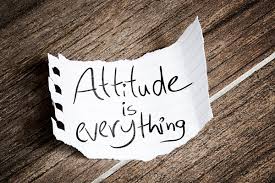
The miracles of recovery just keep flooding into my life, like a welcome storm after a long dry spell. The world around me, and the people in it, remain the same in many ways. The world still turns. But I’m not the same. My perceptions are different, and I see people and events through a different lens.

I used to feel intimidated and defensive around my husband’s family. But we recently had a wonderful visit together. I enjoyed their company thoroughly. It is with great relief that I realize the problem was never with them; it was with me. And to be able to own that now, and move on comfortably, is but one of the gifts of my growth in recovery.

I’ve heard it said that ours is a disease of relationships, and I agree. How substance use disorder of all forms tears through relationships—mother and child, husband and wife, father and son—and gets in the way of healthy communication. The twelve steps of recovery, when practiced diligently, offer so much hope for change. And that change is reflected in how we relate to those around us. Not every day and not completely. But it’s progress I’m making, not perfection I’m seeking. The willingness to grow along spiritual lines is enough for me. And it brings me closer to the peace and serenity I strive for.

Just Being Myself

“The Al-Anon program has helped me see that pleasing others over myself is no longer in my best interest.” ~The Forum, 8/19, Al-Anon Family Group, Conference Approved Literature

I’ve always been a people pleaser. I wanted others to be happy, and I often sacrificed something of my own to achieve that. Not always something obvious like an object: my dessert, my jewelry, or my car. Usually it was much more subtle so I wouldn’t take notice: my time, my opinions, even my values.

There was a time when I was like a chameleon, but like the lizard I was usually afraid of offending people. That’s why I made the “sacrifice.” But it was my integrity that, over time,  I lost.

In recovery, I’ve learned to understand that people pleasing isn’t always a healthy behavior. Often we lose ourselves in the process. My step work has helped me get to know myself more honestly and like myself anyway. If I value who I am, it’s easier to stick to my guns and not fear the consequences if someone disagrees with me. The cost of losing myself to please others is greater than the benefit of being who I am.

People respect honesty.

Awareness, Acceptance, Action


“The universe is run exactly on the lines of a cafeteria. Unless you claim—mentally—what you want, you may sit and wait forever.” ~Emmet Fox

Fear has always kept me from asking for what I want. But the older I get, the less I care about rejection. Living fully means facing that on a regular basis. And I always learn something. Maybe I learn that my request was ill-timed or inappropriate. Other times I might learn that I asked for just the right thing, but it was denied. I can spend hours ruminating on why it was denied, driving myself batty. Or I can accept that things worked out differently, and let it go. My energy is better spent on other things I have control over now.

That’s important. Because wasting my energy on things I can’t do anything about saps my strength—strength I need to stay in recovery.

Self-Love 101

“How I relate to my inner self influences my relationships with all others. My satisfaction with myself and my satisfaction with other people are directly proportional. ~Sue Atchley Ebaugh

I grew up with two hypercritical parents. The negativity, of course, affected me profoundly, and I was saddled with low self-worth and self-esteem issues. And though I recognize that I’m an adult child of an alcoholic, I no longer have to view my life through the eyes of a child.

My recovery program has opened my eyes and presented me with new perspectives. My father had problems of his own, and my mother, an untreated Al-Anon, suffered as she tried to cope with him. The children in such a dysfunctional family are bound to be affected in adverse ways. That’s why they call it “a family disease.”

Learning to re-parent myself with compassion and understanding is a task for many of us adult children. And as I continue to view my life through a different lens, my inner self blossoms. In turn my self-acceptance reflects itself in those around me as I cease to criticize.

The best reward of self-love, I think, is that it’s a magnet for others. No more loneliness and isolation. As I learn to treat myself with love and respect, those positive feelings are mirrored in all of my relationships. Life is good!