Where Is My Focus?

From Hope for Today, November 12:

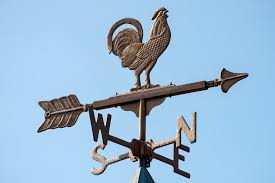
“Serenity? What is that? For years I was like a weather vane that spun around according to the air currents that other people generated… I attributed these mood swings to nervousness, lack of assurance, and whoever else occupied the room at the time. Serenity always seemed beyond my control… Where does this serenity come from? It comes from trusting that everything in my life is exactly as it should be. It comes when I choose to care for myself rather than to fix someone else…

THOUGHT FOR THE DAY: I am powerless over many things, but my serenity is not one of them.”

“Trusting that everything in my life is exactly as it should be…” That’s the hard part, because everything in my life is not great. My daughter Annie is lost to me and has been, on and off for twenty years. How does one learn to live with that?

Everyone is different, but I find serenity by focusing on my blessings. They’re all around me: my other children, my grandchildren, and nature. The salt air just blows me away with its fragrance, and the trees in this rain forest are already budding a little. My friends and my partner Gene are my daily supports. And God—he pilots my ship. In spite of my loss, I find myself saying all the time, and feeling sincerely in my heart, that life is good. And I’m filled with the elevating power of gratitude.

Like any good habit, I have to practice it every day: my gratitude journal; the therapy of writing down my stories. And ever so gradually over the years—I don’t remember exactly when—my dark world started to get brighter. I began to laugh more. I found joy in my grandchildren—not consolation. And I knew—though I’ve lost a piece of my heart—that I would find a way to get past the heartache.
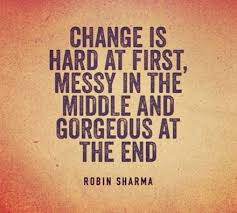
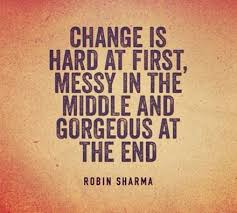
Oh My, How Hard It Is To Change!

Oh My, How Hard It Is To Change!

From Each Day A New Beginning, January 8:

“’When people make changes in their lives in a certain area, they may start by changing the way they talk about that subject, how they act about it, their attitude toward it, or an underlying decision concerning it.’ ~Joan Illsley Clarke

…Each positive change we make builds our self-esteem. Realizing that through our own actions we are becoming the kind of women (and men) we admire, gives us the strength, in fact, encourages the excitement in us that’s needed to keep changing…

I will accept an opportunity today to act as if I can handle a situation I used to run from.”

I was desperately unhappy when I joined Al-Anon. I was sure that my misery was caused by my daughter and her substance use disorder. It didn’t occur to me that it was my reaction to those circumstances that was the culprit. But when, after years of struggle, I finally did accept that I was the author of my own unhappiness, I was ready to do some of the real work of the program. Many people write me: “But what made you WANT to change?” I answer them all the same way: “I was sick and tired of being sick and tired” (of myself).

My daughter has gone in and out of recovery from SUD. My recovery, in recent years, has followed a different trajectory. And the key, of course, is being able to cut the umbilical cord and recognize that we are on separate paths.

That’s very hard for most parents, myself included. But when I see the damage that comes from NOT detaching, from staying mired in old resentments, old guilt, old unresolved stuff, I am reminded to let the past go and stay in the here and now. “Annie,” deep in her disease, has consistently tried to keep my focus on past errors, in order to justify her rage and distract her from what she needs to do now to get well.

But that’s the illness talking. I don’t take the bait anymore. I don’t engage unless it’s on a healthy level. Why not? Because it keeps us rolling around in the mud. And that’s not productive.

For a long time I welcomed rolling around in the mud. But not anymore. That’s one of the changes in myself that I’ve enjoyed. With my history, my self-esteem has always been shaky. But the tools of recovery help me learn how to adopt new attitudes about myself. And as the reading suggests, this is most often accomplished by making positive changes in my behavior.

When I do good things, they return to me tenfold. I may not get everything I want in my life. But for me to get up every day and say to myself: “You know, Marilea? You’re okay. You’re a work in progress. You just keep doing things that reinforce that self-directed goodwill, and you’ll be okay.”

Life is unfolding as my HP intended, and all will be well.

Seedlings Require Sunlight

Substance use disorder doesn’t discriminate. Before my daughter was swallowed up in it, she was a successful ten-year-old gymnast, competing in England while we were traveling in the Foreign Service and living in Greece. She was a gifted artist. And she graduated from college with a B.A. in Journalism. When she was twenty-one, it all fell apart.

I no longer speculate on “Why Annie?” Rich, poor, educated or not, substance use disorder can strike anywhere. And sometimes there is a gene component—four generations in my family—but not always.

The particular poignancy of this mother’s story is that Annie and I mirror each other: we both suffer from substance use disorder. So my story has a bit of a spin to it. It’s all graphically portrayed in my books. I’m not as detached as many parents without such baggage. My guilt and overinflated sense of responsibility consistently prevented me from being objective or from acting intelligently. I had to let go of my remorse before I could be helpful to her. And I had to learn to value myself enough to do that.

That came from working the steps of my recovery program. Self-forgiveness is critical to my ability to move on. Mine has been a classic redemption story.

I have learned to live well, despite the fact that my daughter is estranged from me. Many fellow parents, myself included, are primarily interested in the magic bullet that will save our children. But I’m glad I stayed in recovery long enough to learn that even though I’m powerless to save my daughter, I can still save myself. There are other voices in my world who call me: other children, grandchildren, family and many friends. I want to listen and live well for them. That is the message of my story and many others’: that even though I’m weathering one of a parent’s worst nightmares, I’ve learned that there’s no glory in martyrdom, and that I’ve earned the right to live happily, whether Annie recovers or not. Life goes on, and we with it. I’ve lived a blessed life, and only through my work in recovery have I found the good sense to recognize and be grateful for that.

As I’ve watched Annie slipping away all these years, I’ve learned to view my life through a different lens. The tools of recovery have taught me how to be grateful for what I have, how to let go of people and situations that I cannot change, and to have faith in something greater, wiser, and more powerful than I am.

Losing my child to substance use disorder did break me a few years ago, and in my brokenness and despair I turned toward the light that had always been there. I’m so grateful that I still had the eyes to see it.

The Freedom Of Recovery

From Survival to Recovery, p. 25-26:

“Unless recovery is found, blame, guilt, anger, depression, and many other negative attitudes can go on for generations in a family affected by alcoholism…Focusing on ourselves actually allows us to release other people to solve their own problems and frees us to find contentment and even happiness for ourselves.”

We all have different stories of how substance use disorder has touched our lives. In my life, guilt was a constant theme from very early in my childhood, and, as I said in my memoir, “Guilt is a terrible crippler.” It crippled me, especially, when my own child mirrored the user in me and morphed into a worse and more dysfunctional user than I ever was. Guilt and self-blame put me at risk in setting and enforcing boundaries, in becoming an enabler, in shielding Annie from the logical consequences of her behavior. In short, guilt kept me from parenting my daughter intelligently and kept me stuck in a hole. Fortunately I found recovery and release from my own remorse, much of it misplaced, which in turn is freeing Annie to live her own life and solve her own problems.

Whatever happens in the days ahead, I won’t be burdened under a cloud of shame that isn’t  mine to carry.

Self-Love

“Thoughts become things; choose the good ones.”

Unlocking the key to this is the key to 12-Step recovery, because with it I become empowered to intelligently deal with the substance use disorder of a loved one (and/or myself). In a letter to another parent I said, “ I love my daughter with all my heart and soul. And I deeply grieve the loss of her. But it’s been learning how to love and value myself that has elevated me from the reality I live with”—“elevate,” as in rise above, detach from, avoid becoming enmeshed in and manipulated by my child. Oh, it’s a sad, sorry catechism we mothers of substance users must learn in order to survive the illness of our children, which changes some of them into people we don’t even recognize.

How I think about myself is conveyed to others. If I put myself down, or have self-deprecating humor, what will others think of me? I will try to guide my thoughts better and guard my tongue more.

But if I can create even a little bit of distance and objectivity from the problem that is consuming me, I might be given some freedom: to look around me and appreciate other blessings in my life, whether it’s a good job, good health, other healthy children, grandchildren, or a sunny day.  Life goes on, relentlessly, with or without me. I choose to live well in my golden years. And I’ll do what’s necessary to insure that. My recovery has taught me that I deserve to.

Opting For Peace

From Each Day A New Beginning, April 18:

“I maintain my struggles with righteous behavior. They lose their sting when they lose my opposition. I will step aside and let God.”

Somewhere in the readings, someone wrote ‘Pain is not in acceptance or surrender; it’s in resistance.’ It’s much less painful to just let go and have faith that things are unfolding as they are meant to. There’s a reason that my Higher Power is running the show the way he is. I’m not in charge; I just have to get out of the way.

I also read somewhere the difference between submission and surrender: submission is: I’ll do this if I get XYZ; it’s entirely transactional. Surrender, on the other hand, is unconditional acceptance of what I get in life. Well, the latter is easier because I’m not holding my breath waiting for the outcome. I just let go – and have faith. Again, it’s a very conscious choice.

We can get bogged down in semantics. But each day as I go about my routines, I pray to keep Spirit close in all my affairs. For a long time I had an adversarial relationship with my Higher Power because I needed to be in control. My self-will was running rampant. I was white-knuckling my way through life. And getting very sore knuckles.

It’s been such a relief to learn how to surrender without feeling like I have failed. In some other places we are called warrior moms. And that very term says that we must do battle. Well, we have been, in some of the most painful ways. I have many battle scars, along with my brothers and sisters in these rooms.

At some point, embracing the idea of acceptance became my only option if I wanted any peace in my life. I will always love my daughter, and I tell her so. She has options, too. I can only pray that she exercises healthy ones someday.

In the meantime,  though, I take comfort in accepting realities that I cannot change. Lord knows I’ve tried. Haven’t we all?

Surrender

From Each Day A New Beginning, January 9:

‘The Chinese say that water is the most powerful element, because it is perfectly nonresistant. It can wear away a rock and sweep all before it.’ —Florence Skovel Shinn

“Nonresistance, ironically, may be a posture we struggle with. Nonresistance means surrendering the ego absolutely. For many of us, the ego, particularly disguised as false pride, spurred us on to struggle after struggle. ‘Can’t they see I’m right,’ we moaned, and our resistance only created more of itself.

Conversely, flowing with life, ‘bubbling’ with the ripples, giving up our ego, releases us from an energy that heals the situation—that smooths the negative vibrations in our path. Peace comes to us. We will find serenity each time we willingly humble ourselves.”

‘Resistance is more familiar. Nonresistance means growth and peace. I’ll try for serenity today.’

I wrote in my first memoir toward the end: “This is where I was in my recovery as I left San Francisco, at that hard won place I’d fought through years of resistance to find: the end of the battle—acceptance.”  That’s what the above reading is all about, I think. Letting go of my desperate need to save my daughter from her substance use disorder, and coming to accept that I simply don’t have that power. I can only love her.

What could be harder for any parent than to accept our powerlessness over our child’s substance use disorder? Yes, there are many things we can do to help, not the least of which is continue to love our kids unconditionally. My experience has taught me, though, that when I make decisions out of fear, I risk making bad choices. When my actions flow from a place of love, including love of self, all will be well.

Getting Out Of The Way

I’m a mother. When my kids were little, it was my job to keep them safe from harm. If they ran across the street with a car coming, I might have spanked them a little so they’d remember to look both ways next time. Yes: pain; yes: consequences. Yes: both good teachers.

But when Annie was twenty-one and started making terrible choices, I still thought it was my job to protect her from harm, self-inflicted or otherwise. And I still treated her like a two-year-old.

When she first stole from me early on, I went into a long period of denial and guilt, minimizing my feelings and believing her incredible explanations. My inaction only emboldened her, and she went on to steal in other ways. Several times, she stole my identity, with no explanations. So even when it was clear to me that her behavior was unacceptable, I still behaved inappropriately: I did nothing. Even when the credit card company told me to do something—that it would be a lesson for her—I still did nothing.

Where was the smack on the rear she would have gotten from running across the street? Where were the consequences that would have reminded her to be careful? I presented Annie with no consequences in the beginning of her illness and so she learned nothing. Her progressive illness got much worse. My guilt was crippling me as an effective parent.

Not until I started working my own program of recovery was I able to release myself from the hold that was strangling us both. I needed to get out of my daughter’s way. She wasn’t two anymore.

I’ve made a lot of progress since those early days. I’ve learned to let go and leave Annie to the life she has chosen. Four rehabs helped her turn her life around for a while, but she always slipped back into her substance use disorder and the life that goes with it. But staying out of the way has given me the freedom to take back my life and learn to live well by focusing on something else. It has also given Annie the freedom to take responsibility for her own life and hopefully her own recovery. If she reaches for it again, and I pray she will, how much more rewarding it will be for her to find her own way!

We Do Recover

Dr. Nora Volkow, director of the National Institute on Drug Abuse, has said: “I’ve studied alcohol, cocaine, methamphetamine, heroin, marijuana and more recently obesity. There’s a pattern in compulsion. I’ve never come across a single person that was addicted that wanted to be addicted. Something has happened in their brains that has led to that process.”

I picked up my tools for recovery in various 12-Step fellowships, which are at times controversial. I was reading in “Psychology Today” an article addressing this controversy. Here’s the link:

https://www.psychologytoday.com/us/blog/where-science-meets-the-steps/201211/why-the-hostility-toward-the-12-steps


I honestly think that I could have picked up some of these life lessons anywhere; Al-Anon doesn’t have a lock on teaching gratitude and acceptance. The fellowship just happens to be where I gained some tools to change my attitudes and try to live better. I learned in more than one program how to take responsibility for my own happiness and how to stop searching for validation outside of myself. I’m happy to be a member. But this is an interesting article, and explains why many people still shy away from 12-Step programs.

“Do whatever works for you—“ that’s my motto.

My Daughter/Myself

My story with Annie has always been a complicated one. A number of moms I’ve met in these rooms are double winners, like myself, and that reality only made my recovery work harder. And lengthier! This excerpt demonstrates how I was dealing with my daughter from a terribly weak position. And until I dealt with my own issues, I would be in no position to intelligently cope with hers.

Enjoy this poignant excerpt. It’s a window into my life before I surrendered to a power greater than myself, before I began reaping the rewards of my own recovery.

https://www.thefix.com/my-daughter-myself