Lightening My Load

From Hope for Today, April 22:

“One beautiful spring day I was walking in the forest. A slight breeze blew through the trees. The birds sang and fluttered. I bent down, picked up a rock, which I named loneliness, and put it in my knapsack. I walked along a little further, enjoying the wildflowers as I passed. I paused again and picked up another rock, which I called hatred for my alcoholic stepfather. As I traveled further I picked up some more rocks—suspicion of others, isolation, fear, and uncertainty. Soon the beauty of the forest ceased to capture my attention. My knapsack was so heavy I couldn’t think of anything else. The rocks weighed me down so much I felt as though I had almost lost myself beneath their weight.

Eventually I walked through the doors of Al-Anon and found the tools I needed to start emptying my gunnysack…Surrender in Step One helped me admit how heavy my sack had become. Hope in Step Two taught me there was Someone who could help me empty the sack—a Power greater than myself. Step Four helped me determine which rocks were mine and which ones belonged to others…Living one day at a time and sharing with my sponsor helped me shrink my gunnysack back into a knapsack and find new things to put in it, such as kindness, compassion, love, and humor. Instead of weighing me down, these lift me up into the light and life of recovery.”

I can’t improve on those thoughts at all! The metaphor is perfect for me. This miraculous program has guided me through the fog of my tears into a clarity of purpose and a world of growing happiness. I am grateful beyond words to have found a way to overcome my sadness around Angie and live well. I believe with all my heart that she would want me to.

Loosen Your Grip—Take Two

From Courage to Change, March 28:

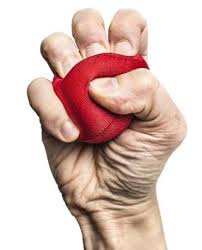
“What happens when I physically hold on tightly to something? I turn my head away. I squeeze my eyes shut. My knuckles ache as my fists clench. Fingernails bite into my palms. I exhaust myself. I hurt!

On the other hand, when I trust God to give me what I need, I let go. I face forward. My hands are freer for healthy, loving, and enjoyable activities. I find unexpected reserves of energy. My eyes open to see fresh opportunities, many of which have been there all along.

Before I complain about my suffering, I might do well to examine myself. I may be surprised by the amount of pain I can release by simply letting go.”

As with most other things in my life, I have a choice. I choose to use the tools at my disposal that have helped me to be a happier, more serene person: gratitude, acceptance, faith. Life is good; it’s all a matter of perspective.

The Debate Continues

From Courage to Change, March 24:

“When I accept that alcoholism is a disease, I am forced to face the fact that I am powerless over it. Only then can I gain the freedom to focus on my own spiritual growth.

‘A family member has no more right to state, ‘If you loved me then you would not drink,’ than the right to say, ‘If you loved me you would not have tuberculosis…’ Illness is a condition, not an act.”

The NIH (National Institute on Drug Abuse) has stated: “Addiction is defined as a chronic, relapsing brain disease that is characterized by compulsive drug seeking and use, despite harmful consequences. It is considered a brain disease because drugs change the brain; they change its structure and how it works. These brain changes can be long and can lead to many harmful, often self-destructive behaviors.”

The debate continues: is it a disease or a choice? A person who has the disease, before they know it, might try a dangerous drug or alcohol and become hooked. Another person who doesn’t have addictive disease might experiment in the same way; but he can walk away.

Disease just is; you either have it or you don’t. Choice is what the addict decides to do about it: get help or not.

I have two daughters: Angie has been a drug addict for fifteen years; today she chooses to continue in her disease. I have another daughter who has also tried drugs a few times; but she walked away. She chose to live healthfully. Which one of my girls is an addict?

Accepting that addiction is a disease “has given me the freedom to focus on my own spiritual growth.” And the results in my life have been miraculous. God Bless us all who have to struggle with the painful reality of drug addiction!

Going Back To Childhood

From Courage To Change, March 22:

“In order to survive in the contradictory and explosive world of alcoholism, many of us learned to ignore our feelings. We lost touch with ourselves without even knowing it.

For example, although I pointed an accusing finger at the alcoholics in my life for deserting me in times of need, I wasn’t a very good friend to myself. In my fear and confusion, I walked away from the little child in me who lived simply, who cried when the cat died and then let it go, who could appreciate a sunset and not want to own it, and who lived one day at a time.

Recovery does not mean that I have to become a different person. It means I need to start being myself again. The lessons I’m learning in Al-Anon are lessons I already know. I just need to remember.

Today’s Reminder:

There is an innocence within me that already knows how to trust my Higher Power, to cherish life while holding it lightly, to live fully and simply in the present moment. I will allow that part of myself to come forward and nourish me as I continue on this journey.

‘It takes a long time to become young.’ Pablo Picasso”

It’s taken a long time in recovery for me to let go of my fears and need to control—and trust again. Loosening my grip on everything, letting go of outcomes, trusting that God has a plan and is a lot smarter than I am—these are a few elements of my recovery that have made my life so much simpler. It’s almost like becoming a child again…

Loosen Your Grip!

From From Survival To Recovery, page 268:

“Living fully requires enough trust to release our manipulative, tight-fisted control of life, for only then can we accept the guidance of a Power greater than ourselves. For adult children of alcoholics, our damaged, devastated trust has to be healed and nurtured bit by bit until we feel safe enough to truly let go and let God. Trust does not come from reading a book, however inspired, but from experiencing new relationships in which we are trusted and we can learn to trust those around us…If we willingly surrender ourselves to the spiritual discipline of the Twelve Steps, our lives will be transformed…Though we may never be perfect, continued spiritual progress will reveal to us our enormous potential…We will laugh more. Fear will be replaced by faith, and gratitude will come naturally as we realize that our Higher Power is doing for us what we cannot do for ourselves…”

“We will laugh more.”  How can I, beset by depression and instability for many of my early years, come to revisit my life now from another perspective? How have I learned how to laugh and see the comedy in things? What has enabled me at last to live well and be happy?

Being in the rooms.

But I hasten to add that we can learn the same tools elsewhere: the tools of letting go and accepting what we can’t change; the tool of gratitude (a big one—half the world is starving; I have enough food and a roof over my head); the tool of detachment and understanding our personal boundaries in relation to our addict.

I might have been luckier, like many of you out there, and learned these tools in a happy, functioning family when I was growing up. But I didn’t; I learned them later.

And it’s never too late to learn how to be happy.

Chasing The Butterfly

From Each Day A New Beginning, July 19:

‘At fifteen, life had taught me undeniably that surrender, in its place, was as honorable as resistance, especially if one had no choice.’—Maya Angelou

“We had to surrender to a power greater than ourselves to get where we are today. And each day, we have to turn to that power for strength and guidance. For us, resistance means struggle—struggle with others as well as an internal struggle.

Serenity isn’t compatible with struggle. We cannot control forces outside of ourselves. We cannot control the actions of our family or our co-workers. We can control our responses to them. And when we choose to surrender our attempts to control, we will find peace and serenity.

That which we abhor, that which we fear, that which we wish to conquer seems suddenly to be gone when we decide to resist no more—to tackle it no more.

The realities of life come to us in mysterious ways. We fight so hard, only to learn that what we need will never be ours until the struggle is forsaken. Surrender brings enlightenment.”

Thank you, Amazon customer, for this wonderful review of my book, A Mother’s Story: Angie Doesn’t Live here Anymore, by Maggie C. Romero (pseudonym):

“One of the most honest and insightful accounts to date of a mother’s struggle to win the battle over her daughter’s addiction. Told in unsparing detail, it takes us step by step through the dark tunnel of despair with all the triumphs and mistakes on the road to recovery. It is an inward journey that reveals three important concepts: understanding the powerlessness of addiction, the willingness to let go and the courage to change. This is not just a recovery book but a riveting story from beginning to end that flies in the face of despair and embraces the strangest paradox of all – absolute surrender in order to win.”   ~Claire Demers

The Poison Of Resentment

I think we often forget how much carrying resentments burdens us. As they say,”It’s like swallowing poison and waiting for the OTHER person to die.”

It’s only natural to feel angry sometimes, to develop a resentment. But if we have no control over it, it’s best to let it go. There are many healthy ways to do this: go for a run, write in a journal, confront the person in question and try to talk it out peacefully, turn the resentment over to God; the list goes on. Before I got into recovery I lost sleep a lot, overate a lot, shopped a lot, and buried my feelings a lot. But these are not healthy ways to respond to resentments. And they didn’t go away anyway.

Another jingle I hear in the rooms is this: “expectations are premeditated resentments.” So once I’ve developed a resentment, I take a step back and look at the expectation that probably got me there. And I try to confine my expectations to myself—to people, places and things that I have some control over. Staying in control is important to us, so I try to keep my expectations within reasonable bounds. Staying focused on me is a step in the right direction, and ensures that I’ll have a happier day.

Weathering The Storms

From Each Day is A New Beginning, May 16:

‘It is only the women whose eyes have been washed clear with tears who get the broad vision that makes them little sisters to all the world’—Dorothy Dix

“The storms in our lives benefit us like the storms that hit our towns and homes and wash clean the air we breathe. Our storms bring to the surface the issues that plague us…Recovery is a whole series of storms, storms that help to sprout new growth and storms that flush clean our own clogged drains. The peace that comes after a storm is worth singing about.”

Growing up surrounded by addiction and falling prey to the disease myself, I was in the veritable forest, unable to see the trees. My deep and overriding love for my daughter forced me to open my eyes and see what was right in front of me. I took a large leap toward healing myself so that I could be well enough to enjoy all my blessings. As I conclude in the final chapter of my memoir, “What could be a better testament to Angie, to all her gifts and possibilities, than to go forward with my life savoring every moment?”

Many friends in Al-Anon have expressed gratitude to their addict/alcoholic for getting them into the rooms of recovery— these same friends who, like me, deeply mourn the lost years with our loved one—but who, also like me, refuse to offer another victim up to the altar of addiction. We have made it through the storm, and have found that we have something to sing about.

Expectations

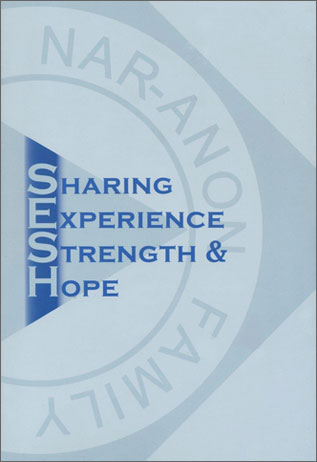
In recovery, we learn to profoundly adjust our expectations, hard as it is. We raised one child, and now we have another. We are all too aware of the change that drugs have produced in our children. A parent wrote in Sharing Experience, Strength and Hope (the SESH book) a very revealing statement, something I could have written myself. It is a key to understanding my story, my mother and father’s stories, and my daughter’s painful struggle:

“I expected my children to be perfect, to always do the right thing. I tried to control them by giving them direction and making them do things in a way that I felt was correct! When they didn’t, I could not handle it.

I could not accept their drug use and I felt that their behavior was a reflection on me. I was embarrassed for myself and scared to death for them. I became so distrusting of my children that I showed them no respect. I would meddle and invade their privacy looking for any excuse to challenge and confront them.

When I came to Nar-Anon, I learned that my interference and my attempts at controlling them were actually standing in the way of their recovery. I learned to let go of the control I never had in the first place.”


Those words echo my own from a recent blog: “I would finally, thank God, let go of the oppressive burden I was placing on my daughter by demanding she get well so that I could be OK.” This is a difficult statement for many of us to make.

Angie’s active drug addiction shook me to the core and made me decidedly unwell. Her illness had the power to ruin my day (and my life) before I got into a recovery program and started practicing the concept of detachment with love.

This concept has placed me at a healthy distance from my daughter so that I could view her situation with some objectivity and respond to her with intelligence and compassion. I’m very grateful for the education I’ve received in the rooms of recovery. I will always love Angie and I grieve the loss of her. But there are other people in my life, and I want to stay well for them. Thank you, Nar-Anon, for helping me reclaim my life!

En”light”enment

Ernest Hemingway famously said: “We are all broken; that’s how the light gets in.” This speaks to me, and to many of us.

In my search to be free of my emotional pain, I have found en”light”enment in a recovery program with tools to help me live better. It hasn’t been an overnight cure for my misery. I will always mourn the loss of my daughter Angie to this cruel disease. But, over time, I’ve learned to let go of some bad habits that weren’t serving me anymore—and contributed to me serving her even less. What didn’t serve me? Guilt. Untreated, that led to enabling, which served her not at all.

Working this miraculous program has helped me see that I’m just another child of God—and that I’m worth something. My years in various 12-Step fellowships have saved my life. Back in 2001 when a school counselor told me to go to an Al-Anon meeting, I told her, “No, that’s not for me.”

Yes, it was.