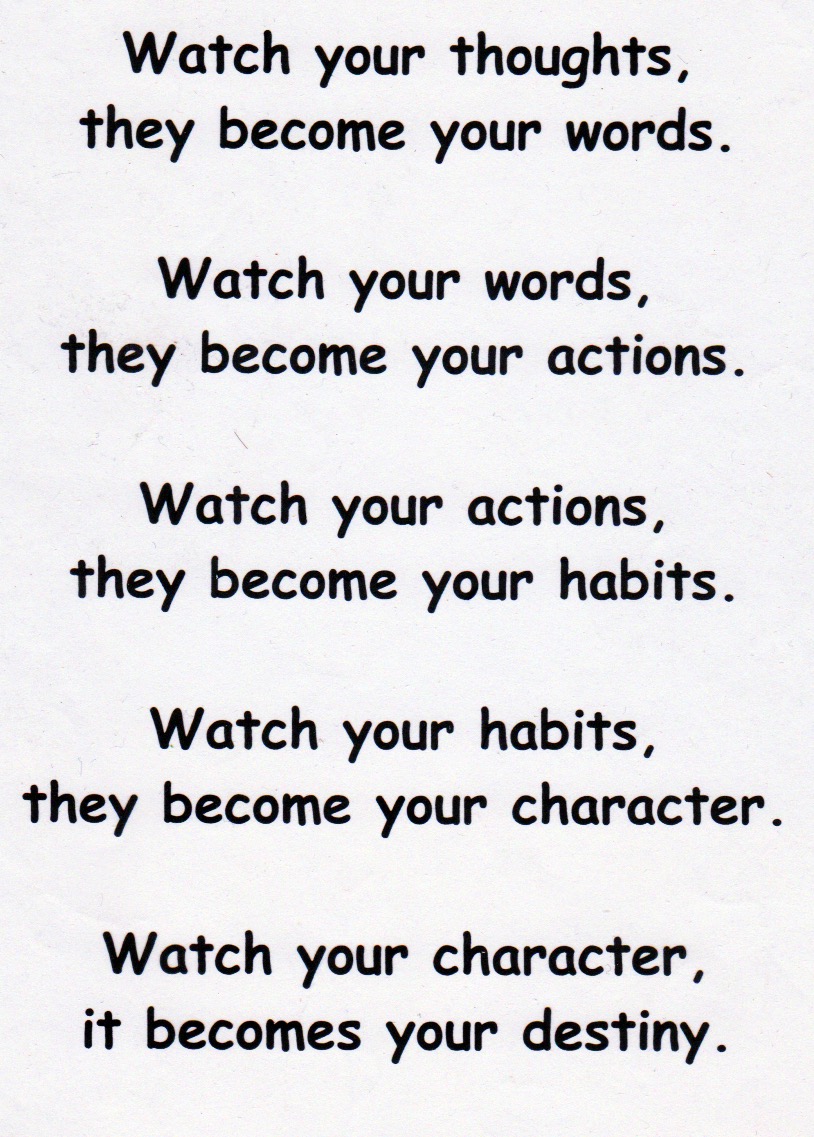
If I am overwhelmed, I may be trying to do too much. Today I will try to “keep it simple.” “The ability to simplify means to eliminate the unnecessary so that the necessary may speak.”
Another reason to let go…
Recovery of the Spirit

From Survival to Recovery, p. 25-26:
“Unless recovery is found, blame, guilt, anger, depression, and many other negative attitudes can go on for generations in a family affected by alcoholism…Focusing on ourselves actually allows us to release other people to solve their own problems and frees us to find contentment and even happiness for ourselves.”
We all have different stories of how addiction has touched our lives. In my life, guilt was a constant theme from very early in my childhood, and, as I said in my memoir, “Guilt is a terrible crippler.” It crippled me, especially, when my own child mirrored the addict in me and morphed into a worse and more dysfunctional addict than I ever was. Guilt and self-blame put me at risk in setting and enforcing boundaries, in becoming an enabler, in shielding Angie from the logical consequences of her behavior. In short, guilt kept me from parenting my daughter intelligently and kept me stuck in a hole. Fortunately I found recovery and release from my own guilt, much of it misplaced, which in turn is freeing Angie to live her own life and solve her own problems.
 “Fifth Step Prayer:
Higher Power,
My inventory has shown me who I am, yet I ask for Your help
in admitting my wrongs to another person and to You.
Assure me, and be with me, in this Step,
for without this step I cannot progress in my recovery.
With Your help, I can do this and I will do it.”
I’ve stopped the blame game. Admitting my defects to God and another human being has been critical in my recovery. Denial is like a dark cave: we hide there, from ourselves and others, and without any light it’s not easy to see the truth.
I’ve struggled with addictions my whole life, but until I told someone about them, brought them into the light, they weren’t real to me, and I could continue on the merry-go-round of denial.
But when I told someone else, I couldn’t pretend anymore. Sharing with someone else makes me accountable. Admitting our defects to others shines a light on who we really are. Then, and only the, do we have the opportunity, through God’s help and the support of others, to work on our defects and our recovery.
P.S. It’s also kinda necessary to know who we are, and admit who we are, before we can love who we are and accept who we are!
“Fourth Step Prayer:
Dear God,
It is I who has made my life a mess.
I have done it, but I cannot undo it.
My mistakes are mine and I will begin a
searching and fearless moral inventory.
I will write down my wrongs,
but I will also include that which is good.
I pray for the strength to complete the task.”
When I joined Al-Anon fifteen years ago, I was miserable and desperate to save my daughter from self-destructing. But I was also guilt-ridden and felt overly responsible for the mess her life was in.
Because I was inclined at that point to be overly hard on myself, I did not take this step properly. I focused exclusively on my defects and ignored my strengths. If I had had a program sponsor I would have received the proper guidance. But it took a very long time for this CSR (compulsively self-reliant) Al-Anon to admit she needed help in getting help. “My way or the highway…” Uh, huh, no wonder I was getting nowhere. Fortunately I did finally start to get it and come out of my isolation. It’s been a miraculous journey ever since.
What I love about this step is the inherent balance and demand for honesty. There are few shortcuts to telling the truth. We can hide and distort and rationalize all we want. But brown eyes are brown, no matter how much we want them to be blue.
Facing ourselves in the mirror on a regular basis takes discipline. But for me it’s been the best way to change and grow. As I continue to work on this step, I feel less vulnerable to life’s inevitable challenges. And I’m particularly less vulnerable to the manipulations of others, including my addict.
This is an honest program, and I’m grateful to have discovered the ability to look within. “Happiness (truly is) an inside job.”

From Courage to Change, March 13:
“I’m apt to think of Step Seven—‘Humbly asked him to remove our shortcomings’–as a step I take tearfully and on my knees. I’ve had that experience, but I want to entertain the possibility that Step Seven might be taken with joy—and even humor.
Sometimes the sign that I have actually gotten humble enough to ask my Higher Power to remove a shortcoming is that I can laugh about it. Suddenly a past action or decision of mine seems ludicrous and I can stop taking myself so seriously…
So the next time I want to tear my hair out because I haven’t gotten rid of some nagging shortcoming, I’ll try to lighten up and see how silly my intensity can be…
Desperation and pain can certainly lead me to humility, but in Al-Anon I’m cultivating a new and eager willingness to follow my Higher Power’s guidance. Because I am willing, I’m freer to learn from all of life’s lessons, not just the ones that hurt.”
How did I ever get here? When I began my recovery journey I was in so much pain I couldn’t see through the river of salty tears I was drowning in. I was consumed with sadness, alternately watching Angie slowly self-destruct and determining to save her from herself. We all know that unhappy place, and we pray to be released from our sorrow.
I’m one of the lucky ones; I stuck around long enough to learn how to laugh again. “whether the alcoholic is still drinking or not…”
I’m not angry at God anymore and I accept His will for her. I believe He is a force for good—it wasn’t His plan to visit the misery that we read about on people all over the world. His purpose in our lives is to teach us how to rise above it. With acceptance, faith, gratitude and humor.
I laugh a lot these days, at myself most of all. The problems I carry don’t seem very important in the grand scheme of things. Humility has given me a healthier perspective, and I’m thrilled to be able to see the comedy in life. It’s a great leveler.
“He who laughs, lasts.” Mary Pettibone Poole
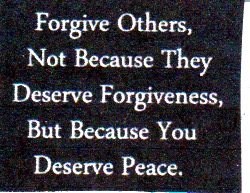 I think we often forget how much carrying resentments burdens us. As they say,”It’s like swallowing poison and waiting for the OTHER person to die.”
It’s only natural to feel angry sometimes, to develop a resentment. But if we have no control over it, it’s best to let it go. There are many healthy ways to do this: go for a run, write in a journal, confront the person in question and try to talk it out peacefully, turn the resentment over to God; the list goes on. Before I got into recovery I lost sleep a lot, overate a lot, shopped a lot, and buried my feelings a lot. But these are not healthy ways to respond to resentments. And they didn’t go away anyway.
Another jingle I hear in the rooms is this: “expectations are premeditated resentments.” So once I’ve developed a resentment, I take a step back and look at the expectation that probably got me there. And I try to confine my expectations to myself—to people, places and things that I have some control over. Staying in control is important to us, so I try to keep my expectations within reasonable bounds. Staying focused on me is a step in the right direction, and ensures that I’ll have a happier day.
From Each Day is A New Beginning, May 16:
‘It is only the women whose eyes have been washed clear with tears who get the broad vision that makes them little sisters to all the world’—Dorothy Dix
“The storms in our lives benefit us like the storms that hit our towns and homes and wash clean the air we breathe. Our storms bring to the surface the issues that plague us…Recovery is a whole series of storms, storms that help to sprout new growth and storms that flush clean our own clogged drains. The peace that comes after a storm is worth singing about.”
Growing up surrounded by addiction and falling prey to the disease myself, I was in the veritable forest, unable to see the trees. My deep and overriding love for my daughter forced me to open my eyes and see what was right in front of me. I took a large leap toward healing myself so that I could be well enough to enjoy all my blessings. As I conclude in the final chapter of my memoir, “What could be a better testament to Angie, to all her gifts and possibilities, than to go forward with my life savoring every moment?”
Many friends in Al-Anon have expressed gratitude to their addict/alcoholic for getting them into the rooms of recovery— these same friends who, like me, deeply mourn the lost years with our loved one—but who, also like me, refuse to offer another victim up to the altar of addiction. We have made it through the storm, and have found that we have something to sing about.
“Early in Angie’s illness, I flailed around in denial, sometimes strong, as when I handed her logical consequences for being abusive. I felt like a moth turned into a butterfly then. But I later added, ‘Oh how this butterfly would flutter and die in the years that followed, as I backtracked over and over again, trading in my courage for equal does of martyrdom.’” ~except from A Mother’s Story: Angie Doesn’t Live Here Anymore by Maggie C. Romero
It’s been quite a roller coaster ride these past fifteen years. At first I wouldn’t believe it was really happening. “This sort of thing happens to other people’s children,” I wrote in my memoir. What arrogance! I simply couldn’t accept it.
But when she was living with me and stealing anything that wasn’t nailed down, it was hard to ignore. So for a while I got tough, even told her to live elsewhere more than once. But addicts are, if nothing else, resourceful.
I often write that deep pockets are dangerous, enabling us to be generous and feel good about it. I was able to put Angie through rehab four times, but one time would have been enough to teach her the tools of recovery. For recovery to be successful, whether it’s once or ten times, the addict has to be ready. I was just buying time, trying to keep her off the streets long enough to get sick and tired of being sick and tired.
In the program there’s a wry saying: “Sit there. Don’t do anything.” And so I was the one who was getting sick and tired. I stopped doing anything, mostly because it didn’t really matter what I did. Angie was a runaway train, and I couldn’t stop her in the grips of addiction.
I stopped trying to control a situation that was clearly out of my control. I stopped obsessing and enabling. I started focusing on other people in my life who deserved my attention. I learned to practice gratitude for all I have. And though my changed attitude hasn’t brought my daughter back, it has shown me how to live better.
“We don’t always get what we want in life. But to make the best of what we have is the only way to be happy.” ~Jenny Jerome Churchill
“Third Step Prayer:
God, I offer myself to thee
to build with me and to do with me as Thou wilt.
Relieve me of the bondage of self, that I may better do Thy will.
Take away my difficulties, that victory over them may bear witness
to those I would help of Thy power, Thy love and Thy way of life.
May I do Thy will always!”
My willfulness has always been my Waterloo. But I never saw it as a bad thing. I saw it as strength, determination, and power—the opposite of weakness.
But I’ve had to modify my will and determination to save Angie. After years of using my strong will and stubbornness to fight a battle that wasn’t mine to fight, I’ve learned to let go. From well-meaning friends over the years, I’ve heard these comments:
“But how can you drop the ball like that? How can you give up on your own child? She’ll think you don’t love her anymore! How can you be so cruel?”
Those people need to walk a mile or two in my shoes.
The cruelty belongs to the Monster (if it had an appearance), the brain disease, that is claiming millions of our children. After years of educating myself about the nature of addiction, I have settled on my own path to recover from the effects of this illness.
I have no more power to cure Angie of her addiction than I would have if she had schizophrenia. Drug addiction and co-existing mental illness is very common, and there are many treatments out there. My daughter suffered from depression for years before she turned to hard drugs, and she tried therapy and antidepressants when she was just a teenager. Then when full-blown drug addiction took over, she was in and out of recovery, including four rehabs, for fifteen years. But she’s still out there, in active addiction.
My story with my daughter isn’t unique. Many of us share the same tragedy. But if I’ve learned one thing from all these years of chaos and pain, it’s that life is too precious to waste. I want to make the most of mine with the years I have left. I’m grateful now to make good use of my stubbornness and determination: to live well and strive to be happy.