Serenity Every Day

From Hope for Today, November 12:

“Serenity? What is that? For years I was like a weather vane that spun around according to the air currents that other people generated… I attributed these mood swings to nervousness, lack of assurance, and whoever else occupied the room at the time. Serenity always seemed beyond my control… Where does this serenity come from? It comes from trusting that everything in my life is exactly as it should be… It comes when I choose to care for myself rather than to fix someone else…

THOUGHT FOR THE DAY: I am powerless over many things, but my serenity is not one of them.”

Trust. That’s a hard one for many of us. I am an adult child, and being able to trust anyone has been difficult. So I became very controlling, trying to manipulate events to suit me. I had no faith that things were happening as they were meant to. I was always forcing outcomes.

But eventually that behavior took a terrible toll on me and my most important relationships. I was far too dependent on others and what was going on in their lives. This weather vane was spinning out of control. I needed to find a way to center myself.

I’ve learned to recognize situations in my life that I have no control over. And I’ve learned to let go of them and the people attached to them. My life is much simpler when I “stay in my own hula hoop” and concentrate on making my own life better. It’s the only thing I have the power to control.

Joyfulness and serenity are the gifts of my recovery. We can all reach for them, and the rewards are amazing!
The Courage To Change

From the blue Nar-Anon pamphlet: “Changing Ourselves”

“Addiction is like a chain reaction. It is a disease which affects the addict as well as the family members, friends and co-workers. We try to control, cover up, and take on the responsibilities of the addict. The sickness spreads to those of us who care the most. Eventually we begin to feel used and unhappy. We worry, lose trust and become angry. The addict blames us and we feel guilty. If only something or someone would change!

When we discover Nar-Anon, we find others with the same feelings and problems. We learn we cannot control the addict or change him. We have become so addicted to the addict that it is difficult to shift the focus back to ourselves. We find that we must let go and turn to faith in a Higher Power. By working the steps, following the traditions and using the tools of the program, we begin, with the love and help of our Higher Power and others, to change ourselves.

As we reach out for help, we become ready to reach out a helping hand and heart to those in need of Nar-Anon. We understand. We do recover. Slowly, new persons emerge. Change is taking place.”

Though I have changed and grown through my work in the program, I still love my daughter and am available to help her if she reaches out to me for help. The difference is that I am a healthier person now and am able to make the tough choices I couldn’t make years ago. I pray she finds the strength to come back to her family. We can’t get back the lost years, but I still have hope, like the warm summer sun shining on me, and keeping my love strong.

An Invitation To Joy


From Each Day A New Beginning, June 28:

“‘Joy fixes us to eternity and pain fixes us to time. But desire and fear hold us in bondage to time, and detachment breaks the bond.’ ~Simone Weil

…”We are on a trip in this life. And our journey is bringing us closer to full understanding of joy with every sorrowful circumstance. When you or I are one with God, have aligned our will with the will of God, we know joy. We know this, fully, that all is well. No harm can befall us.

Each circumstance in the material realm is an opportunity for us to rely on the spiritual realm for direction, security, understanding. As we turn within, to our spiritual nature, we will know joy.”

I have been growing in my spiritual recovery for fifteen years, and it has been the key to learning to live with my daughter Angie in the grips of heroin addiction. Those of us who love an addict know the pain and frustration involved. We know how addiction destroys far more than the addict; it destroys whole families and, often, we who love them. It almost destroyed me.

But I have been incredibly blessed with some well-meaning interventions over the years, the first from a school counselor who told me to go to Al-Anon to help me deal with Angie’s drug addiction. My work in several twelve-step fellowships has given me the tools to adjust my thinking and change my attitude about a lot of things.

The most important change in my perspective is my habit of gratitude. The best antidote to my grief around losing my daughter is focusing on all the good things in my life, my other children and grandchildren, good health, etc. We all have something to be thankful for.

When I turn my thoughts away from my losses, when I “detach” from Angie, I feel a lightness around my shoulders, and I’m able to live joyfully. I wish that for all my friends here. God Bless!

Addiction Is A Disease


From Sharing Experience, Strength and Hope, September 5:

“I have learned that addiction is a disease. It may never go away, but with the help of my Higher Power, I can learn to accept it and then try to live with it. I once heard that addicts need special help when they were ready for recovery. Immediately, I agreed because this is what I wanted to hear, so I enabled, paid her debts, and manipulated her through her crises, thinking that this would keep her clean. What I did not realize is that I was doing this with expectations. When it did not work, I became angry.

Going to Nar-Anon meetings, I learned about the effects of manipulating and enabling. Thanks to the program, I am able to make decisions and set boundaries in my own way, and in my own time. I believe that by dealing with the suffering and challenges in my life, with dignity and courage, ultimately good will come from it, even though it may not always be apparent to me.”

“All will be revealed,” they say in one of the programs. I don’t know what will come to me in the future, but I do know that living “with dignity and courage,” something I was never able to do before I came to the rooms, has helped me to grow and expand in my understanding of the world and the people in it.

I will appreciate all that I have in my life and enjoy it, one day at a time. I will do my best to live well. I “won’t leave before the miracle happens.”

We’re Not Responsible

“My father made attempts here and there to give up gin and tobacco.  When he had his gall bladder removed the nurses made him cough into a bag, and he was so disgusted with what came up that he stopped smoking for a while. But he never completely set aside his self-destructive behavior. It was like an old friend who reminded him of what he’d often felt as a child from an uncaring, abusive father: “You’re not good enough, not important enough.” As a young man working in the family business, he met and fell in love with my mother, who spent a good part of their marriage echoing his father’s disappointment in him. Where do the seeds of addiction take root? It’s the old chicken and the egg confusion. Was my father predestined to become an alcoholic? Or was he made one by the emotional abuse he endured? And if the latter is true, then how and when was I an emotional abuser of my own daughter?

But Twelve-Step recovery gently steers us away from questions like that; we can’t go back and do things over.  And I’m only human. I sometimes ask myself what I did wrong or what I missed seeing. Then I remember that addiction is a disease: “I didn’t cause it, I can’t control it, and I can’t cure it.” And like a gentle breeze blowing away the clutter of remorse, I let go of those thoughts and embrace my life again, free of responsibility.

In any case, whatever she chose to do now, I needed to leave her alone to do it. I knew better than to scream and wail in the night to God and all the graces that protected the innocent to save my daughter. Whatever the roots of addiction are, whatever holes were missing in her that this opportunistic disease filled in, I didn’t have the power to combat them. And I just had to let go of the struggle, or I would disappear down that rabbit hole with her.” ~excerpt from my award-winning addiction memoir A Mother’s Story: Angie Doesn’t Live Here Anymore, by Maggie C. Romero

Love And Enabling

A while back I read Libby Cataldi’s book, Stay Close. In my book, I say that I try to stay in communication with Angie, but reading Libby convinced me to “stay closer.”

Now, after years of recovery work, I feel strong enough to try to keep up communication without feeling drawn into the orbit of her manipulation and insanity. Whatever happens, I want her to know that I’ve always loved my daughter inside the addict—and I always will.


In the Afterword in Libby’s book, Dr. Patrick MacAfee has these words to say: “I believe that ‘stagli vicino’—staying close but out of the way of the insanity—is best. If you are dealing with addiction, offer the addict roads to recovery, not more money or bailouts. Excuses keep people sick…The fear of watching a loved one failing is frightening, but don’t let it cloud your realization that the natural extension of love and caring may only enable the addict’s condition.”

That’s a very fine line. We want to help our loved ones, of course. But often giving cash to an addict is like oxygen to a fire. It just feeds the addiction. There are so many other ways to offer help, and when they are ready hopefully we’ll be stronger to give it.

Alice In Wonderland

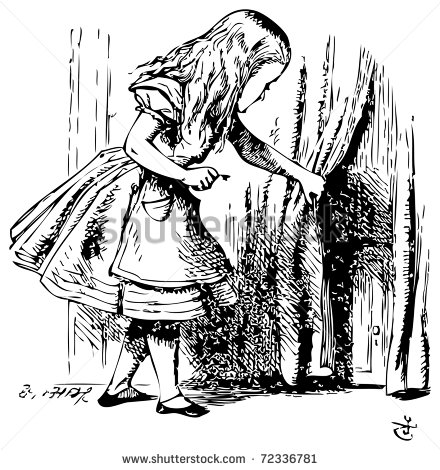
“’Alice: Would you tell me, please, which way I ought to go from here?’

The Cheshire Cat: ‘That depends a good deal on where you want to get to.’

Alice: ‘I don’t much care where.’

The Cheshire Cat: ‘Then it doesn’t matter which way you go.’

Alice: …’So long as I get somewhere.’

The Cheshire Cat: ‘Oh, you’re sure to do that, if only you walk long enough.’

It’s worth noting here that of the four rehabs Angie has been to this one, the one she herself wanted produced the best results in her. Why? Because she wanted it—as plain and simple as that sounds. She wanted it because for the first time in her disease she felt her life was in danger—not from drugs—but from the life and the people that accompany them. A few years down the road, no longer a stranger to the danger that went with this way of life, three more rehabs would be placed in front of her, like roadblocks: ‘Choose, Angie, do this or die. And to her credit, I suppose, she chose to go where we wanted to send her. ‘Where we wanted to send her.’ That’s why they didn’t work. She wasn’t ready to make that commitment again. She was just Alice tripping from one place to another, when all of a sudden this bulldozer broke through the ceiling and screeched, ‘Angie, come with me. I want to save you!’ And ‘curiouser and curiouser’ she cracked, ‘Oh, what the hell, I need a vacation from all this anyway.’” ~excerpt from my award-winning addiction memoir, A Mother’s Story: Angie Doesn’t Live Here Anymore, by Maggie C. Romero

Lightening My Load

From Hope for Today, April 22:

“One beautiful spring day I was walking in the forest. A slight breeze blew through the trees. The birds sang and fluttered. I bent down, picked up a rock, which I named loneliness, and put it in my knapsack. I walked along a little further, enjoying the wildflowers as I passed. I paused again and picked up another rock, which I called hatred for my alcoholic stepfather. As I traveled further I picked up some more rocks—suspicion of others, isolation, fear, and uncertainty. Soon the beauty of the forest ceased to capture my attention. My knapsack was so heavy I couldn’t think of anything else. The rocks weighed me down so much I felt as though I had almost lost myself beneath their weight.

Eventually I walked through the doors of Al-Anon and found the tools I needed to start emptying my gunnysack…Surrender in Step One helped me admit how heavy my sack had become. Hope in Step Two taught me there was Someone who could help me empty the sack—a Power greater than myself. Step Four helped me determine which rocks were mine and which ones belonged to others…Living one day at a time and sharing with my sponsor helped me shrink my gunnysack back into a knapsack and find new things to put in it, such as kindness, compassion, love, and humor. Instead of weighing me down, these lift me up into the light and life of recovery.”

I can’t improve on those thoughts at all! The metaphor is perfect for me. This miraculous program has guided me through the fog of my tears into a clarity of purpose and a world of growing happiness. I am grateful beyond words to have found a way to overcome my sadness around Angie and live well. I believe with all my heart that she would want me to.

Loosen Your Grip—Take Two

From Courage to Change, March 28:

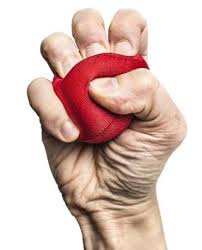
“What happens when I physically hold on tightly to something? I turn my head away. I squeeze my eyes shut. My knuckles ache as my fists clench. Fingernails bite into my palms. I exhaust myself. I hurt!

On the other hand, when I trust God to give me what I need, I let go. I face forward. My hands are freer for healthy, loving, and enjoyable activities. I find unexpected reserves of energy. My eyes open to see fresh opportunities, many of which have been there all along.

Before I complain about my suffering, I might do well to examine myself. I may be surprised by the amount of pain I can release by simply letting go.”

As with most other things in my life, I have a choice. I choose to use the tools at my disposal that have helped me to be a happier, more serene person: gratitude, acceptance, faith. Life is good; it’s all a matter of perspective.

Going Back To Childhood

From Courage To Change, March 22:

“In order to survive in the contradictory and explosive world of alcoholism, many of us learned to ignore our feelings. We lost touch with ourselves without even knowing it.

For example, although I pointed an accusing finger at the alcoholics in my life for deserting me in times of need, I wasn’t a very good friend to myself. In my fear and confusion, I walked away from the little child in me who lived simply, who cried when the cat died and then let it go, who could appreciate a sunset and not want to own it, and who lived one day at a time.

Recovery does not mean that I have to become a different person. It means I need to start being myself again. The lessons I’m learning in Al-Anon are lessons I already know. I just need to remember.

Today’s Reminder:

There is an innocence within me that already knows how to trust my Higher Power, to cherish life while holding it lightly, to live fully and simply in the present moment. I will allow that part of myself to come forward and nourish me as I continue on this journey.

‘It takes a long time to become young.’ Pablo Picasso”

It’s taken a long time in recovery for me to let go of my fears and need to control—and trust again. Loosening my grip on everything, letting go of outcomes, trusting that God has a plan and is a lot smarter than I am—these are a few elements of my recovery that have made my life so much simpler. It’s almost like becoming a child again…