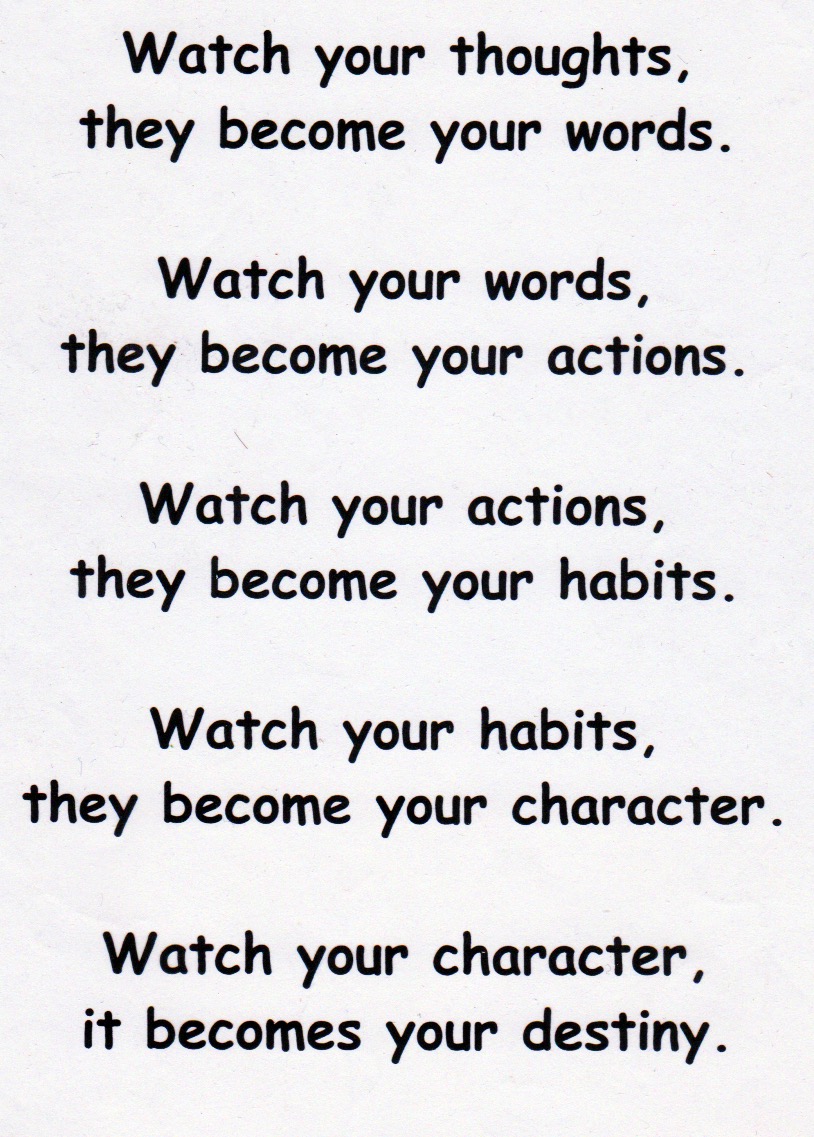
Just because others can’t see what we’re thinking doesn’t mean our thoughts remain a secret. Eventually, it all comes out in the wash!
Recovery of the Spirit

None of us is perfect. We all come into parenthood with different baggage. But we love our children. We do the best we can with what we have. But we love our children. And it’s the love we grow as parents—like an extra pair of arms to hug them—that will strengthen us to go on. Wherever they are—whether here or in Heaven—we are embracing our children.
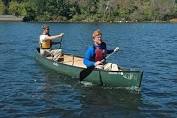
When I met my partner, Gene, twenty-four years ago, he was an experienced canoeist, and he loved paddling every summer. So I figured I’d better learn fast. One memorable incident was during a trip to Quetico Provincial Park across the Minnesota border in Canada. It was there that I added a chapter to my “Life Lessons” journal.
Gene and I always went canoeing with his friend, Stewart and his wife, Joan. I didn’t like Joan from the beginning. She talked non-stop, endlessly showing off how much she knew about everything. And worst of all, because I can’t even boil a carrot, she was a gourmet cook.
So the two weeks of wilderness paddling and camping were a challenge for me. At the end of one day, we scouted around for a stellar camping site and I showed Joan the one we had found.
“This island sucks,” she sniffed, “Stew and I’ll stay on that one over there,” she informed us, pointing to another one across an inlet.
“Okay,” I chirped. “See you tomorrow.”
I was awakened in the morning by the smell of smoke in the air.
“Gene, get up!” I screamed, looking across the water. “There’s a fire on Stew and Joan’s island!”
We piled into our canoe and raced across the inlet to find them frantically trying to remove the underbrush from the flames. Soon we heard the Canadian Forest Service arriving by helicopter to douse the area. It took twenty-six hours, but they finally extinguished the fire.
Joan had neglected to stamp out her cigarette while she was shitting in the woods, and, well, shit happens.
She was inconsolable. She loved nature and couldn’t bear to see the results of her carelessness.
The Canadians sent a crew of four, two Ojibwa Indians, the ax man and the pump man, an assistant chief and a chief, both White. The cost of the manpower and equipment could have exceeded $12,000 if they hadn’t called off the aerial bomber. It was a particularly dry season that summer in Canada, but they didn’t fine us. We were lucky.
Joan and I had pushed each others’ buttons plenty before that incident. But our esteem for one another began then. I suppose the dark side of our natures enjoys it when our adversaries falter. And I’m no different. But somehow that smug inner smile turned the mirror back onto me, and I didn’t like what I saw.
“Joan Joan, come on,” I insisted, offering her a hug and a shoulder to cry on. “It could easily have been me. I smoke too. Please, don’t be so hard on yourself. It was just a terrible accident.”
She and I hold each other in very high esteem now. This brief confrontation with my darker side opened my heart to appreciating Joan’s good qualities. Maybe it also reminded me how human we all are and how important it is to lift each other up as we pass through life.
Beats bitchin.’
“Fourth Step Prayer:
Dear God,
It is I who has made my life a mess.
I have done it, but I cannot undo it.
My mistakes are mine and I will begin a
searching and fearless moral inventory.
I will write down my wrongs,
but I will also include that which is good.
I pray for the strength to complete the task.”
When I joined Al-Anon fifteen years ago, I was miserable and desperate to save my daughter from self-destructing. But I was also guilt-ridden and felt overly responsible for the mess her life was in.
Because I was inclined at that point to be overly hard on myself, I did not take this step properly. I focused exclusively on my defects and ignored my strengths. If I had had a program sponsor I would have received the proper guidance. But it took a very long time for this CSR (compulsively self-reliant) Al-Anon to admit she needed help in getting help. “My way or the highway…” Uh, huh, no wonder I was getting nowhere. Fortunately I did finally start to get it and come out of my isolation. It’s been a miraculous journey ever since.
What I love about this step is the inherent balance and demand for honesty. There are few shortcuts to telling the truth. We can hide and distort and rationalize all we want. But brown eyes are brown, no matter how much we want them to be blue.
Facing ourselves in the mirror on a regular basis takes discipline. But for me it’s been the best way to change and grow. As I continue to work on this step, I feel less vulnerable to life’s inevitable challenges. And I’m particularly less vulnerable to the manipulations of others, including my addict.
This is an honest program, and I’m grateful to have discovered the ability to look within. “Happiness (truly is) an inside job.”

A few years ago in one of my support groups in New Mexico, a friend shared how she had to lock everything up in her house. She’d lock the jewelry here, the silver there. She had a different key for every place, and one time she was so flummoxed by her son that she lost all the keys! We laughed together at that one, grateful that we still could laugh.
This is what it comes to for many of us parents. We erect walls to protect ourselves, keeping the addicts out. And then, of course, we feel guilty about doing that.
My daughter Angie used to steal valuables from my home in order to sell them for drug money. It was safer, she thought, to steal from me than from a store. She already knew what an enabler I was; but she was still a thief. And even though her addiction pushed her onto the wrong path, she still should have paid the consequences if she was going to learn and mature. But I let her get away with it. I deeply regret that.
They will work us, manipulate us, and use every tool in their arsenal to get what they want if they’re still using. Parents are so vulnerable, and they’re walking a fine line between helping their child recover, and enabling them to continue using. We learn eventually to sit frozen in inaction, to do nothing. We learn to let our addicts be accountable for their own actions, and hopefully learn from the consequences: eviction, jail, or death.
But it’s that last consequence that holds us hostage, keeps us doing for our addict all that he should be doing for himself. We say to ourselves, ‘As long as he’s alive, he can recover.’ True, but when will we ever get rid of our God-like parental power, thinking that his recovery is all up to us?

From Courage to Change, March 13:
“I’m apt to think of Step Seven—‘Humbly asked him to remove our shortcomings’–as a step I take tearfully and on my knees. I’ve had that experience, but I want to entertain the possibility that Step Seven might be taken with joy—and even humor.
Sometimes the sign that I have actually gotten humble enough to ask my Higher Power to remove a shortcoming is that I can laugh about it. Suddenly a past action or decision of mine seems ludicrous and I can stop taking myself so seriously…
So the next time I want to tear my hair out because I haven’t gotten rid of some nagging shortcoming, I’ll try to lighten up and see how silly my intensity can be…
Desperation and pain can certainly lead me to humility, but in Al-Anon I’m cultivating a new and eager willingness to follow my Higher Power’s guidance. Because I am willing, I’m freer to learn from all of life’s lessons, not just the ones that hurt.”
How did I ever get here? When I began my recovery journey I was in so much pain I couldn’t see through the river of salty tears I was drowning in. I was consumed with sadness, alternately watching Angie slowly self-destruct and determining to save her from herself. We all know that unhappy place, and we pray to be released from our sorrow.
I’m one of the lucky ones; I stuck around long enough to learn how to laugh again. “whether the alcoholic is still drinking or not…”
I’m not angry at God anymore and I accept His will for her. I believe He is a force for good—it wasn’t His plan to visit the misery that we read about on people all over the world. His purpose in our lives is to teach us how to rise above it. With acceptance, faith, gratitude and humor.
I laugh a lot these days, at myself most of all. The problems I carry don’t seem very important in the grand scheme of things. Humility has given me a healthier perspective, and I’m thrilled to be able to see the comedy in life. It’s a great leveler.
“He who laughs, lasts.” Mary Pettibone Poole
Wisdom From The Rooms:
“In Al-Anon we learn how to exchange a wishbone for a backbone.”
Setting and enforcing boundaries with our loved ones is difficult, and can seem harsh at times. But many of us see all too clearly the effects of drug use on our loved ones: the loss of their moral compass which can lead to lying, stealing, verbal abuse and worse, all as a result of flooding their brains with dangerous chemicals. It can become a matter of our survival to stay strong and take care of ourselves, even when that means making excruciating choices. At the end of the day, we owe it to everyone else in our lives to survive and try to live well. Then, God willing, if the addict needs us to walk through recovery with him/her, we’ll be strong enough to do so.

From Each Day A New Beginning, July 19:
‘At fifteen, life had taught me undeniably that surrender, in its place, was as honorable as resistance, especially if one had no choice.’—Maya Angelou
“We had to surrender to a power greater than ourselves to get where we are today. And each day, we have to turn to that power for strength and guidance. For us, resistance means struggle—struggle with others as well as an internal struggle.
Serenity isn’t compatible with struggle. We cannot control forces outside of ourselves. We cannot control the actions of our family or our co-workers. We can control our responses to them. And when we choose to surrender our attempts to control, we will find peace and serenity.
That which we abhor, that which we fear, that which we wish to conquer seems suddenly to be gone when we decide to resist no more—to tackle it no more.
The realities of life come to us in mysterious ways. We fight so hard, only to learn that what we need will never be ours until the struggle is forsaken. Surrender brings enlightenment.”
Thank you, Amazon customer, for this wonderful review of my book, A Mother’s Story: Angie Doesn’t Live here Anymore, by Maggie C. Romero (pseudonym):
“One of the most honest and insightful accounts to date of a mother’s struggle to win the battle over her daughter’s addiction. Told in unsparing detail, it takes us step by step through the dark tunnel of despair with all the triumphs and mistakes on the road to recovery. It is an inward journey that reveals three important concepts: understanding the powerlessness of addiction, the willingness to let go and the courage to change. This is not just a recovery book but a riveting story from beginning to end that flies in the face of despair and embraces the strangest paradox of all – absolute surrender in order to win.” ~Claire Demers
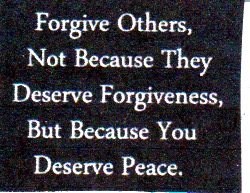 I think we often forget how much carrying resentments burdens us. As they say,”It’s like swallowing poison and waiting for the OTHER person to die.”
It’s only natural to feel angry sometimes, to develop a resentment. But if we have no control over it, it’s best to let it go. There are many healthy ways to do this: go for a run, write in a journal, confront the person in question and try to talk it out peacefully, turn the resentment over to God; the list goes on. Before I got into recovery I lost sleep a lot, overate a lot, shopped a lot, and buried my feelings a lot. But these are not healthy ways to respond to resentments. And they didn’t go away anyway.
Another jingle I hear in the rooms is this: “expectations are premeditated resentments.” So once I’ve developed a resentment, I take a step back and look at the expectation that probably got me there. And I try to confine my expectations to myself—to people, places and things that I have some control over. Staying in control is important to us, so I try to keep my expectations within reasonable bounds. Staying focused on me is a step in the right direction, and ensures that I’ll have a happier day.