“Enough is enough when the hurt inflicted is greater than the lesson learned.”
I felt that, because I was the mother of an addicted child, I just had to put up with things. But underneath that martyred attitude was a shaky self-esteem that whispered to me, “This is what you deserve. It’s your fault.”
When I recognized the truth of that, I became willing to take up the yoke and start working on myself. After many years of working the steps and arriving at a place of self-love, I no longer hear those voices. I’ve gotten my life back, and concentrate on what I can control in my life.
I give thanks, multitudes of thanks, for what I’ve been given. I’m finally able to celebrate myself. And I’m grateful to my daughter for getting me into recovery.
God Bless Us, Mamas. We do the best we can! Everyone reading this: buy yourself a rose today!
“I’m so grateful I found a way out of sadness, a way to take care of myself each day, and a relationship with the God of my understanding, who will never abandon me. The pain I’ve felt in the past is equal to the measure of joy I feel now.”
That’s quite a mouthful. Whoever wrote those words in “The Forum” is saying that somewhere between despair and happiness she or he did some work, found some answers. For me, anyway, I entered into a state of grace. I quite deliberately let go of my pain, which served no further purpose in my life. The lessons it taught me have been learned. I’ve put my sadness in a back drawer—and replaced it with positive thoughts that keep me motivated to reclaim my life, my remaining loved ones, and keep my heart ticking.
“…What I had overlooked in Step Two was the word ‘Power.’ The day I started placing my attention on that Power instead of on insanity, I began to see miracles in my life. One such miracle was my ability to talk about my fears in Al-Anon meetings. Other miracles included taking the Twelve Steps that lead me to serenity, and engaging in the process of forgiving and healing.”
It has taken many years of hearing Step Two read at meetings for me to really hear the word ‘Power.’ Now I realize how much more awesome my Higher Power is than this disease. Instead of dwelling in fear—and listening to my worst instincts—today I am striving to pass on the miracles of recovery to my children and grandchildren. If we keep doing this then, maybe not in
my lifetime but in theirs, we will see a change in how substance use disorder is treated around the world.
Many people are not strong enough to battle the terrible force of substance use disorder on their own. Application of the Twelve Steps had proven successful over and over again since they were put together by a couple of alcoholics and their friends back in the late 1930’s. Substance abusers need help; some say they need spiritual help. Our society is full of naysayers—skeptics who eschew these programs that are found in every major city across the country, and in big cities, in many of the churches, meeting three or four times a day. There’s a reason for the popularity of Twelve-Step programs: they work for many people. So I promised myself I would try harder now. My daughter was worth it. My daughter was worth it?
There is no one place on this journey to pinpoint where I discovered that I was worth it. I knew what a flawed human being I was. I was aware of my mistakes along the way—big ones and little ones.
But as I was starting to embrace the principles found in these Twelve Steps I was reacquainting myself over and over again with my own humanity and feeling my self-worth solidify with roots into the earth. None of this growth in me would have occurred if my daughter’s illness hadn’t pushed me onto this path. And I would always—still—reckon with the survivor guilt that has challenged my right to be happy while my daughter still struggles with this cruel disease.
There are many who view Twelve-Step groups as cultish and unattractive. There’s such a powerful stigma in our society against substance use disorder in all its forms that, I suppose, families of substance abusers suffer from guilt by association. Early on in my recovery my sister once said that it must be nice to have “those people” to talk to. But as she’s watched me grow and change these past few years I think she’s developed a healthy respect for the Program.
To this day, though, she has never discussed with me the dark side of our father, the alcoholic. Maybe she never saw his dark side, as I did. To her, he was the best father in the world, and I have no need to invade that sacred place where she holds him in her heart. In fact, I agree with her. He was a very loving man who passed on many gifts to his children and grandchildren. Yes, he was sick, and he died too young because of it. But just as I have forgiven my mother for any ways she may have hurt me so have I lovingly accepted my father’s illness. And in learning to forgive my parents and others who have wounded me in my life, it has become easier for me to forgive myself for my own shortcomings and the part they played in hurting my own children.
I, being a substance abuser, a daughter of one and a parent of one, have found myself quite at home among these seekers of peace and serenity. I’ve been in the right place for twenty-three years now, and I cannot begin to tell you the gratitude I feel for the wisdom in this simple program that has helped me to look forward to the sun coming up every day—and to embrace my life in its entirety.
“Oh I hate to write, Marilea. It’s like pulling teeth. And I’m afraid of what I might find.”
“Bingo, girlfriend, that’s the whole point. Discovery. I’ve been writing my heart out for more than a decade, and what I’ve learned about myself in the process could fill a book. In fact, it did. It filled three books and countless essays.”
“Yeah, but you’re a good writer and I’m just a hack.”
“Whoa! There’s all that judgment we keep heaping on ourselves. It doesn’t matter if you write well or not. The work is putting your words on paper. How they are received is also not important. What you do with those words is not important. Just get them out of you and examine what’s on the page. Maybe you will learn something new.”
So my friend and I went back and forth about the value of writing. She said she’d get back to me.
But I learned many things about myself from reading my early writing. I learned that I was extremely angry and judgmental toward my daughter. How could she be behaving so badly? And then I wrote about my own youth and realized that we were mirror images of each other.
Discovery.
I learned that I needed to be in the rooms as much as my daughter, if not more, because there were two of us who were sick. And that was the beginning of my healing. My words on the page stood out like red flags everywhere. That’s when I stopped being so angry or judgmental. If I could forgive myself for my sick soul and the behavior it reflected, I could certainly forgive my daughter. And that smoothed the way for her to come back to her family when she was ready.
Our lives rarely enjoy Hollywood endings. My story has not ended well for my daughter. But my writing has helped me cope with that too. The two of us might have fallen down the rabbit hole and never returned. But the catharsis I experienced from being honest on the page has freed me to look beyond my daughter and see my life in perspective. I have a wonderful life, surrounded by people I love. And though I miss my daughter and feel the loss of her every day, I can transform my grief into something positive: joy and gratitude for all that’s left in my life. This book, Opening Our Hearts, Transforming our Losses, is a great resource for those who don’t know what to do with their grief. Take a look.
“One beautiful day, a man sat down under a tree, not noticing it was full of pigeons. Shortly, the pigeons did what pigeons do best. The man shouted at the pigeons as he stormed away, resenting the pigeons as well as the offending material. But then he realized that the pigeons were merely doing what pigeons do, just because they’re pigeons and not because he was there.
Active alcoholics are people who drink. They don’t drink because of you or me, but because they are alcoholics. No matter what I do, I will not change this fact, not with guilt, shouting, begging, distracting, hiding money or bottles or keys, lying, threatening, or reasoning. I didn’t cause alcoholism. I can’t control it. And I can’t cure it. I can continue to struggle and lose. Or I can accept that I am powerless over alcohol and alcoholism, and let Al-Anon help me to redirect the energy I’ve spent on fighting this disease into recovering from its effects.
It’s not easy to watch someone I love continue to drink, but I can do nothing to stop them. If I can see how unmanageable my life has become, I can admit that I am powerless over this disease. Then I can really begin to make my life better.”
My recovery has been, among other things, about redirecting my energy into a positive force for my loved ones and me. Before I learned the tools of recovery, though I appeared to be content and doing well, I was deeply troubled and unhappy on the inside. Then, when my daughter became a substance abuser, it all boiled to the surface. I love my daughter very much, and I would have done anything in my power to save her.
There’s that word “power” that we hear so much in the recovery rooms. And that’s good because power and ego so often go together, and I’ve had to learn to let go of both of them. I spent several years trying to save her, but I made many mistakes and in the end was not able to influence her choices. Just like the pigeons, she’s gonna do what she has to do. I can only love her and be strong for her if and when she goes into recovery. I am, therefore, concentrating on saving myself. And if it weren’t for my daughter, I probably wouldn’t even be doing that. Beauty is often born out of loss. I still have a heart that can love—and the eyes to enjoy the beautiful sunsets where I live in Puget Sound.
“’On occasion I realize it’s easier to say the Serenity Prayer and take that leap of faith than it is to continue doing what I’m doing.’
Most of our struggles, today as in the past, are attached to persons and situations we are trying forcibly to control. How righteous our attitudes generally are! And so imposing is our behavior that we are met with resistance, painful resistance. Our recourse is now and always to ‘accept those things we cannot change, and willingly change that which we can.’ Our personal struggles will end when we are fully committed to the Serenity Prayer.
‘The wisdom to know the difference is mine today.’”
Oh yes, the wisdom to know the difference…how often our egos get in the way of living well. We want what we want when we want it! We want our substance abuser to give up drugs and come back to the living. If only that choice were in our hands…
But it’s not. Only substance abusers have the power to reach for their own recovery…and we have the power to reach for our own. That has been my choice for several years now, and I’m learning to be happy despite losing my daughter to the living death of heroin addiction.
A good friend told me that ego is what separates us from God and each other. Ego (Easing God Out) is often our enemy and keeps us from the serenity we so desperately long for. So I’ve learned to turn my pain over to God (Step Three), to “let go and let God,” and that has made all the difference in my life.
I messaged a friend on Facebook: “Oh, God Bless, Maryann, my heart goes out to you and all of us mothers. I often say in my book and on these sites that I’m grieving a living death because my daughter is not the person who’s walking in her shoes. She’s split right down the middle. Anyway, we all have different stories, but some parts are so familiar. My books are all about finding solutions for myself, and I hope they help you too. One thing I’ve learned on this difficult journey is to live in the solution, not in the problem. That’s how I’ve learned to be happy. Hugs to you!”
From a Nar-Anon handout: “People like myself whose problems have brought them to the point of despair have come to Nar-Anon to seek advice and find solutions. As soon as they attend the first meeting they feel like they have come home and feel like they are among people who really understand. And fortunate is the newcomer who finds a group that permits such expression. It gives those who have gone before them a way to give encouragement and hope. The newcomer discovers that it is by giving and receiving in our sharing that we are able to heal ourselves, and slowly we are able to regain control of our lives again.
But still more fortunate is the newcomer who finds a group that does not allow such unburdening to continue meeting after meeting. There is work to be done; Nar-Anon is not a sounding board for continually reviewing our miseries, but a way to learn how to detach ourselves from them.
A Recovery reminder:
I will learn by listening, by reading all the Nar-Anon literature as well as all good books on the subject of substance use disorder by working and trying to live the 12 Steps. The more I read and study the more knowledge I receive. Knowledge is power, and I will be able to help myself as well as others.”
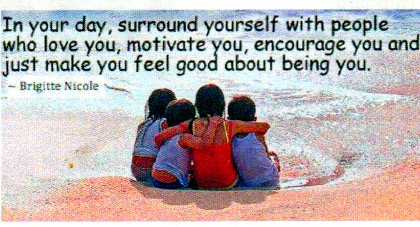
My recovery work over the years has brought me out of isolation and pushed me into the circle of love in this picture. I have learned many things in my recovery program, but the most important has been placing a greater value on my worth, my needs and my wants. Learning to set boundaries is another way to take care of myself, letting others know what is and what isn’t acceptable to me. This tool has made my relationships healthier. Without a daily practice of self-care, what shape am I in to interact with those around me?
“Progress, not perfection,” to be sure, and we all have bad days. But I’m grateful to have found a sound guide for living in my recovery program. It doesn’t take away the pain of struggling with my daughter throughout her substance use disorder. But it does offer coping strategies that encourage me to focus on what I can control in my life. No longer drained from fighting a battle I can’t win, I feel energized to move on and celebrate the blessings God has given me.
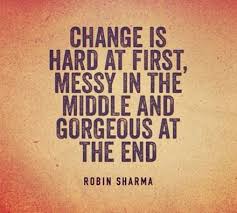
It’s all a matter of perspective. Attitude is everything.
“’When people make changes in their lives in a certain area, they may start by changing the way they talk about that subject, how they act about it, their attitude toward it, or an underlying decision concerning it.’ ~Jean Illsley Clark
Acting “as if” is powerful. It leads the way to a changed attitude, a changed woman…Each positive change we make builds our self-esteem. Realizing that through our own actions we are becoming the kind of women we admire gives us the strength, in fact, encourages the excitement in us that’s needed to keep changing…Each gain makes the next one easier to attempt.
I will accept an opportunity today to act as if I can handle a situation I used to run from.”
I think, as any of us grow older but not always wiser, that it becomes easy to descend into a passive state of “Oh well, what’s the use? I’ve tried everything I can think of to make this problem go away, and nothing works. So I guess I’m stuck with it.”
I’ve certainly been there, but eventually I got lucky. I got so tired of my misery that I became willing to try something else. That was the key. Willingness to change and do something else. It worked.
Now I’m happy, joyous and free of the demons and obsession that were destroying my life. I had to work hard for this. But it was time well-spent in recovery.
I’m in two 12-step programs, and they all have one thing in common: helping those of us who suffer to recognize our own part in our misery, to work through all those demons, and hopefully learn to be accountable and free of guilt. The freedom that follows is indescribable. And though I still carry the sorrows that brought me to the rooms, I’ve learned to view them through a new and different lens.
Life can be a glorious adventure. I’m so grateful for my recovery.