Resentment Hurts Us

When I feel resentment it’s uncomfortable, and I’m prone to want to stuff my feelings. But that’s never good for me. It’s an old bad habit that my years in the program have enabled me to give up.

I need to stay in tune with my resentments every day and deal with them constructively. Sometimes that means airing them; other times I need to bury them. Otherwise, they will come back and destroy me.

I’m so grateful to be able to look at negative behaviors and try to replace them with positive ones. It’s “progress, not perfection” that keeps me moving forward to calmer waters.

“Resentment is like swallowing poison and waiting for the other person to die.”


The Pain Of Isolation

From “When I Got Busy I Got Better,” p. 12

“Recently I attended a neighborhood hearing to show support for a local service. To my surprise, I found myself taking part as an active and committed member of my community. My pre-Alanon feelings of isolation and frustration had abated as I established a connection with my neighbors…In tracing the development of my new experience of common ground, I realize that my years in Al-Anon had been instrumental in dispelling my isolation…A member of our fellowship once explained how reaching out in simple ways had helped her break through her loneliness, desperation, and isolation.”

Feelings of being an isolated outsider have shadowed me all of my life, and not just because I’ve traveled a lot. Many of my friends who grew up in alcoholism share the same experience of being different from others. I’m not sure why this is, but I do know that the work I’ve done in recovery has pushed me out of my shell, “my dark cave of depression,” and encouraged me to jump into life more, do more service work, get involved. In other words: shed my fear and take risks. Recovery is all a matter of perception, I often say here, and the world has opened up to me in new and different ways. I’m grateful not to be closed off to all the possibilities ahead. Life is good!

Seasonal Prompts

I love observing the seasons and the months they represent. They are the embodiment of the natural flow of life—and a constant reminder of change and renewal.

I was a high school teacher for twenty years. Summers were times for me to breathe, relax, and get off the treadmill. Then in August the anxiety and excitement would build, as I felt hungry to return to school and start using my skills in the classroom again.

Just as our lives change and new routines replace old ones, our feelings about the months of the year change as well. Bright red chili festivals have replaced pumpkin cutting in the classroom for me. Life is never static, and I do well to remain open to new opportunities as they present themselves.  Change is good. Change is very, very good.

Now, some months are times of remembrance. I’ve been retired for nearly a decade, and August/September has a new meaning for me. August 16 is the birthday of my mother, who died eight years ago. And August 23 is the birthday of my estranged daughter, Annie. But now I celebrate my granddaughter Emily’s birthday on August 9 by going to Seattle to see her. I never miss either of my granddaughters’ birthdays. In focusing on my blessings, I feel a sense of abundance every day.

September/October start to herald in autumn for me. In Albuquerque the leaves change color from the frosty night air. This is a welcome change from the oppressive heat of the summer. But here the leaves turn yellow, not the reds I used to see in New England.

In New Mexico, autumn is a gorgeous and productive lingering—well past Thanksgiving. It’s harvest season and the farmer’s markets overflow with abundance from the ground. Many holidays come in autumn and on the cusp of winter. These are always poignant times of the year for me, but now more than ever they are times to take stock and savor all that I have.

Winter drops like a curtain, in some states more than others. A couple of weeks before Christmas, Mother Nature lowers the boom. Winter is bitter in the high desert. Where I live, there’s very little snow. Sandia Mountain, across the rift valley from my farmhouse, attracts all the “weather.” At nearly 6000 feet, the air is cold even with the sun shining, though the temperature rarely drops below freezing.

Winter rings in differently state to state. But universal, in the areas where cold weather does settle into our bones, is the wish to smell spring in the air.

Many of us enjoy watching the trees coming out of dormancy and preening like peacocks, their colorful buds in bloom. We thrill to see the first flowers peek up from the ground. And gradually, though differently from state to state, we see the resurgence of nature, in all its glory. It is the season of renewal, of new beginnings.

Life goes on, and we with it.
Spiritual Empowerment

From Hope For Today, April 15:

“…Before I seriously practiced meditation and prayer with Step Eleven, asking only for knowledge of God’s will for me and the power to carry that out, detaching was an exercise in futility.

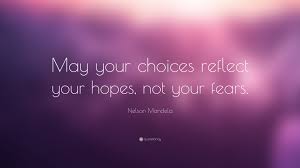
Today detachment is different for me. It’s an opportunity to make a choice. I can focus on the problem, or I can attach to my Higher Power and see what is before me with rest, new eyes and thoughts. I am learning to detach from old reactions that interfere with my serenity, old fears that feed into expectations and judgments, and the part of me that diverts me from my primary spiritual aim…”


I’m very grateful to be able to make the choices I make today. I’ve changed. I make decisions that support my living well—with gratitude, peace, and joy. As I said on Tuesday, it’s all a matter of perspective.

Today I choose the serenity that comes from detaching from the problem and attaching to the solution. I’m happier when I live in the solution. I can say with a full heart that life is good.


The Red Brick Road

From The National Institute on Drug Abuse:

 “Does relapse to drug abuse mean treatment has failed?

 No. The chronic nature of the disease means that relapsing to drug abuse is not only possible but also likely. Relapse rates are similar to those for other well-characterized chronic medical illnesses, such as diabetes, hypertension, and asthma, which also have psychological and behavioral components. Treatment of chronic diseases involves changing deeply imbedded behaviors. For the addicted patient, lapses back to drug abuse indicate that treatment needs to be reinstated or adjusted or that alternate treatment is needed.”


What “alternate treatment”? There are a number of options for addicts out there, and they include programs for folks who don’t believe in a “higher power.” I’m so glad that the recovery net is spreading wider and including other sources of strength and help for the addict. My daughter Angie could not believe in God or reach beyond herself for recovery, and many addicts feel the same way. But many of them recover.

 Whatever works, I always say. Addicts suffer badly enough from this cruel brain disease without being told as well how to find relief from it. There are many paths to recovery and remember: Dorothy may have been on a yellow brick road, but there was also a red brick road right next to it.

Operating From A Place Of Love…

From the National Institute on Drug Abuse:

“Is Drug abuse a voluntary behavior?

The initial decision to take drugs is mostly voluntary. However, when addiction takes over, a person’s ability to exert self-control can become seriously impaired. Brain-imaging studies from drug-addicted individuals show physical changes in areas of the brain that are critical for judgment, decision making, learning and memory, and behavior control. Scientists believe that these changes alter the way the brain works and may help explain the compulsive and destructive behaviors of an addicted person.”


In the recovery rooms, I became educated about drug addiction. I learned that it is a brain disease. This education changed my attitude toward my addict and toward myself. And this changed attitude changed and improved my behavior.

There is no room for judgment in my life: judgment toward me for being “a bad parent;” judgment toward my daughter Angie for using drugs.

I feel only love and compassion for all addicts who suffer and for all who love them.

I’m powerless over other people, places and things. But I can take charge of my own life. I focus on gratitude and all my blessings. I try to live well.

I believe Angie would want me to. This is how I honor and love her.


“Deal From Strength”


“Nar-Anon Do’s and Don’ts:

Do note the effect the user has on each member of the family…

Do always encourage attempts to seek help.

Do remember to see the good in others and yourself.

Don’t accept guilt for another person’s acts.

Don’t nag, argue, lecture or recall past mistakes.

Don’t overprotect, cover up or rescue from the consequences.

Don’t neglect yourself or be a doormat.

Don’t forget that addiction is a disease, not a moral issue..

Do allow other people to accept their own responsibilities.

Don’t manipulate or make idle threats.

Do involve yourself with the activities of Nar-Anon.

Do learn to be open and honest.

Don’t yearn for perfection in yourself or others.

Do grow day by day, by reading Nar-Anon literature.

Do remember to focus on your OWN reactions and attitudes.

Don’t overlook the growth opportunities of a crisis.

Don’t underestimate the importance of release with love (commonly called detachment with love).

Do please try to manage your anxieties with love.

Don’t start the recovery program with the user. Start with the family at Nar-Anon, meeting and learning the difference between destructive and constructive help.”

Spiritual Empowerment

I love my recovery program because it makes me aware of my choices. I’m not on automatic pilot anymore, and I don’t have to react to situations the way I used to. As I start to take better control of my life, I become an actor, and I can write more of my own story.

The past is over; the future hasn’t happened yet. But I have today—and today I choose to live well.

The Courage To Change

From the blue Nar-Anon pamphlet: “Changing Ourselves”

“Addiction is like a chain reaction. It is a disease which affects the addict as well as the family members, friends and co-workers. We try to control, cover up, and take on the responsibilities of the addict. The sickness spreads to those of us who care the most. Eventually we begin to feel used and unhappy. We worry, lose trust and become angry. The addict blames us and we feel guilty. If only something or someone would change!

When we discover Nar-Anon, we find others with the same feelings and problems. We learn we cannot control the addict or change him. We have become so addicted to the addict that it is difficult to shift the focus back to ourselves. We find that we must let go and turn to faith in a Higher Power. By working the steps, following the traditions and using the tools of the program, we begin, with the love and help of our Higher Power and others, to change ourselves.

As we reach out for help, we become ready to reach out a helping hand and heart to those in need of Nar-Anon. We understand. We do recover. Slowly, new persons emerge. Change is taking place.”

Though I have changed and grown through my work in the program, I still love my daughter and am available to help her if she reaches out to me for help. The difference is that I am a healthier person now and am able to make the tough choices I couldn’t make years ago. I pray she finds the strength to come back to her family. We can’t get back the lost years, but I still have hope, like the warm summer sun shining on me, and keeping my love strong.