Choice And Empowerment

From Each Day a New Beginning, 9/30:

“’Birds sing after a storm; why shouldn’t people feel as free to delight in whatever remains to them?’ ~Rose Fitzgerald Kennedy

We choose the lives we lead. We choose sadness or happiness; success or failure; dread or excited anticipation. Whether or not we are conscious of our choices, we are making them every moment.

Accepting full responsibility for our actions is one of the requirements of maturity. Not always the easiest thing to do, but necessary to our further development. An unexpected benefit of accepting our responsibility is that it heightens our awareness of personal power. Our wellbeing is within our power. Happiness is within our power. Our attitude about any condition, present or future, is within our power, if we take it.

Life is “doing unto us” only what we allow. And it will favor us with whatever we choose. If we look for excitement, we’ll find it. We can search out the positive in any experience. All situations present seeds of new understanding, if we are open to them. Our response to the events around us determines whatever meaning life offers. We are in control of our outlook. And our outlook decides our future.

The day is mine, fully, to delight in—or to dread. The direction is always mine.”

We all go through tough times, often wondering how we will endure the unendurable. Watching our children go down paths we would never choose for them, and being powerless to stop it; or many of us burying our children, and forced to face the closure that comes with that. How do we bear it? How do we go on? I put my faith in God, and know—without a doubt—that things are happening for a reason, and that much beauty is often born out of loss. I’m so grateful to have the eyes and heart to see what has been left to me. My recovery is a miracle. God is good!
Chasing The Butterfly

From Each Day A New Beginning, July 19

‘At fifteen, life had taught me undeniably that surrender, in its place, was as honorable as resistance, especially if one had no choice.’—Maya Angelou

“We had to surrender to a power greater than ourselves to get where we are today. And each day, we have to turn to that power for strength and guidance. For us, resistance means struggle—struggle with others as well as an internal struggle.

Serenity isn’t compatible with struggle. We cannot control forces outside of ourselves. We cannot control the actions of our family or our co-workers. We can control our responses to them. And when we choose to surrender our attempts to control, we will find peace and serenity.

That which we abhor, that which we fear, that which we wish to conquer seems suddenly to be gone when we decide to resist no more—to tackle it no more.

The realities of life come to us in mysterious ways. We fight so hard, only to learn that what we need will never be ours until the struggle is forsaken. Surrender brings enlightenment.”

Surrender is not transactional. It’s not submission. It’s freely giving up our wills to a power who is smarter than we are, a power who has our back. Surrender is like wearing a loose-fitting garment. It’s easy, comfortable, and doesn’t restrict me to my own demands. It is, as the third step prayer tells us, “freedom from the bondage of self.”

Acceptance and surrender. Peace and serenity await me there.

“Look Back Without Staring”

From Hope for Today, September 13:

“Never underestimate the power of self-awareness to put past experience into a new perspective…Until we take the time to look at ourselves honestly. we may never be free of the bondage in which alcoholism holds us captive.”

As the mother of a substance user, I was focused completely on my daughter and her problems. In the beginning of her illness, I failed to see that how I handled the chaos in my home might have more to do with me than with her. I didn’t realize what a powder keg my past was bringing to an already explosive situation.

My own history of substance abuse played a big role in my reactions. Whoever said “Blame is for God and small children” forgot about me. I thought Annie’s illness was my fault. I burdened myself with guilt, and that burden crippled me when dealing with the consequences of her bad choices. I often lost my own moral compass, the one I raised her to follow. That guilt put at risk all the healthy boundaries I had set in place with all of my children. I became lost.

Much of my behavior was a misguided attempt to protect my daughter. I became overprotective, and shielded her from the logical consequences of many choices that might have taught her some valuable life lessons.

I did step up and put her through four rehabs. I was happy to do that and so hopeful. But after she got out and relapsed every time, I fell back into old patterns. I didn’t see how I might be part of the problem.

My enabling just kept her stuck, and I became stuck too in a vicious cycle that wasn’t helping either one of us. I needed to distance myself just enough to learn how to detach from my daughter. To do it lovingly and without any judgment.

It’s a fine line we mothers walk between protecting our children and letting them go to learn how to live well. Since so many substance users stop growing emotionally when they start using, it’s easy to step in and do too much for them. There’s nothing easy about what we face with our children.

But the more I learn about myself, the more armed I am to avoid the pitfalls along the way. As I find the need to change much of my behavior, so do those around me. My recovery has affected all those I come into contact with. And it has “freed me of the bondage that had held me captive” all of my life, so that I can let go of the past, and more effectively deal with the challenges that face me now.

A New Kind Of Freedom

From Each Day A New Beginning, November 25:

“’Change occurs when one becomes what she is, not when she tries to become what she is not.’ ~Ruth P. Freedman

Learning self-acceptance, and then loving the selves we are, present perhaps our two biggest hurdles to the attainment of emotional and spiritual health. Fortunately, they are not insurmountable hurdles. The program offers ready assistance.”

Well, learning to be comfortable in my own skin has been a lifelong process for me. But not until I found 12-step recovery did I discover such a well-conceived plan to achieve that. Before I found a way to recover from substance use disorder—my own and my daughter’s—I wore masks to conceal how unhappy I was. It all started with me in an unhappy childhood. But I don’t dwell on any of that anymore because it represents the beginning of my problems, not the solution to them. I think it can be self-defeating to remain stuck in the past because I can’t do anything to change it. But I can, with effort, keep laser-focused on the present and paying attention to what I can do something about.

“Learning to love all our parts, the qualities we like and the traits that discouragingly hang on, offers a new freedom. A freedom that invites change. A freedom that safeguards the emotional and spiritual well-being that we strive for.”

Hide And Seek

Twenty-one years.

Almost twenty-two. That’s a lot of time to live with substance use disorder in my child. It’s a third of our normal lifespan. So much time lost to the battle of this relentless disease. Some win the battle and some do not. No matter what “approach” we eventually embrace, some of our children will not make it. We can look for answers in hindsight, second guess ourselves ad nauseam. But to what purpose? Acceptance is what enables me to still get out of bed every day.

At first I was in denial. My kid? No way! This sort of thing happens to other people’s children. I was disabused of my arrogance and complacency pretty early, though, when she brazenly stole my identity—twice. That’s when I knew I wasn’t in Kansas anymore.

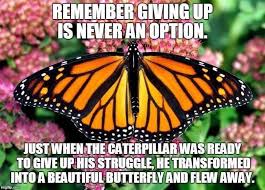
I got tough at first. I kicked her out, frantically wondering what would become of her. I felt like a moth turned into a butterfly for the moment, like I was taking charge. I was definitely giving her the message to shape up or lose her family. Little did I know at that point that many in the disease couldn’t care less about family.

Oh how this butterfly would flutter and die in subsequent years, as I backtracked over and over again, trading in my courage for equal doses of martyrdom.

This was all characteristic of my disease, of course. My inability to let go of my own guilt and responsibility (which she played on whenever I let her), my needing her in my life at all costs (the martyrdom of the ATM machine), and still thinking that I was her Higher Power. I’m her mother. It’s up to me to save her. Well, that’s bunk, of course. If she had terminal cancer, I wouldn’t be putting myself through all this. When will the world accept that SUD is a complicated brain disease? When will we look on these people with compassion and not crucify them with shame, stigma, and isolation? Do we do that with cancer?

My daughter did go to four rehabs, all of them using the 12-Step approach to recovery. She told me afterwards  that she was an atheist and could not buy into it. There are a few other approaches as well, Smart Recovery for example. But whether or not substance abusers accept any form of recovery has everything to do with their willingness to change what they’ve been doing. The willingness to let go of the high they get from drugs. The willingness to face the demons that made them seek numbness and oblivion from pain in the first place.

My daughter has played hide and seek with recovery all these years. She’s had periods of remission that we all celebrated as a family. She was a reader at her brother’s wedding in 2009, for example, and I was sure we had her back then. How could she go back out when it was so clear to her on that joyful occasion what she would be giving up?

But within two years, she was gone again, sucked into the belly of the beast in the underworld of San Francisco. I haven’t see her since May, 2012. Yes, she’s alive. She reminds me of her presence every once in a while with a barrage of emails, blaming me for everything. This is her disease.

So, clearly, my daughter lacks the willingness to do the interior work necessary to disempower the disease that has taken control of her. And if I am to have any peace in my life, I must accept that. She may decide to come back to the living—the willingness to change—but if she does it will be primarily because she wants recovery for herself, and less about me wanting it for her.

I can only pray to accept God’s will for her—and for me.

“In the end what matters most is

How well do I live…

How well do I love…

How well do I learn to let go.”

An Important Distinction

A few years ago, I was reading about one of my favorites, Naomi Judd, and how she sadly died by suicide. This is what her daughter, Ashley, said about her death:

“When we’re talking about mental illness, it’s very important to be clear and to make the distinction between our loved one and the disease,” she continued. “It’s very real … it lies, it’s savage.”

Hmmm…

I believe that. We all know how substance use disorder can change our kids: change their minds, change their lifestyle, change the values we taught them. In my daughter’s case, as long as drugs were flooding her system, she ceased to be the daughter I raised. So yes, I make the distinction Ashley has called for. And I pray that someday the general public will have as much compassion for our lost children.

I remember my daughter before this disease took her away from me. And I take comfort in those memories—because I can separate her from her disease. It’s a surreal exercise, I know. But remembering our children as they were—and as they can be again—is profoundly comforting to me. It doesn’t change the present, but it puts things into perspective. Smile about the birthday parties and the piñatas. They happened. I did my best with who I was at the time.

We all did.

Let God Do It

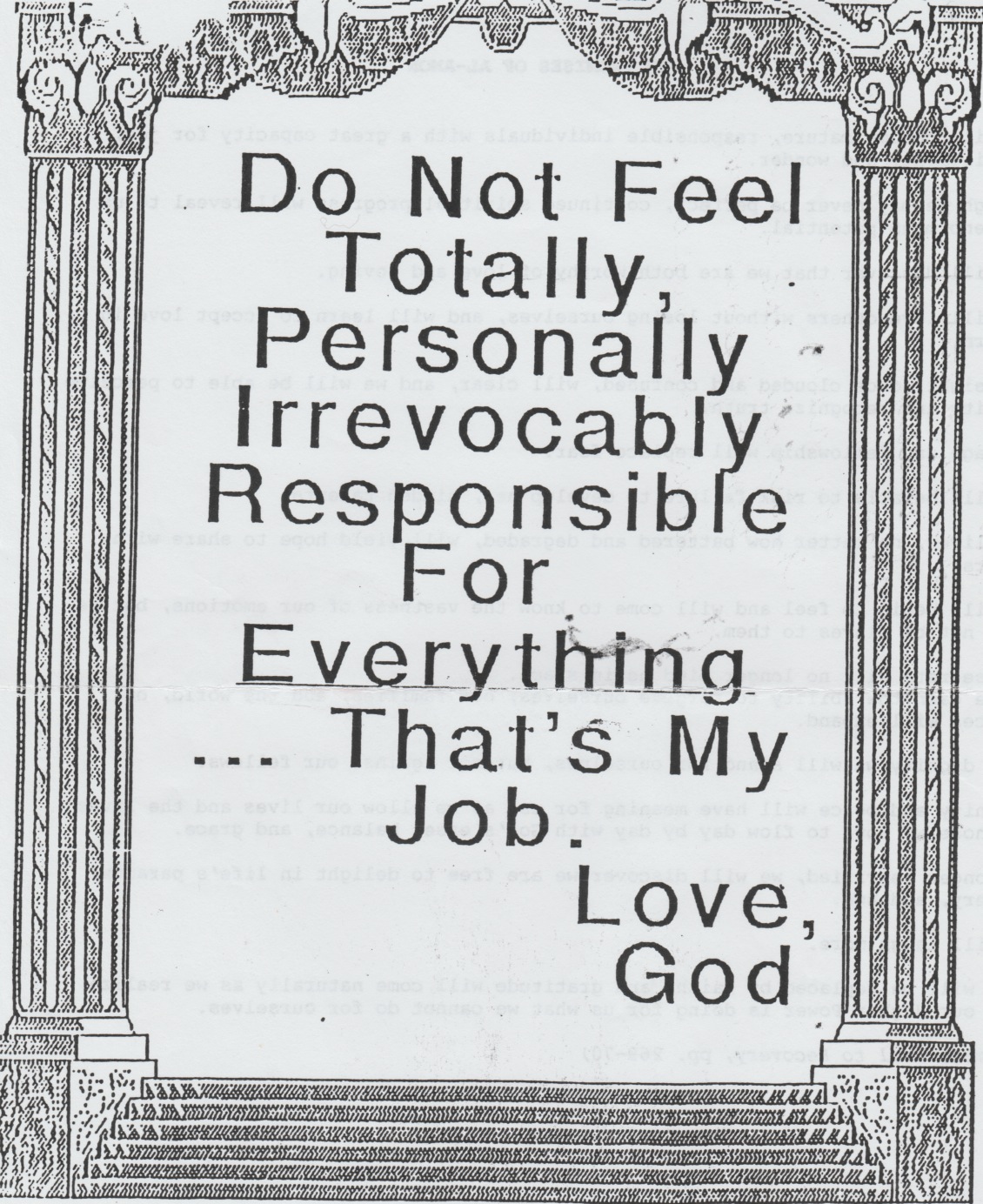
I raised my family with the best of intentions. I loved my kids to the moon—still do—but I also felt completely responsible for them. That’s understandable when they’re children and young adults. But at some point—and this place is different for all of us—I feel it’s important to relinquish our responsibility and allow our children to be responsible for themselves.

This gets so complicated because mental health issues so often accompany active substance use disorder. There is so much for our children to shoulder, and we want to help.

This understanding is never more critical than when our adult children struggle with this disease. If we are hampered by guilt—a truly crippling emotion—we might allow ourselves to feel overly responsible. We keep moving our own healthy boundaries to accommodate the substance abuser. This in turn puts us at risk of becoming enablers. And that downward spiral will continue—until we break free of it. It’s a hard journey we’re on, and we need help too.

”We didn’t cause it; we can’t control it; we can’t cure it.”

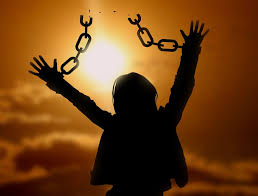
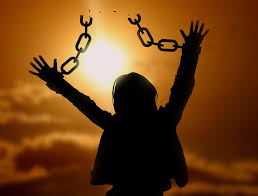
“Freedom From The Bondage Of Self”

From Each Day A New Beginning, January 6:

“Wanting to control other people, to make them live as we’d have them live, makes the attainment of serenity impossible. And serenity is the goal we are seeking in this serenity program. In this life.

We are each powerless over others, which relieves us of a great burden. Controlling our own behavior is a big enough job…”

When I took the Third Step, and turned my concerns about my daughter over to the God of my understanding, I felt a freedom that I’d never felt before. I stopped trying to control everything so much, stopped trying to play God when that’s not my job. With this freedom comes the faith that things are unfolding as they are meant to, without any help from me. Acceptance of life on life’s terms gives me peace—and the energy to open my eyes and keep moving.

Baby Steps Lead To Bigger Ones

“First Step Prayer:

Dear Lord,

I admit that I am powerless over my addict.

I admit that my life is unmanageable

When I try to control him/her.

Help me this day to understand the true meaning of powerlessness.

Remove from me all denial of my loved one’s addiction.”

The first step is probably the most important one in assuring our recovery from the effects of another’s substance use disorder.  And it’s because I refused to take it that it took me so long to start to recover. I simply wouldn’t accept my powerlessness over my daughter’s disease. I felt as though I would be dropping the ball and appearing not to care about her. I felt that I had to do everything in my power to save her. “Power,” I realized later on, that I didn’t have.

So, deep pockets enabled me to put her through four rehabs. Deep pockets also had me paying her rent, paying off her loans, paying back the creditors she got into trouble with. All my “help” simply gave her more money for drugs. In short, deep pockets can be dangerous if used for the wrong things. She might have learned something from the consequences of her actions if I hadn’t kept getting in the way.

So yes, my life had become unmanageable. I love my daughter very much. And I kept making things easy for her. But we can enable our children to death. Now I’ve let go of all my attempts to control her and her disease.

And I feel as though the weight of the world has been lifted from my shoulders.

Expectations

In recovery, we learn to profoundly adjust our expectations, hard as it is. We raised one child, and now we have another. We are all too aware of the change that drugs have produced in our children. A parent wrote in Sharing Experience, Strength and Hope ( the SESH book) a very revealing statement, something I could have written myself. It is a key to understanding my story, my mother and father’s stories, and my daughter’s painful struggle:

“I expected my children to be perfect, to always do the right thing. I tried to control them by giving them direction and making them do things in a way that I felt was correct! When they didn’t, I could not handle it.

I could not accept their drug use and I felt that their behavior was a reflection on me. I was embarrassed for myself and scared to death for them. I became so distrusting of my children that I showed them no respect. I would meddle and invade their privacy looking for any excuse to challenge and confront them.

When I came to Nar-Anon, I learned that my interference and my attempts at controlling them were actually standing in the way of their recovery. I learned to let go of the control I never had in the first place.”

In an earlier blog, “Redemption and Freedom,” I said, “I would finally, thank God, let go of the oppressive burden I was placing on my daughter by demanding she get well so that I could be OK.”  This is a difficult statement for some of us to make.

I’m very codependent; my daughter’s active drug addiction shook me to the core and made me decidedly unwell. Her illness had the power to ruin my day (and my life) before I got into a recovery program and started practicing the concept of detachment with love.

This concept has placed me at a healthy distance from my daughter so that I could view her situation with some objectivity and respond to her with intelligence and compassion. I’m very grateful for the education I’ve received in the rooms of recovery. I will always love her and I grieve the loss of her. But there are other people in my life, and I want to stay well for them. Thank you, Nar-Anon, for helping me reclaim my life!