“Deal From Strength”

From The Forum, October, 2014:

“Before I came to Al-Anon, when I was figuring out if I was okay, I had a mental checklist: is my daughter okay, is my son okay, and is my husband okay? If I could answer yes to all of those, then I knew I was okay. When I could no longer deny that my teenage son had a big problem with alcohol and drugs, I was no longer able to feel okay, because he wasn’t okay. I had it backwards.

In Al-Anon, I’m learning how to be okay without first checking in with my loved ones to see if they are okay, If they aren’t, maybe I can say or do something helpful; maybe not. I will still be okay. The action I take is much more likely to be effective if I am acting or speaking from a place of serenity. And with serenity I can begin to let go of the outcome, knowing I have done all I can and that I am powerless over the rest.”

All I can add to these wise words is another saying I’ve picked up along the way: “deal from strength.”  So often in life our actions, and more often reactions, are born out of fear. When Angie robbed me, I was afraid that if I had her arrested she would be scarred forever, when in fact it might have taught her a valuable lesson about consequences. This is an example of enabling at its worst. My fear governed that very poor decision. Now, through the wisdom I have learned in the rooms, I do things differently. I can let go of outcomes and be at peace with myself.
Who Are Our Teachers?

Memoir Excerpt:

My unsent letter to my child:

‘Dear Angie,

Ironic, isn’t it, that you have become my teacher and not the other way around—teacher of life, teacher of love, and beacon of surrender.

I’m so grateful that you were born, even though at times I’ve felt otherwise. God works in mysterious ways, doesn’t he? Though you haven’t been in my life long, and not always happily, it’s been your very existence that has propelled me into a serenely spiritual life, even happiness. I never would have done the work necessary to reach this place without your inspiration.

You are my child, my teacher. As I’ve stumbled on this rocky path, my thoughts of you have guided me; they guide me still.

All that I’ve become are gifts from you, my daughter: life lessons, trial by fire. How do I thank you?

By living well—By loving well—Mom’

‘God grant me the serenity to accept the things I cannot change.’ I cannot change the fact that Angie is an addict, and I cannot ‘wish’ her into recovery. I can only love her. And—this catch-22 has taken me most of my life to learn—I can only love her or anyone else in my life with any integrity, if I love and value and respect and cherish myself first.”

Recovery At Its Best

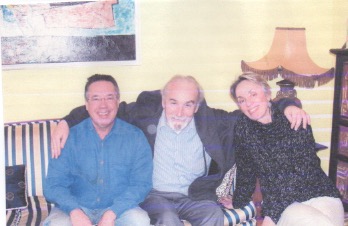
My former husband, Angel Miguel Rabasa, died last week in Washington, D.C. He had been ill with cancer and, despite surgery and chemotherapy to slow down its progress, he succumbed on 9/26/16, three days before his 68th birthday. I, along with his children and grandchildren, scrambled to get there from the West Coast. But none of us, including his two sisters from Miami, made it in time. He died surrounded by his wife and other loved ones. I have just two things to share regarding the passing of this good man: first, the early years of our marriage were filled with excitement and colorful stories that will keep our grandchildren entertained for years to come; the second thing, and this is such a blessing, is that the storms we have weathered in recent years have brought us closer together and we have become good friends. Such a gift! I am grateful beyond words for the difference this man has made in my life.

angel-scott-and-me

Accepting Addiction As A Disease

“Learning that addiction is a disease offers us a new understanding and suggests that compassion could replace anger and hurt. We can spend our time wishing things were different but must accept the fact that we have no power over another human being. We need to care enough about ourselves to give up the struggle over which we have no control. We may have tried many things such as keeping score, pointing the finger and blaming others in order to keep from feeling so much pain. No matter how harsh reality is, we can learn to accept each new day with confidence.

Accepting addiction as an illness helps us realize we cannot waste action and energy in fighting the battle but instead we can seek recovery for ourselves.”


Is it a disease or a choice? I’ve entered into this debate many times. But I’ll leave the final word to the experts, one of whom, Nora Volkow, I quoted in my memoir:

“Insist that our loved ones are choosing to be addicts, that they want to stick a needle in their arm and live in a gutter, and we feel justified in our anger and our bitterness. Keep feeding those feelings, and they will consume you. I choose to believe that my daughter is wired differently and is prone to addictive disease. That’s no surprise, since four generations in my family have all had addictive disease in varying degrees. For whatever reason we still are unsure of, whatever life stresses beckoned her into that dark place, she became a victim of addiction.

Dr. Nora Volkow, director of the National Institute on Drug Abuse, has said: “I’ve studied alcohol, cocaine, methamphetamine, heroin, marijuana and more recently obesity. There’s a pattern in compulsion. I’ve never come across a single person that was addicted that wanted to be addicted. Something has happened in their brains that has led to that process.”

Am I Helping Or Enabling?

Memoir Excerpt:

 “Rehab was mostly clear sailing for Angie. But there was one incident at the end of March that was upsetting: she snuck out beyond curfew with a friend and got drunk. She came back eventually, very repentant, and good-naturedly accepted her loss of privileges. The staff felt obligated to call me about the incident. I wasn’t sure what it all meant, but I joked with Gene that she has acted out more since she was twenty-one than she had in her whole life!

I’ve heard it said that once drug abuse takes hold in someone, they stop growing emotionally and remain stuck. Angie was thirty that year but clearly acted like a rebellious teenager. And up until the present when she found the courage to break away from me, she had been almost completely dependent on her father and me. But we, addicted as we were to her, made that easy for her. From time to time throughout her addiction, she fought to establish her independence from us. Then she would turn around and ask for help. I wanted so much for her to take charge of her own life, but later on it would be crystal clear: Addiction was in control and was happy for any handouts. Drugs cost money.”


I made many mistakes early in Angie’s addiction. Taking over too many of her responsibilities, I should have closed the bank sooner. I often say that deep pockets are dangerous. They allow us to be generous and feel good about it. A friend in Virginia told me that she’s glad she didn’t have the money to bail her son out of jail. He was forced to stay and feel the consequences of his behavior. It taught him a lesson, and he chose to go into recovery when he got out. He’s doing very well today. I see an important lesson in that.

Accepting Ourselves

“If we have submerged ourselves in the needs of others we may have lost sight of who we are, our self-esteem and individual rights. Awareness of the futility of doing the same things over and over, trying to control another person, and expecting that one day these actions will work, is freeing if we allow it to be. We are entitled to our own opinions, beliefs, limitations, and strengths. Accepting and loving ourselves for who we are will enable us to grow and change.

The less we try to manage others’ lives, the more effective we become. If we are accepting of others and the things around us, we can simply be ourselves.”

The definition of insanity: doing the same thing over and over again and expecting different results. I have accepted that my Higher Power will restore me to sanity. I will cease trying to force solutions and control my daughter. She has her own path and her own Higher Power. And I have mine.

The Courage To Let Go

Memoir Excerpt:

    “Angie told me once that that’s why she hated NA meetings: pimps, dealers, and strung-out junkies just itching for their next high often attended them. But in Angie’s case I don’t think that’s true. I think she didn’t go to meetings because she needed to deal with her addiction her way, and not be told by anyone else what to do: CSR—compulsively self-reliant—just like her mother.

Or maybe she just wasn’t ready to embrace recovery at all, a painful possibility I had not yet considered. I was still determined, at that point, to believe that she was going to beat her addiction and that I, of course, would be the glorious savior she would spend the rest of her life thanking, handing me my redemption on a silver platter.

I would finally, thank God, let go of the oppressive burden I was placing on my daughter by demanding she get well so that I could be OK. My mother unconsciously did the same thing with her children: she was a demanding perfectionist, beating back the pain of self-doubt and unworthiness by raising “successful” children. I’m very glad to have found recovery from my dysfunctional upbringing. It has helped to ‘relieve me of the bondage of self’. And most importantly, most importantly of all, my recovery has freed my children.”

Accepting Imperfection

“When we strive for perfection in ourselves and expect it in others, we may feel we have failed when this doesn’t meet our expectations. This step teaches us to accept each other and ourselves as we are, even if it’s less than we had hoped. We strive only to do our best. This invites us to practice humility in order to begin our progress toward recovery.”


True humility is the ability to see myself in relation to God, and this keeps me where I need to be with the people in my life. It has nothing to do with humiliation; it’s maintaining a realistic and balanced perspective of myself. I’ve heard it said that addiction is a disease of relationships, and it certainly has the power to destroy them. When I try to let go of many of my defects and practice humility, my relationships work better. This, I believe, is God working through me.

The Heart To Listen

The Serenity Prayer (Part 4)

“and Wisdom to know the difference…

“Wisdom is God’s own conversation with me. Often he speaks through books or other people. Wisdom can be found merely by listening to others after I develop the ability to hear it in their words. To recognize Wisdom, I must have compassion for others, which gives me insight rather than knowledge of myself. Facing reality encourages recognition of Wisdom, because Wisdom is always truth.”

Thank God I have the ears to listen when He speaks to me! Not always, of course. And some of the best wisdom I pick up is in the rooms from other members. Opening my heart to listen to others is one of the great rewards of my recovery program. And I NEVER feel alone anymore.

Playing God

Memoir Excerpt:

 “Recovery in the Program, time and the perspective it brings us, has given me a lot of new information. My own recovery has also graced me with a healthy amount of humility. I used to confuse humility with humiliation. I used to think that admitting my faults would produce shame in me and threaten my self-worth. But in recent years I have a different understanding of this word.

Having taken the Fourth Step (“Made a searching and fearless moral inventory of ourselves”), and later the Seventh Step (“Humbly asked Him to remove our shortcomings”), I began to see myself in a healthier light. I began to see myself in relation to my higher power. I am just a speck in the universe, no more, no less. I’ve been playing God for much of my life. It doesn’t matter any more why; what matters now is that I remain ever mindful of the amount of power I have over others and stop trying to play God with them.”