Weathering The Storms

From Each Day is A New Beginning, May 16:

‘It is only the women whose eyes have been washed clear with tears who get the broad vision that makes them little sisters to all the world’—Dorothy Dix

“The storms in our lives benefit us like the storms that hit our towns and homes and wash clean the air we breathe. Our storms bring to the surface the issues that plague us…Recovery is a whole series of storms, storms that help to sprout new growth and storms that flush clean our own clogged drains. The peace that comes after a storm is worth singing about.”

Growing up surrounded by addiction and falling prey to the disease myself, I was in the veritable forest, unable to see the trees. My deep and overriding love for my daughter forced me to open my eyes and see what was right in front of me. I took a large leap toward healing myself so that I could be well enough to enjoy all my blessings. As I conclude in the final chapter of my memoir, “What could be a better testament to Angie, to all her gifts and possibilities, than to go forward with my life savoring every moment?”

Many friends in Al-Anon have expressed gratitude to their addict/alcoholic for getting them into the rooms of recovery— these same friends who, like me, deeply mourn the lost years with our loved one—but who, also like me, refuse to offer another victim up to the altar of addiction. We have made it through the storm, and have found that we have something to sing about.
There Is No Glory In Martyrdom

Early in Angie’s illness, I flailed around in denial, sometimes strong, as when I handed her logical consequences for being abusive. I felt like a moth turned into a butterfly then. But I later added, ‘Oh how this butterfly would flutter and die in the years that followed, as I backtracked over and over again, trading in my courage for equal does of martyrdom.’” ~except from A Mother’s Story: Angie Doesn’t Live Here Anymore by Maggie C. Romero

It’s been quite a roller coaster ride these past fifteen years. At first I wouldn’t believe it was really happening. “This sort of thing happens to other people’s children,” I wrote in my memoir. What arrogance! I simply couldn’t accept it.

But when she was living with me and stealing anything that wasn’t nailed down, it was hard to ignore. So for a while I got tough, even told her to live elsewhere more than once. But addicts are, if nothing else, resourceful.

I often write that deep pockets are dangerous, enabling us to be generous and feel good about it. I was able to put Angie through rehab four times, but one time would have been enough to teach her the tools of recovery. For recovery to be successful, whether it’s once or ten times, the addict has to be ready.  I was just buying time, trying to keep her off the streets long enough to get sick and tired of being sick and tired.

In the program there’s a wry saying: “Sit there. Don’t do anything.” And so I was the one who was getting sick and tired. I stopped doing anything, mostly because it didn’t really matter what I did. Angie was a runaway train, and I couldn’t stop her in the grips of addiction.

I stopped trying to control a situation that was clearly out of my control. I stopped obsessing and enabling. I started focusing on other people in my life who deserved my attention. I learned to practice gratitude for all I have. And though my changed attitude hasn’t brought my daughter back, it has shown me how to live better.

“We don’t always get what we want in life. But to make the best of what we have is the only way to be happy.” ~Jenny Jerome Churchill

Let Go…And Strive To Be Happy Yourself

Third Step Prayer:

God, I offer myself to thee

to build with me and to do with me as Thou wilt.

Relieve me of the bondage of self, that I may better do Thy will.

Take away my difficulties, that victory over them may bear witness

to those I would help of Thy power, Thy love and Thy way of life.

May I do Thy will always!”

My willfulness has always been my Waterloo. But I never saw it as a bad thing. I saw it as strength, determination, and power—the opposite of weakness.

But I’ve had to modify my will and determination to save Angie. After years of using my strong will and stubbornness to fight a battle that wasn’t mine to fight,  I’ve learned to let go. From well-meaning friends over the years, I’ve heard these comments:

“But how can you drop the ball like that? How can you give up on your own child? She’ll think you don’t love her anymore! How can you be so cruel?”

Those people need to walk a mile or two in my shoes.

The cruelty belongs to the Monster (if it had an appearance), the brain disease, that is claiming millions of our children. After years of educating myself about the nature of addiction, I have settled on my own path to recover from the effects of this illness.

I have  no more power to cure Angie of her addiction than I would have if she had schizophrenia. Drug addiction and co-existing mental illness is very common, and there are many treatments out there. My daughter suffered from depression for years before she turned to hard drugs, and she tried therapy and antidepressants when she was just a teenager. Then when full-blown drug addiction took over, she was in and out of recovery, including four rehabs, for fifteen years. But she’s still out there, in active addiction.

My story with my daughter isn’t unique. Many of us share the same tragedy. But if I’ve learned one thing from all these years of chaos and pain, it’s that life is too precious to waste. I want to make the most of mine with the years I have left. I’m grateful now to make good use of my stubbornness and determination: to live well and strive to be happy.

The Good Daughter

“Angie was a good daughter. But please, beware of the complacency in those words.  Clearly, she hid her pain very well. Clearly, much was lurking beneath the surface that I did not see. And if I ache with the vacant promise of all the “woulda, coulda, shouldas,” it’s because I know that even if I had known what was coming down the road, I couldn’t have stopped it.” ~Maggie C. Romero, A Mother’s Story: Angie Doesn’t Live Here Anymore

Expectations

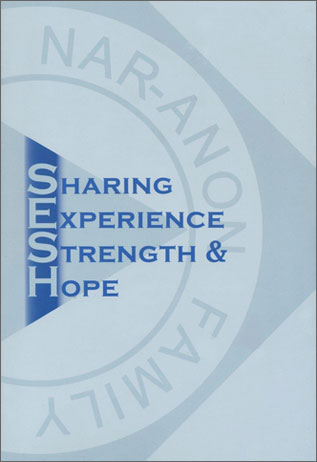
In recovery, we learn to profoundly adjust our expectations, hard as it is. We raised one child, and now we have another. We are all too aware of the change that drugs have produced in our children. A parent wrote in Sharing Experience, Strength and Hope (the SESH book) a very revealing statement, something I could have written myself. It is a key to understanding my story, my mother and father’s stories, and my daughter’s painful struggle:

“I expected my children to be perfect, to always do the right thing. I tried to control them by giving them direction and making them do things in a way that I felt was correct! When they didn’t, I could not handle it.

I could not accept their drug use and I felt that their behavior was a reflection on me. I was embarrassed for myself and scared to death for them. I became so distrusting of my children that I showed them no respect. I would meddle and invade their privacy looking for any excuse to challenge and confront them.

When I came to Nar-Anon, I learned that my interference and my attempts at controlling them were actually standing in the way of their recovery. I learned to let go of the control I never had in the first place.”


Those words echo my own from a recent blog: “I would finally, thank God, let go of the oppressive burden I was placing on my daughter by demanding she get well so that I could be OK.” This is a difficult statement for many of us to make.

Angie’s active drug addiction shook me to the core and made me decidedly unwell. Her illness had the power to ruin my day (and my life) before I got into a recovery program and started practicing the concept of detachment with love.

This concept has placed me at a healthy distance from my daughter so that I could view her situation with some objectivity and respond to her with intelligence and compassion. I’m very grateful for the education I’ve received in the rooms of recovery. I will always love Angie and I grieve the loss of her. But there are other people in my life, and I want to stay well for them. Thank you, Nar-Anon, for helping me reclaim my life!

The Healing Power Of Writing

My friend from Virginia writes me that he took my book to his son who is serving a six-month sentence in jail. Justin was so moved by the book that he has decided to write his own story.  I am happy to have been a source of inspiration for him, because just the act of writing my story was healing for me. Likewise, it could prove to be the catharsis Justin needs to finally face his demons and walk away from drugs.

David Sheff’s (Beautiful Boy, Clean) son, Nick, wrote his own gripping tale, Tweak, and it was very successful.

We all have a story to tell. And even though we’re not all famous authors, our stories  have value to those of us walking down the painful road of addiction. I hope Justin and many other addicts out there write down what’s in their heart. More of us need to get these stories into bookstores. The shame and stigma of addiction will fade in time if we all come out of the shadows and tell our truth.

En”light”enment

Ernest Hemingway famously said: “We are all broken; that’s how the light gets in.” This speaks to me, and to many of us.

In my search to be free of my emotional pain, I have found en”light”enment in a recovery program with tools to help me live better. It hasn’t been an overnight cure for my misery. I will always mourn the loss of my daughter Angie to this cruel disease. But, over time, I’ve learned to let go of some bad habits that weren’t serving me anymore—and contributed to me serving her even less. What didn’t serve me? Guilt. Untreated, that led to enabling, which served her not at all.

Working this miraculous program has helped me see that I’m just another child of God—and that I’m worth something. My years in various 12-Step fellowships have saved my life. Back in 2001 when a school counselor told me to go to an Al-Anon meeting, I told her, “No, that’s not for me.”

Yes, it was.

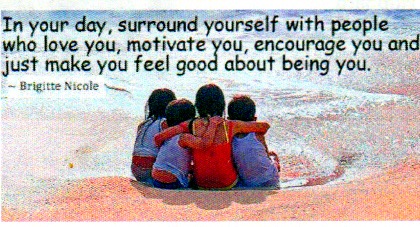
Surround Yourself With Love—And Not Just On Valentine’s Day!

My recovery work over the years has brought me out of isolation and pushed me into the circle of love in this picture. I have learned many things in my recovery program, but the most important has been placing a greater value on my worth, my needs and my wants. Learning to set boundaries is another way to take care of myself, letting others know what is and what isn’t acceptable to me. This tool has made my relationships healthier. Without a daily practice of self-care, what shape am I in to interact with those around me?

“Progress, not perfection,” to be sure, and we all have bad days. But I’m grateful to have found a sound guide for living in my recovery program. It doesn’t take away the pain of struggling with my daughter throughout her addiction. But it does offer coping strategies that encourage me to focus on what I can control in my life. No longer drained from fighting a battle I can’t win, I feel energized to move on and celebrate the blessings God has given me.

It’s all a matter of perspective. Attitude is everything.

Resistance Training

From In All Our Affairs, Making Crises Work For You, Surrender:

“’Let go and Let God.’ It sounds so simple. But when our circumstances or the circumstances of those we love weigh heavily on our minds, we may have no idea how to do it. Some of us struggle with the very idea of a Higher Power. Others begin to question long and deeply held beliefs, especially in stressful times…

Many of us review the same scenario again and again, looking for that elusive answer that will solve everything, obsessively wracking our brains for something that we could do differently or should have done differently in the past…As long as there is a chance of figuring out a solution, we reason, we should keep trying…We may secretly feel that this problem is too important to trust to God, as if we had the power to prevent God’s will from unfolding by the mere exercise of our resistance. We fear that if we surrender, anything could happen.

Actually, anything could happen whether we let go or not. It is an illusion that as long as we cling to the situation we have some control…Surrender means accepting our powerlessness to change many of the realities in our lives…It means trusting instead in a Power greater than ourselves. Faith has been likened to being in a dark tunnel and seeing no glimmer of light but still crawling forward as if we did.

Though our circumstances may seem dark indeed, when we turn to a Higher Power rather than to our own stubborn wills we have already begun to move toward the light.”

“Moving toward the light…” I really love the sound of those words. What could be darker than watching my daughter self-destruct over the course of fifteen years? How have I learned to “dance in the rain,” even as she has continued to slip away?

My resistance training at the gym has shown me that pain comes from putting resistance on the force exerted, and that has served me in strengthening my body. But my spiritual life demands just the opposite. My strong will and determination to save Angie from drug addiction was instinctive; it would be counterintuitive NOT to step in and interfere in my child’s self-destruction.

But once I became educated about the nature of addiction as a brain disease, I realized that other than offering my love and emotional support, there was very little I could do. I did send her to four rehabs, which bought her some time. Once or twice would have been enough to show her the tools of recovery. At what point do we need to make our adult children responsible for their own recovery from this cunning disease?

I will let go of my strong will to save Angie and trust that God has a bigger plan. I have faith that things are unfolding as they are meant to—and in God’s time. In my view, faith and acceptance go hand in hand.

The Pain Of Resistance

From In All Our Affairs: Making Crises Work for You

“I had always wanted to be different, better than others. It comforted me to believe that I loved more, cared more and suffered more from the effects of someone else’s drinking.

I was different when I went to Al-Anon. I suffered from these feelings of alienation, yet while I wanted to belong, I wanted even more to remain apart—to hang on to my old life, my old thinking. I felt that as I accepted each truth, each part of the program, some portion of me was going to die. I was not capable of believing that there would be a new life, or that a mature woman might be born from the wreckage of a guilt-ridden, obsessive child.”

My resistance remained even as I took the Steps of recovery. While I made progress emotionally through friendship and the release of some of my anxiety, I was unable to surrender myself to the idea of a Higher Power. It was a few years before I made that final surrender. Then and only then did I have any idea what Al-Anon was all about. I now understand my uniqueness. There is no one else on earth exactly like me, but with God as my partner and as a member of such a fellowship, I am not alone.