“I’m so grateful I found a way out of sadness, a way to take care of myself each day, and a relationship with the God of my understanding, who will never abandon me. The pain I’ve felt in the past is equal to the measure of joy I feel now.”
That’s quite a mouthful. Whoever wrote those words in “The Forum” is saying that somewhere between despair and happiness she or he did some work, found some answers. For me, anyway, I entered into a state of grace. I quite deliberately let go of my pain, which served no further purpose in my life. The lessons it taught me have been learned. I’ve put my sadness in a back drawer—and replaced it with positive thoughts that keep me motivated to reclaim my life, my remaining loved ones, and keep my heart ticking.
“…What I had overlooked in Step Two was the word ‘Power.’ The day I started placing my attention on that Power instead of on insanity, I began to see miracles in my life. One such miracle was my ability to talk about my fears in Al-Anon meetings. Other miracles included taking the Twelve Steps that lead me to serenity, and engaging in the process of forgiving and healing.”
It has taken many years of hearing Step Two read at meetings for me to really hear the word ‘Power.’ Now I realize how much more awesome my Higher Power is than this disease. Instead of dwelling in fear—and listening to my worst instincts—today I am striving to pass on the miracles of recovery to my children and grandchildren. If we keep doing this then, maybe not in
my lifetime but in theirs, we will see a change in how substance use disorder is treated around the world.
When my ego is involved and there’s a calculated risk, I’m going to be gutsy, not courageous. It takes guts to ski a steep trail; I alone will be rewarded. Courage is different. There is always a parenthesis of fear in Courage; the risk becomes minor. This parenthesis remains a void of fear until it is filled by God. There is no ego in a courageous act. Courage can ask for help. It is often something done for someone else, or it may be something I am not attracted to doing at all. I may lose by doing it. The courageous act is often the unpopular choice, to do or not to do. The results are seldom only mine. It requires more of me than I want to think I can do, alone. After it is finished, gratitude to someone or something is usually in order. Courage requires a moral strength not of myself. This strength is given by faith.”
EGO—Easing God Out—is my enemy in many ways. It makes me willful and arrogant. It’s the great separator—of me from people, of me from God. When I let God back in again, my life and my relationships seem to work better. And God has always given me the courage to do what is difficult in relation to my daughter. My faith in Him has given me the strength to do what I believe is right, regardless of the consequences. I believe things are unfolding as they are meant to. When I surrender to this belief, I am at peace.
Many people are not strong enough to battle the terrible force of substance use disorder on their own. Application of the Twelve Steps had proven successful over and over again since they were put together by a couple of alcoholics and their friends back in the late 1930’s. Substance abusers need help; some say they need spiritual help. Our society is full of naysayers—skeptics who eschew these programs that are found in every major city across the country, and in big cities, in many of the churches, meeting three or four times a day. There’s a reason for the popularity of Twelve-Step programs: they work for many people. So I promised myself I would try harder now. My daughter was worth it. My daughter was worth it?
There is no one place on this journey to pinpoint where I discovered that I was worth it. I knew what a flawed human being I was. I was aware of my mistakes along the way—big ones and little ones.
But as I was starting to embrace the principles found in these Twelve Steps I was reacquainting myself over and over again with my own humanity and feeling my self-worth solidify with roots into the earth. None of this growth in me would have occurred if my daughter’s illness hadn’t pushed me onto this path. And I would always—still—reckon with the survivor guilt that has challenged my right to be happy while my daughter still struggles with this cruel disease.
There are many who view Twelve-Step groups as cultish and unattractive. There’s such a powerful stigma in our society against substance use disorder in all its forms that, I suppose, families of substance abusers suffer from guilt by association. Early on in my recovery my sister once said that it must be nice to have “those people” to talk to. But as she’s watched me grow and change these past few years I think she’s developed a healthy respect for the Program.
To this day, though, she has never discussed with me the dark side of our father, the alcoholic. Maybe she never saw his dark side, as I did. To her, he was the best father in the world, and I have no need to invade that sacred place where she holds him in her heart. In fact, I agree with her. He was a very loving man who passed on many gifts to his children and grandchildren. Yes, he was sick, and he died too young because of it. But just as I have forgiven my mother for any ways she may have hurt me so have I lovingly accepted my father’s illness. And in learning to forgive my parents and others who have wounded me in my life, it has become easier for me to forgive myself for my own shortcomings and the part they played in hurting my own children.
I, being a substance abuser, a daughter of one and a parent of one, have found myself quite at home among these seekers of peace and serenity. I’ve been in the right place for twenty-three years now, and I cannot begin to tell you the gratitude I feel for the wisdom in this simple program that has helped me to look forward to the sun coming up every day—and to embrace my life in its entirety.
“I had a habit of doing the same thing over and over again and expecting different results. After discussing the matter with a friend, I was given an exercise to practice. When someone says something to me and I have a strong reaction—wanting to cry, wanting to rage, thinking I am inferior—I stop and visualize two doors. One is marked “Same old, same old,” or “My will.” The other is marked “New and different,” or “God’s will.” On seeing these two doors, I imagine opening mine and viewing what I would normally say or do in this situation. Then I close my door and open God’s. By the time I’ve done this, I’ve given myself several moments between the initial comment and my impulsive reaction. This gives me time to practice the slogan T.H.I.N.K. and to choose a healthier response. I’ve not had a single regret-filled incident since I began to practice this self-restraint. Ironically, most times what’s behind God’s door is absolutely nothing. What a message! Could this possibly mean that other people’s behavior belongs to them and I don’t have to make it mine by reacting to it?”
Before I went into recovery and learned how to view myself and my world differently, I was on automatic pilot. And the worst example of that was my extreme reactiveness to just about anything. Something like a look from another person could really get me going! But to make myself vulnerable to other people’s thoughts or opinions about me put me at a terrible disadvantage. I continually got lost, too often dependent in other people’s ideas and behaviors. Twelve-step recovery has taught me how to sort out who I am as I interface with the rest of the world. Acting with more integrity than before, I can react less and be more proactive.
Which is a long way of saying that I’m grateful not to be on automatic pilot anymore. Grateful to recognize that I have choices now. And I try to make good ones.
Here’s a good book to consider buying: Discovering Choices, Al-Anon Family Group
I love this acronym because it shows how emotions can collide with rational thinking. It also shows that even when we are being rational, we sometimes say the wrong thing. As a writer, I’m aware of the power of words—how they can persuade, or repel, how they can win friends, or lose them. I’ve done them all! When I get too emotional, I’m sure to say the wrong thing. Experience has taught me to use this acronym to weigh carefully what comes out of my mouth. To ask myself if what I say is necessary, or am I just spouting off, releasing steam like Old Faithful in Yellowstone? Am I being honest, or are my words brutal and tactless? Do I care how my words might affect the other person? Am I so emotional, in the moment, that my words might appear unintelligible? And most of all, do my words demonstrate kindness towards the other person?
Of all those terms, kindness for me is the most far-reaching and important. No matter what happens to us in our lives, no matter how deeply we are humbled by our circumstances and shortcomings, if we can remain kind in the face of everything, then that says a lot about our character.
from Sharing Experience, Strength and Hope, June 16:
“I remember feeling my anger and resentment lessen at my first meeting when I learned that addiction is a disease, like cancer or diabetes. I didn’t cause it, I can’t control it and I can’t cure it.
Today I am grateful that I am married to an addict because I have been given the opportunity to explore my spiritual nature and move out of my comfort zones. I have taken a good look at who I am, what I want and where I’m going. I am facing my past, my faults and my fears. I am becoming a better person, a happier person, and a more serene person. I am slowly but surely learning not to suppress my emotions and fears, but to release them and grow.”
‘No longer forward nor behind I look in hope or fear. But, grateful, take the good I find, the best of now and here.’ John Greenleaf Whittier
Just for today, I will pay attention to my blessings. I have so much to be grateful for, and I guard against complacency. It can all be snatched away in a heartbeat, so I take nothing for granted. This is a good way to live, savoring every good moment.
At that last Zoom meeting with Dr. Malakoti, I complained that in all these months of tests and speculation I haven’t yet had a physical examination. I guess I got through to her because the scheduler at Fred Hutch called me the next day and made an appointment for just that, before we would decide on another lymph node biopsy. That made wonderful sense to me, and all of a sudden I felt more secure, like we weren’t just throwing darts in the air. An exam would tell Dr. Malakoti a great deal about the state of my health. And it also taught me the value of advocating for myself.
So Gene and I drove down to Fred Hutch for a noon appointment and anxiously waited to see my doctor. She felt around my body for swollen lymph nodes and measured the ones she felt in my groin on both sides.
Dr. Malakoti confirmed, “Yes, we will need to get you into surgery for this biopsy as soon as possible.”
“How soon?” I asked.
“Probably within twenty-four to forty-eight hours,” she assured me.
I waited, not too patiently, for a call from the scheduler. Nothing. I called them twice a day. Nothing. A week of waiting. Nothing.
So I decided to go down to Seattle because my son needed me to babysit for his kids. His anniversary trip to Belize with his wife was more important to me than waiting for a phone call that wasn’t coming. Life goes on, doesn’t it?
Dr. Malakoti did take the time to message me about the surgeons’ decision to biopsy the right node instead of the left. And she emphasized that they haven’t found any cancer in my tests “at least, not at this time.”
Those are ominous words. What do you mean, “not at this time…?” Well, I’ve made it to age 76 without any cancer or its symptoms. Now I have symptoms. Now they are subjecting me to invasive tests. Now they tell me, “You don’t have cancer at this time.” So what does that mean? That cancer is a slow-moving train that may or may not collide with me someday? Everyone in the world can say that, can’t they? From the day they are born. How am I any different from other people? I have some hallmark symptoms of blood cancer. So they are treating me seriously.
I guess, since no one in the medical community will talk straight with me, I will have to wait for a definitive sighting of lymphoma, or lack of it, in my second biopsy.
I asked Dr. Malakoti directly when she examined me: “What are you looking for? What do you suspect? Could I have lymphoma?”
She moved around the room to get something, but did not answer my question. Maybe any form of speculation is strictly forbidden at this point. Maybe they will level with me when they have an answer.
So I return to patience and acceptance of what I cannot change.
“Oh I hate to write, Marilea. It’s like pulling teeth. And I’m afraid of what I might find.”
“Bingo, girlfriend, that’s the whole point. Discovery. I’ve been writing my heart out for more than a decade, and what I’ve learned about myself in the process could fill a book. In fact, it did. It filled three books and countless essays.”
“Yeah, but you’re a good writer and I’m just a hack.”
“Whoa! There’s all that judgment we keep heaping on ourselves. It doesn’t matter if you write well or not. The work is putting your words on paper. How they are received is also not important. What you do with those words is not important. Just get them out of you and examine what’s on the page. Maybe you will learn something new.”
So my friend and I went back and forth about the value of writing. She said she’d get back to me.
But I learned many things about myself from reading my early writing. I learned that I was extremely angry and judgmental toward my daughter. How could she be behaving so badly? And then I wrote about my own youth and realized that we were mirror images of each other.
Discovery.
I learned that I needed to be in the rooms as much as my daughter, if not more, because there were two of us who were sick. And that was the beginning of my healing. My words on the page stood out like red flags everywhere. That’s when I stopped being so angry or judgmental. If I could forgive myself for my sick soul and the behavior it reflected, I could certainly forgive my daughter. And that smoothed the way for her to come back to her family when she was ready.
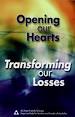
Our lives rarely enjoy Hollywood endings. My story has not ended well for my daughter. But my writing has helped me cope with that too. The two of us might have fallen down the rabbit hole and never returned. But the catharsis I experienced from being honest on the page has freed me to look beyond my daughter and see my life in perspective. I have a wonderful life, surrounded by people I love. And though I miss my daughter and feel the loss of her every day, I can transform my grief into something positive: joy and gratitude for all that’s left in my life. This book, Opening Our Hearts, Transforming our Losses, is a great resource for those who don’t know what to do with their grief. Take a look.
Time flies. It’s March now, a long time to not know what’s wrong with me. But the medical community operates, sometimes, at a snail’s pace.
Gene and I drove back to Fred Hutch in Seattle for my second PET scan. We had another dinner out and stayed at the same hotel so we would be close by for the 8:15 am appointment. I needled my doctor to secure two (2) Ambien for me from the pharmacy. I am extremely claustrophobic, which is the principle reason for the prescription. They’re not really “coddling” me. They just want to avoid a disaster in the PET machine.
The nurse injected the radioactive liquid into a prominent vein and waited for it to circulate in my system. It usually takes an hour, but I was asleep and didn’t notice. They walked me into the machine and then walked me out. Gene drove me home where I had another long lunch and another long nap.
Today is March 18. I had a Zoom meeting with my doctor at Fred Hutch. What are my hopes? That they found no areas of concern and refer me back to my original hematologist, Dr. Julia at Providence oncology, and let her come up with an explanation. You can’t fault the doctors at Fred Hutch for thoroughness. They seem to have pulled out all the stops.
But I’m getting ahead of myself. This is an example of my “future-tripping,” which I’ve done too much of. Enjoy every moment I have. Today is sunny and 70 degrees. I will indulge in my “spiritual” weeding (oh yes, weeding is a spiritual exercise for me!) and be grateful for the sunshine.
Dr. Malakoti, Dr. Poh’s P.A., addressed me on Zoom and said that the second PET scan showed lots of lymph node involvement. So they want to do another biopsy of another node in my groin, near the last one they removed. It’s the fastest way to rule out lymphoma. Another one? The queen (lately I’ve been demoted to princess) of silver linings sees this added surgery not only as a probable end to all our uncertainty but also a chance to learn from my mistake the last time. After the surgery, go home and stay there for two weeks. Suspend all activities.
Waiting for the scheduler to call me for the exam with my doctor, my negative side internally whines that, since I live two hours away from Fred Hutch, going back and forth on Route 5 will be another weekly hassle.
“Oh Carter, I’m so sick of the Route 5 parking lot. Now I have several more trips down to Seattle to endure.”
But my son rescues me from myself momentarily:
“Endure? How about you put a brighter face on it? Instead of dreading the traffic, the pain of surgery and the waiting for results, why don’t you and Gene come down to Seattle for two nights and spend time seeing your grandchildren and having some fun?”